 Birch Bay Siding
 Fiber Cement Siding for Point Whitehorn Homes
Point Whitehorn sits along the bluffs above the Strait of Georgia just north of Birch Bay, and it's a different kind of setting than a typical Whatcom County subdivision. Many homes out here sit on wooded, bluff-top lots with open water views on one side and mature tree cover on the other, which means a single house can face two very different exposure problems at once: a water-facing wall taking direct wind and salt off the strait, and a shaded, tree-covered wall that almost never gets a full day of sun to dry out. That combination of salt air, driving rain, and a moss season that runs most of the year is exactly the kind of environment that separates siding installed to actually last from siding that starts showing problems within a few winters.
We install James Hardie fiber cement siding for homes in and around Point Whitehorn, and we don't install anything else. That's not a preference pulled off a supplier price sheet — it's a standard built from years of seeing which siding materials hold up on exposed, moisture-heavy properties like the ones out here, and which ones quietly start failing behind a coat of paint that still looks fine from the driveway.
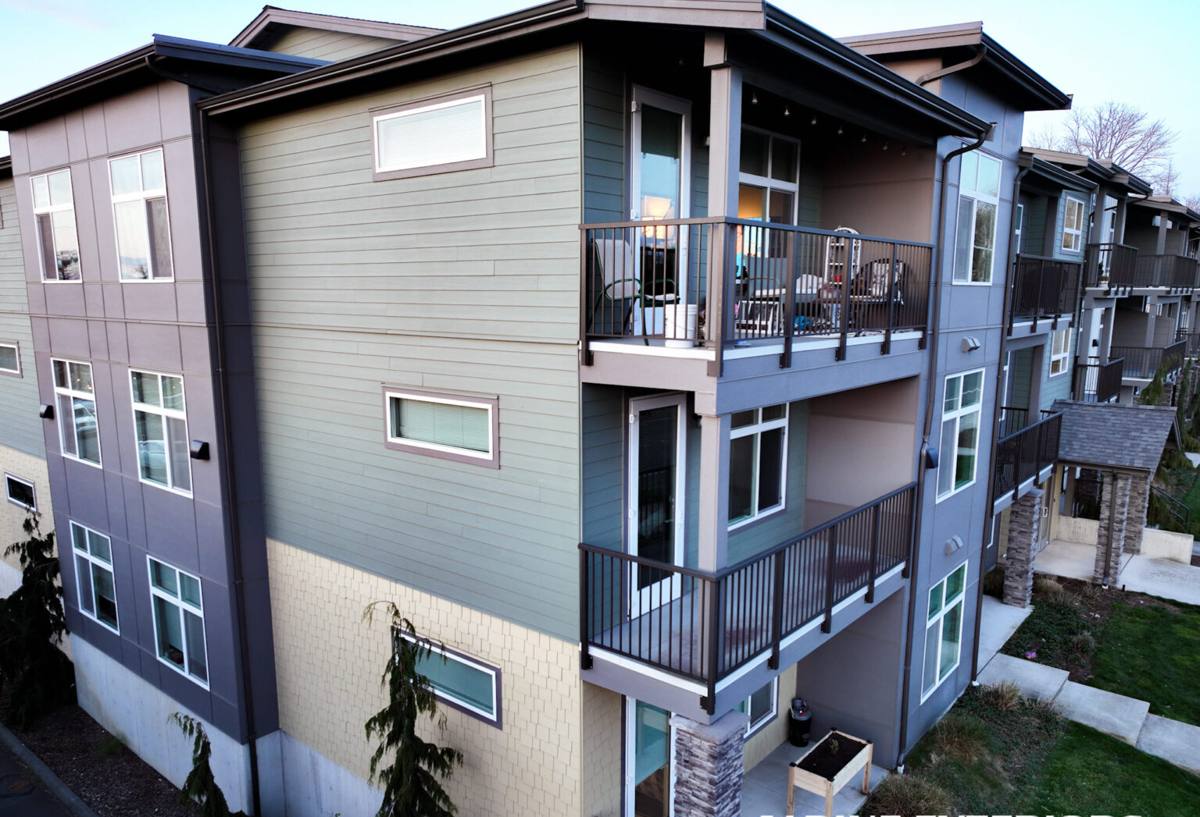
What Point Whitehorn's Climate Does to Siding
Salt Air and Wind Off the Strait
Homes on or near the bluffs get a steady dose of salt-laden air moving in off the Strait of Georgia, often with less of a windbreak than a property set back further from the water. Salt accelerates corrosion in fasteners, flashing, and any exposed metal trim, and it wears down lower-quality finishes faster than a drier, more sheltered site would. On a bluff-top lot, that exposure isn't occasional — it's a daily condition the siding has to shed, not just tolerate.
Driving Rain Against Water-Facing Walls
Open water exposure also means wind, and wind-driven rain doesn't fall straight down — it gets pushed sideways into siding laps, window flashing, and roof-to-wall transitions with more force than a calm, inland lot ever experiences. That's a heavier moisture load than the region's annual rainfall total suggests on its own. A siding installation that performs fine in a sheltered spot can fail on a Point Whitehorn bluff specifically because water is finding its way in sideways, through joints that were never built to handle that kind of pressure.
A Long Moss Season Under Tree Cover
The flip side of a bluff-top lot is often a heavily wooded one, and shaded, tree-covered walls in this part of Whatcom County stay damp for long stretches of the year. Mild temperatures and near-constant humidity are exactly what moss and mildew need to establish themselves, and any siding material that's even slightly porous, or that holds moisture at the surface instead of shedding it, becomes a growth surface faster than homeowners expect. On a lot with mixed sun and shade, the difference in how each wall ages can be dramatic within a decade.
Why Fiber Cement Is the Right Call for This Setting
We used to install a wider range of siding products. We stopped, and the change came directly from what we kept finding on service calls and tear-offs on exposed, salt-air properties similar to Point Whitehorn — not from a supplier relationship or a sales incentive.
- Non-combustible core: Fiber cement doesn't feed a fire the way wood-based siding products can, which matters for safety and often for insurance underwriting as well.
- Factory-applied ColorPlus finish: The color is baked on under controlled factory conditions rather than brushed on in the field, and it holds up far longer against fading, chalking, and moisture intrusion than site-applied paint does.
- Climate-engineered HZ product lines: James Hardie's HZ5 formulation is built specifically for regions with heavy moisture exposure and freeze-thaw cycling, which describes bluff-top, waterfront Whatcom County well.
- Dimensional stability: Fiber cement doesn't swell, cup, or warp the way engineered wood products can after repeated wetting over a long, damp season.
- Strong transferable warranty: Hardie backs its product with one of the more substantial warranty structures in the industry, as long as installation follows their published spec.
What We Won't Install Here, and Why
We don't install LP SmartSide, vinyl siding, Cemplank, Allura, primed spruce, or cedar. Each of those products has a legitimate place in the market, and plenty of homeowners elsewhere are satisfied with them. Engineered wood products can perform well in drier, more sheltered settings but are more sensitive to moisture at cut edges and joints than fiber cement. Vinyl is a reasonable budget option in a lot of climates, but its seams and thermal movement become bigger liabilities under sustained wind and salt exposure. Cedar and primed wood siding look great and have real appeal, but they demand a maintenance schedule most homeowners underestimate, especially on a shaded, damp wall. On a property with the kind of exposure common to Point Whitehorn, we've made a professional call that we'd rather install one system we fully stand behind than offer a lower-cost option that quietly shifts long-term maintenance risk onto the homeowner.
What a Correct Fiber Cement Install Actually Involves
Fiber cement only performs the way it's engineered to when it's installed to Hardie's published specifications for this climate zone. A quality product installed loosely will still develop moisture problems on an exposed bluff-top wall — the material is only as good as the installation behind it. A correct install includes:
- House wrap or a weather-resistive barrier installed and properly lapped before any siding goes up
- A drainage gap or rainscreen behind the panels where the wall assembly calls for it, so any moisture that does get past the surface can dry out instead of sitting against the sheathing
- The correct fastener type, length, and spacing for the substrate and exposure, using corrosion-resistant fasteners rather than whatever's on hand
- Proper clearance from grade, roof lines, and decks so siding isn't sitting in standing moisture or splash-back
- Factory-mitered or properly caulked and back-primed joints, particularly at corners and window and door openings
- Cut edges primed on site before installation, since the factory ColorPlus finish only protects the face and length of the board, not a field cut
Skip any one of these steps and the siding can still look correct on install day. The problems that follow — staining at seams, soft trim, paint failure at joints, moisture working behind the panel — take a wet season or two to show up, which is exactly why a corner-cutting install can pass a quick visual inspection and still fail years down the road.
Comparing Common Siding Materials for This Setting
| Material | Moisture Behavior | Maintenance in Salt Air | Typical Longevity Here |
|---|---|---|---|
| James Hardie fiber cement | Dimensionally stable, resists swelling and warping | Low; factory finish resists fading and chalking | 30+ years with correct install |
| Vinyl siding | Can warp or distort with heat and settle over time | Low upfront, but seams and fasteners are exposure points | Variable; shorter on exposed bluff or waterfront walls |
| LP SmartSide / engineered wood | Wood-based core is moisture-sensitive at cut edges and joints | Moderate; edge sealing and caulk maintenance matter | Depends heavily on installation and upkeep |
| Cedar / primed wood | Absorbs and releases moisture readily | High; regular refinishing needed in wet, salty air | Shorter without consistent maintenance |
Our Process for a Point Whitehorn Siding Project
On-Site Assessment
We start by walking the actual walls involved, not just estimating off a square-footage number. On a Point Whitehorn property that can mean looking at a water-facing wall taking direct wind and salt separately from a shaded, tree-covered wall on the same house, since those two surfaces often need different drainage and detailing decisions even though they're part of the same building. We also check for signs the existing wall assembly already has hidden moisture damage that needs addressing before new siding goes over it.
A Clear, Written Scope Before Work Begins
Once we know what the property needs, we put together a written scope and timeline before any material gets ordered or any crew shows up. That includes which walls get extra drainage detailing, what the fastener and flashing plan looks like, and what the color and product line selection will be.
Installation to Manufacturer Spec
Every fastener, clearance measurement, and flashing lap follows James Hardie's published installation requirements for this climate zone, not a generic national standard. That's what keeps the manufacturer's warranty intact, and it's the actual reason a Hardie installation performs for decades rather than years.
Final Walkthrough
We walk the finished project with you, point out anything worth knowing about long-term care, and make sure you understand what a healthy wall looks like if you ever want to check on it yourself. Fiber cement needs very little upkeep compared to wood-based siding, but it's still worth knowing what to look for.
Cost Factors for Fiber Cement Siding in This Area
Every property is different, so we'll always give you real numbers after walking your home rather than a rough estimate off square footage alone. A few things tend to move the price on a Point Whitehorn project specifically:
| Factor | Why It Matters |
|---|---|
| Tear-off and existing wall condition | Hidden rot or moisture damage found during removal needs repair before new siding goes up |
| Exposure mix on the property | A house with both a direct water-facing wall and a shaded, wooded wall often needs different drainage detailing on each |
| Siding profile and reveal | Lap width, board and batten, or panel systems each carry different material and labor costs |
| Trim, window, and corner detailing | More openings and corners mean more flashing and finish work |
| Site access | Bluff-top lots, steep driveways, or limited staging space can add labor time |
A Simple Checklist Before Hiring for Fiber Cement Siding
- Ask what siding material they install and why, and whether it comes with a written, transferable warranty
- Confirm current Washington contractor licensing and active liability insurance
- Ask how they handle drainage and flashing differently on a direct water-facing wall versus a shaded, tree-covered one
- Ask about fastener corrosion resistance, especially for a bluff-top or waterfront-adjacent property
- Get a clear, written scope of work and timeline before any contract is signed
Why Hire a Crew That Already Works Point Whitehorn
A crew that regularly works this stretch of Whatcom County coastline already knows that a Point Whitehorn property isn't a single, uniform exposure problem — it's often two or three exposure problems on the same house, depending on which way a wall faces and how much tree cover sits in front of it. That familiarity shows up in the decisions that don't make it onto a glossy brochure: which walls get extra drainage detailing, where the fastener spec gets upgraded, how a joint gets built differently on the water side of the house than on the shaded side. Those are exactly the details that determine whether fiber cement siding performs for one wet season or for several decades on a bluff-top, salt-exposed home.
If you're weighing fiber cement siding for a home in or around Point Whitehorn, we're happy to walk the property, look at how each wall is actually exposed, and give you a straightforward, no-pressure estimate. There's a form below — reach out and we'll set up a time to take a look.