 Birch Bay Siding
 Siding Built for Blaine's Coastline, Not Just Any Coastline
Blaine sits right on Semiahmoo Bay in the far northwest corner of Whatcom County, close enough to the water that salt air is part of daily life for most homes in the area. That's a different exposure than siding faces even a few miles inland. Add in the driving rain that comes off Georgia Strait through fall and winter, plus a moss season that can run six months or longer under the tree cover common to this part of the county, and you've got a climate that is genuinely hard on exterior materials. We install James Hardie fiber cement siding in Blaine because it's the one product system that holds up to all three of those stresses at once without turning into a maintenance project for the homeowner.
This page is specifically about James Hardie siding for homes in and around Blaine — not a general siding overview. If you live near the water, near Drayton Harbor, or anywhere in the Birch Bay to Blaine corridor, the material and installation details below are the ones that matter most for your house.
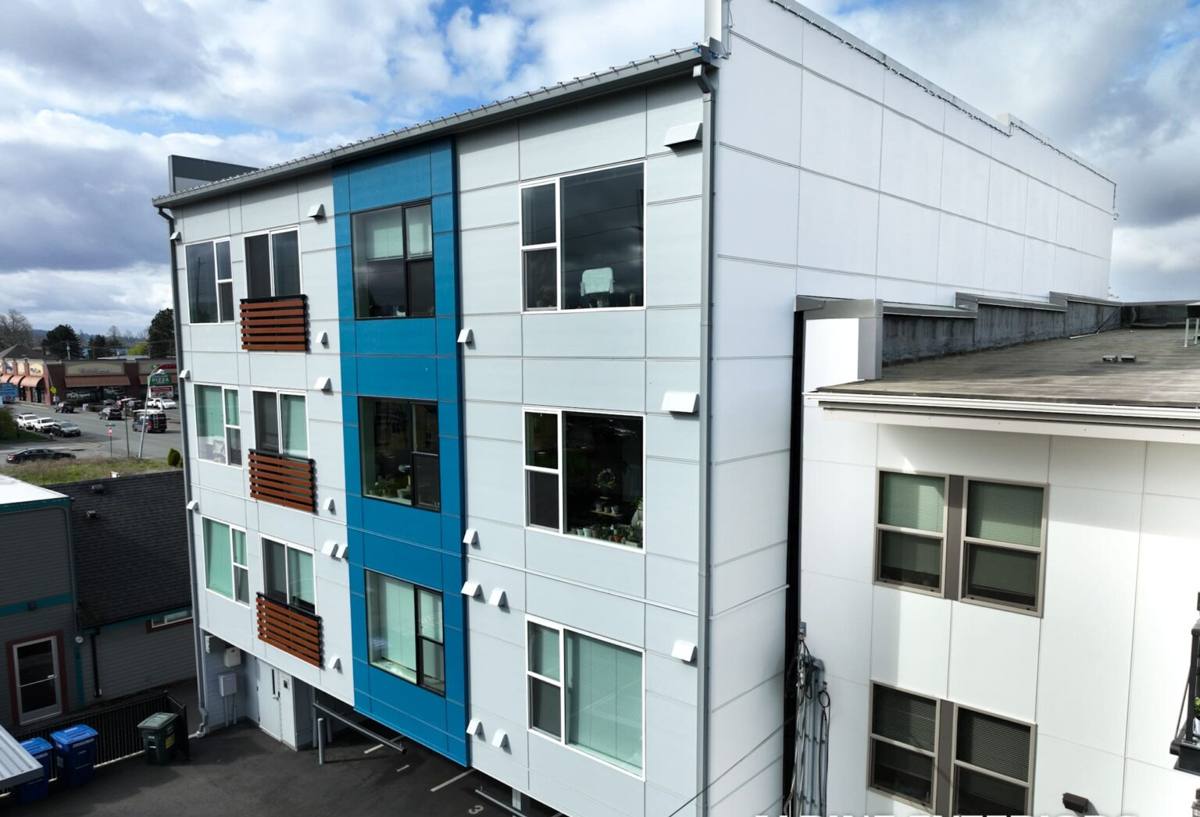
What Salt Air Actually Does to Exterior Siding
Salt-laden air doesn't just sit on a wall — it gets carried by wind and settles into every seam, fastener head, and joint on the exterior of a house. Over years, that steady low-level salt exposure accelerates corrosion on anything metal and speeds up the breakdown of coatings that aren't formulated to resist it. Wood-based sidings and some engineered products can absorb moisture faster in salt-heavy air, which shortens paint life and opens the door to rot at the edges and end cuts.
Why Fiber Cement Handles This Better
James Hardie siding is cement-based, not wood-based, so it doesn't swell, wick moisture through its core, or feed rot the way wood fiber products can. It's also dimensionally stable — it doesn't expand and contract with humidity swings the way wood and some composites do, which matters a lot when a house is getting damp coastal air most of the year. The factory-applied ColorPlus finish is baked on under controlled conditions, which gives it better adhesion and UV/salt resistance than field-applied paint typically achieves, especially on the cut edges and profile details that take the brunt of wind-driven salt spray.
Driving Rain and Whatcom County's Wet-Wall Problem
Blaine and the surrounding Whatcom County coastline get a lot of rain that doesn't just fall straight down — wind off the water pushes it sideways into walls, especially on west- and southwest-facing elevations. That's what installers call "driving rain exposure," and it's one of the top reasons siding jobs fail prematurely in this region. The failure usually isn't the siding material itself — it's what's behind it.
Where the Real Failures Happen
- Missing or poorly lapped weather-resistive barrier (house wrap) behind the siding
- Butt joints and seams that aren't properly flashed or caulked to spec
- Window and door trim that wasn't integrated with flashing tape correctly
- Siding installed too close to grade, decks, or roof lines with no drainage gap
- Fastener patterns that don't match the manufacturer's install requirements, causing splitting or loosening over time
Every one of these is a workmanship issue, not a product issue. A correct install starts with getting the water management layer right before a single piece of Hardie board goes up — the siding is the last line of defense, not the only one.
Moss, Shade, and the Long Wet Season
Much of Blaine and the Birch Bay area has tree cover close to homes, and combined with a wet fall-through-spring stretch, that creates ideal conditions for moss and algae growth on north-facing and shaded walls. Moss holds moisture against a surface far longer than open exposure would, which is exactly the kind of sustained dampness that rots wood trim and breaks down lesser coatings.
How Hardie Siding Responds to Moss Exposure
Fiber cement doesn't feed mold or moss growth the way organic materials can, and it doesn't soften or degrade from prolonged surface moisture the way wood does. Moss and algae can still grow on the surface of any siding material in the right conditions — Hardie isn't magic — but because the board itself isn't absorbing that moisture into its structure, a simple wash keeps it looking right instead of triggering repairs. That's a meaningful difference for homeowners in shaded Blaine lots who don't want a siding job that needs babysitting every year.
The James Hardie Product Lines That Fit This Climate
James Hardie makes climate-engineered product lines, and for a marine, high-moisture environment like Blaine's, the HZ5 line is the one specified for this region. It's formulated for wetter, colder climates with freeze-thaw cycling and sustained moisture exposure — which describes a typical Whatcom County winter well. We spec HZ5 products for Blaine installs as a matter of course, not as an upsell.
Common Choices for This Area
| Product | Look | Where It Fits Best |
|---|---|---|
| HardiePlank lap siding | Traditional horizontal lap, several width and texture options | Most Blaine homes; the default choice for full re-sides |
| HardiePanel vertical siding | Vertical panel, often paired with battens | Modern builds, accent walls, gable ends |
| HardieShingle siding | Staggered or straight-edge shingle profile | Coastal cottage or craftsman-style homes |
| HardieTrim boards | Smooth or textured trim to match siding | Window/door surrounds, corners, fascia |
Color selection matters here too. ColorPlus finishes come pre-matched to trim and accessories, which keeps color consistent across the whole exterior — something that's harder to guarantee with field-painted alternatives, especially once touch-up painting starts happening piecemeal over the years.
What a Correct Install Looks Like on a Blaine Home
The siding material is only half the equation. The other half is installation discipline, and in a high-exposure coastal town like Blaine, that discipline is what determines whether a siding job lasts twenty-plus years or starts showing problems in five.
Our Process
- Inspection and tear-off — remove old siding and inspect sheathing for existing rot or moisture damage before covering anything up
- Water-resistive barrier — install or repair house wrap with correct overlaps and taped seams
- Flashing details — properly flash all windows, doors, and penetrations before siding goes on, not after
- Drainage plane — maintain proper clearance at grade, roofline, and decks so water has somewhere to go
- Fastening to spec — follow James Hardie's published fastener schedule and blind-nailing or face-nailing requirements for the specific product and exposure
- Joint and seam treatment — caulk and seal per manufacturer instructions, using compatible sealants
- Final inspection — walk the whole exterior before calling the job done
None of these steps are unique to Blaine, but skipping any of them shows up faster here than it would in a drier, more sheltered part of the state. That's the practical argument for hiring a crew that already understands this specific coastline.
Why a Local Crew Matters More Than It Sounds Like It Should
A siding crew that mostly works inland jobs isn't necessarily doing anything wrong — but they may not default to the details that matter most in a place like Blaine: the HZ5 product spec, the extra attention to flashing on west-facing walls, the drainage clearance near a shaded, moss-prone yard. A crew that regularly works Birch Bay and Blaine homes has already seen what happens when those details get skipped, because they're the ones who get called back to fix it. That experience shows up in the small decisions made on the job, not just in the brand of siding on the truck.
Cost Factors Homeowners Ask About
Every Blaine home is different, so we don't quote broad-strokes pricing sight unseen — but these are the factors that most affect the cost of a James Hardie install here:
| Factor | Why It Affects Cost |
|---|---|
| Extent of tear-off and sheathing repair | Hidden rot from prior water intrusion adds labor and material |
| Product line selected | Lap vs. panel vs. shingle profiles differ in material and labor |
| Trim and detail complexity | More corners, windows, and rooflines mean more flashing and cutting |
| Home height and access | Multi-story or steep-lot homes require more staging and time |
| Color and finish choice | Standard ColorPlus colors vs. custom options can shift pricing |
We walk every Blaine property in person before giving a number, because the variables above genuinely change job to job — a fair estimate has to be based on your house, not an average.
Maintenance Expectations After Installation
One of the practical advantages of James Hardie siding for a moss-prone, salt-air climate like Blaine's is how little upkeep it demands compared to alternatives. A periodic rinse to keep moss and salt residue from building up, an annual walk-around to check caulking at joints and trim, and prompt attention if a gutter starts overflowing onto a wall section are really the extent of it. There's no repainting cycle to plan around, and no soft spots to worry about after a wet winter — which, in this part of Whatcom County, is not a small thing.
Get a Straight Answer for Your Blaine Home
If you're weighing a siding replacement or new install in Blaine, we're glad to walk your property, look at your current exposure — sun, shade, wind direction, tree cover — and give you an honest read on what your home actually needs. There's no pressure and no obligation. Use the form below to request a free estimate.