 Birch Bay Siding
 Sandy Point's Exterior Problem Isn't Like Most of Whatcom County
Sandy Point sits right up against the water, and that changes what a house needs from its siding. Homes just a few miles inland in Birch Bay or Blaine deal with plenty of moisture, but they don't get the same steady dose of salt-laden air coming off the strait. On a waterfront lot, that salt air is a constant low-grade attack on anything on the exterior of the house — fasteners, trim, paint film, and the siding material itself. Add in driving rain that comes sideways during winter storms, and a moss season that can stretch from fall through spring in the shade of the trees many Sandy Point lots have, and you've got a short list of the toughest conditions a siding product can face in this region.
This isn't a page about siding in general. It's about what actually holds up on a Sandy Point home, specifically, and what a correct installation looks like when the goal is decades of performance instead of a few good years followed by a slow decline.
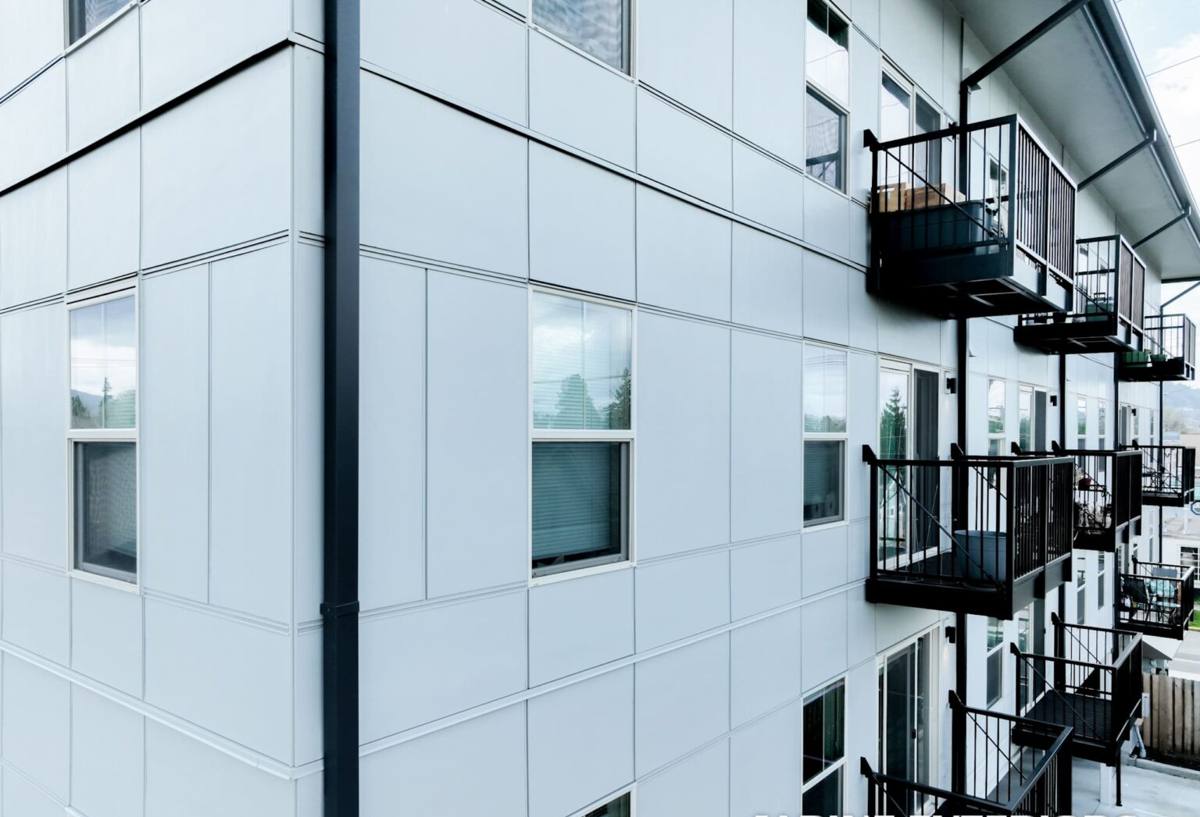
What Salt Air, Rain, and Moss Actually Do to Siding
Salt air
Airborne salt is corrosive and hygroscopic — it pulls moisture out of the air and holds it against surfaces. On siding, that means fasteners and trim details are under more corrosion stress than they'd see even a short distance inland. It also means paint and factory finishes take more of a beating from the combination of salt residue and UV exposure near open water.
Driving rain
Wind-driven rain doesn't just wet the face of a wall — it pushes water sideways and upward, testing every lap, joint, and penetration in the siding system. A siding product that handles vertical rain fine can still fail at the seams if it wasn't detailed for wind-driven exposure. This is a water-management problem as much as it is a materials problem.
Moss and sustained damp
Shaded, moisture-holding surfaces in Whatcom County grow moss and algae readily, and Sandy Point's tree cover and marine humidity make that worse, not better. Moss holds water against the siding face far longer than open sun-exposed walls do, which matters enormously for any product that can absorb moisture or swell.
Why This Rules Out Some Common Siding Choices
We install James Hardie fiber cement siding exclusively, and conditions like Sandy Point's are a big part of why. Wood-based siding products — engineered wood, primed spruce, cedar — rely on paint film and careful maintenance to keep moisture out. In a environment with constant salt-laden humidity and long moss seasons, that maintenance window shrinks. Any point where moisture gets past the paint film and into the wood substrate becomes a slow, hidden problem, because wood-based cores swell and deteriorate when they stay wet.
Vinyl siding handles moisture fine on its own, but it isn't the airtight, wind-driven-rain-resistant system waterfront homes need at the panel joints and corners, and it can become brittle and prone to cracking under long-term UV and temperature cycling near open water. It also can't be painted to refresh its look, which matters when salt residue dulls a finish over the years.
James Hardie fiber cement is cement, sand, and cellulose fiber — it doesn't have an organic core that can rot, and it doesn't swell or wick water the way wood-based products can. It's also non-combustible, which is a genuine advantage anywhere brush and yard debris accumulate near a structure. That combination is why it's the only siding system we put on homes, in Sandy Point or anywhere else in our service area.
What a Correct Job Looks Like on a Sandy Point Home
Product selection
James Hardie's HZ5 product line is engineered for exactly this kind of climate — freeze-thaw cycling combined with high moisture exposure. On a waterfront lot like Sandy Point, that's the baseline, not an upgrade. We also pay close attention to which ColorPlus factory finish makes sense for a home with heavier UV and salt exposure at the water; the factory finish is baked on and warrantied against fading, which matters more here than it does a few miles inland.
Water management behind the siding
The siding itself is only half the system. Correct installation on a marine-exposed home means:
- A properly lapped weather-resistive barrier behind the siding, not just a wrap stapled up and left
- Rainscreen or drainage gap detailing where conditions call for it, so any moisture that gets past the siding face can drain and dry instead of sitting against the wall
- Correct flashing at every window, door, and roofline penetration — these are the points where wind-driven rain actually gets in
- Proper fastener penetration and placement per Hardie's installation instructions, using fasteners rated for coastal/corrosive exposure
- Caulking and sealant only where Hardie's install specs call for it — over-caulking traps moisture just as badly as under-caulking lets it in
Fastening and hardware
In a salt-air environment, the hardware holding the siding on matters as much as the siding itself. We use fasteners and flashing components suited to corrosive coastal exposure, not standard-grade hardware that's fine 10 miles inland but starts corroding early at the water. This is a detail that's invisible once the job is done but shows up as staining, streaking, or loosening panels years later if it's skipped.
Trim and joint details
Every joint, corner, and trim-to-siding transition is a place water can find its way in under driving rain. Correct installation means consistent gapping, backer material where required, and finish details that shed water outward rather than channeling it toward a seam.
Comparing How Siding Materials Hold Up in This Climate
| Factor | James Hardie Fiber Cement | Wood-Based Siding (engineered wood, cedar, primed spruce) | Vinyl |
|---|---|---|---|
| Moisture/rot resistance | No organic core to rot; unaffected by sustained dampness | Organic core swells and deteriorates if moisture gets past the finish | Doesn't rot, but joints aren't a true water barrier under driving rain |
| Salt air / corrosion exposure | Cement composition unaffected by salt; factory finish holds up to UV and salt residue | Paint film degrades faster under salt exposure, exposing substrate sooner | Can become brittle with long-term UV/salt exposure near open water |
| Moss/algae resistance | Doesn't absorb water, so moss sits on the surface rather than feeding into the material | Prolonged moss contact accelerates moisture intrusion into the substrate | Moss sits on surface; material itself doesn't degrade but panels can trap moisture at laps |
| Fire resistance | Non-combustible | Combustible | Can melt/deform under heat exposure |
| Refinishing | Can be repainted if desired; ColorPlus finish is warrantied and long-lasting | Requires repainting on a maintenance cycle | Cannot be painted long-term; fades and can't be refreshed |
| Typical realistic lifespan when installed to spec | Multiple decades | Shorter without diligent maintenance | Variable; joint and fastener failures often show up before the panel material itself fails |
Why Hiring a Crew That Already Works Sandy Point Matters
Sandy Point isn't a typical subdivision — lots vary in exposure depending on how close they sit to the water and how much tree cover they have, and the right approach on one home can be wrong for the house next door. A crew that has already worked in this specific pocket of Birch Bay knows to ask the right questions before the estimate is even finished: How exposed is this wall to prevailing wind and rain? Is there enough tree cover here that moss resistance and drainage detailing need extra attention? Are there specific corners or elevations that take the worst of the weather?
That local familiarity also shows up in the small decisions that determine whether a Hardie installation performs for 30 years or 15 — fastener spacing near corners exposed to wind uplift, where a rainscreen gap earns its keep versus where it's optional, and how much clearance to leave at grade and hardscape edges so splash-back doesn't undermine the bottom course. None of this is exotic knowledge, but it's the difference between a technically-correct-on-paper installation and one that's actually built for where it sits.
What to Expect From Our Process
- On-site assessment — we look at your home's specific exposure: proximity to the water, tree cover, prevailing wind and rain direction, and the condition of the current siding and trim.
- Product and finish selection — we recommend the Hardie product line and ColorPlus finish suited to your exposure level, not a one-size-fits-all default.
- Water management plan — we identify where drainage detailing, flashing upgrades, or barrier improvements are needed behind the new siding, especially around windows, doors, and roof transitions.
- Installation to Hardie's specifications — correct fastening, gapping, flashing, and finish work, using hardware rated for coastal exposure.
- Final walkthrough — we go over the completed work and what maintenance (if any) to expect going forward.
A Practical Checklist Before You Hire Anyone for This Job
- Ask what siding product and specific product line they're proposing, and why it fits a waterfront/high-moisture exposure
- Ask what fastener and hardware grade they use — standard vs. corrosion-resistant matters here
- Ask whether they're planning any drainage gap or rainscreen detailing, and where
- Ask how they handle flashing at windows, doors, and roof-to-wall transitions
- Ask whether they've worked in Sandy Point or similarly exposed Birch Bay-area properties before
- Get the manufacturer warranty terms in writing, not just a verbal assurance
What Correct Installation Protects Over Time
The value of getting this right isn't cosmetic. A correctly installed James Hardie system on a Sandy Point home protects the wall assembly behind it — the sheathing, framing, and insulation — from the slow moisture intrusion that salt air, driving rain, and moss create the conditions for. Siding that looks fine from the road but was installed without proper flashing or drainage detailing can still allow moisture problems to develop behind it for years before they show up as visible damage. Getting the installation right the first time is far less costly than correcting hidden moisture damage later.
If you own a home in Sandy Point and want a straight assessment of what your siding needs given your specific lot and exposure, we're glad to take a look. The estimate is free, there's no pressure, and you'll get a clear explanation of what we'd recommend and why — fill out the form below to get started.