 Birch Bay Siding
 Why Board & Batten on Lummi Island Has to Work Harder
Board and batten has become one of the most requested looks for homes around Birch Bay and out on Lummi Island, and for good reason — the strong vertical lines read as clean and modern on new builds, and as classic Northwest farmhouse or cottage style on older homes. But an island sitting out in the Salish Sea doesn't treat siding the same way an inland neighborhood does. Lummi Island gets steady salt-laden air off the water, wind-driven rain that hits walls at an angle instead of falling straight down, and a wet season that runs long enough to grow a healthy crop of moss and algae on anything that stays damp. A board and batten installation that looks great in a photo but wasn't built for that combination will show problems within a few winters — cupped boards, streaking at the battens, soft spots at the bottom courses, and paint or caulk failing years ahead of schedule.
We treat every Lummi Island board and batten job as a coastal installation first and a design choice second. The pattern is the same one homeowners want; the assembly behind it is built for Whatcom County's marine climate, not a generic mainland spec.
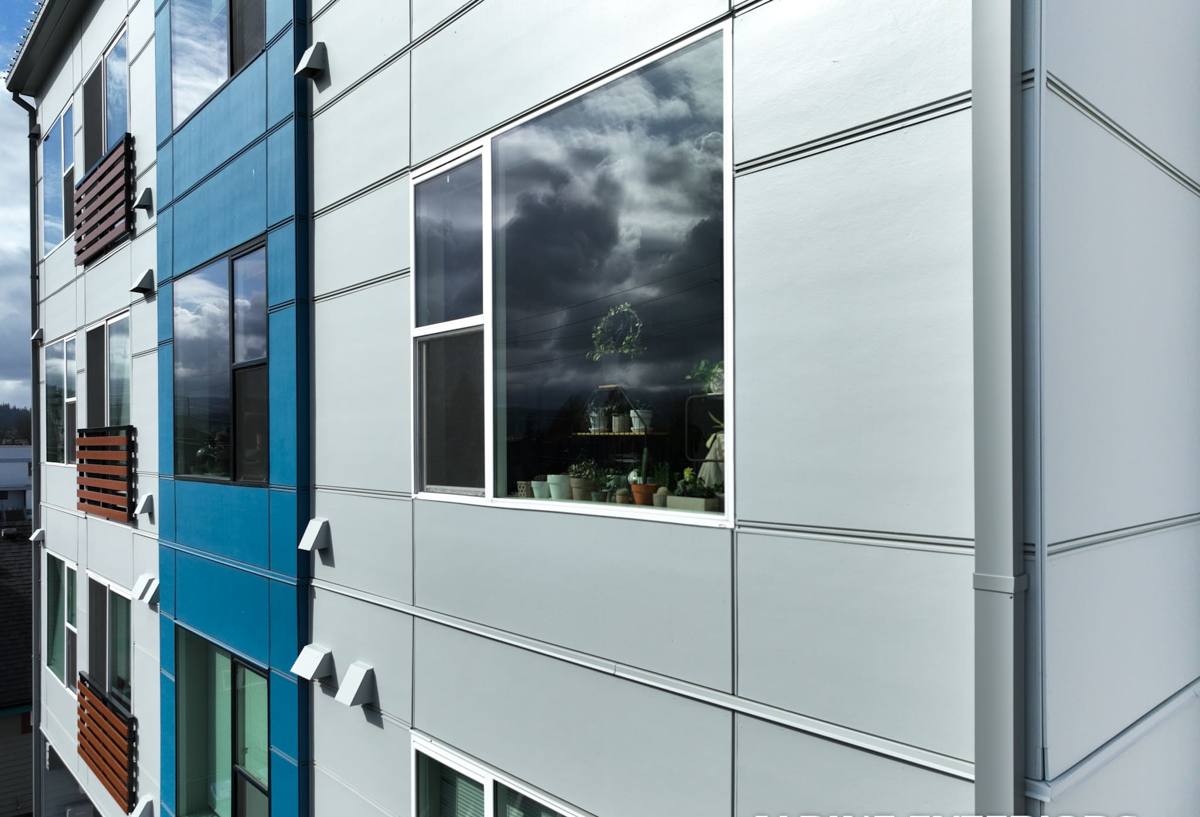
What Board & Batten Siding Actually Is
Board and batten is a vertical siding pattern made of wide flat boards or panels installed with narrower strips — battens — covering the seams between them. Historically it was a simple, functional way to close gaps in a wall with minimal material. Today it's used more for the look: strong shadow lines, a taller visual profile, and a style that pairs well with board-and-batten accents, gable ends, or full elevations on both traditional and contemporary homes.
The pattern itself is simple. What separates a durable board and batten wall from one that fails early is almost entirely in the materials and the assembly behind the visible boards — the part nobody sees until something goes wrong.
The James Hardie Board & Batten System We Install
We install James Hardie fiber cement exclusively, and board and batten is one of the applications where that decision matters most. Fiber cement doesn't absorb water the way wood-based products can, it won't swell or rot at the exposed batten edges, and it holds a factory-applied ColorPlus finish that's formulated to resist the fading and streaking that salt air and UV accelerate. On an island wall that takes direct weather off the water, that difference shows up in years of service life, not just in the first-impression look.
Panel + Batten vs. Individual Board Approaches
There are two common ways to build a board and batten wall with Hardie products: large HardiePanel vertical siding sheets with battens fastened over the seams, or individual HardieTrim boards installed as both the field boards and the battens. Panel systems cover more wall faster and have fewer seams overall; individual-board systems give more flexibility on spacing and reveal but require more precise layout and more fasteners. We choose between them based on the wall's exposure, the home's design, and how the wall transitions at corners, windows, and the foundation line — not on whichever is faster to install.
What Correct Installation Looks Like Here
Board and batten fails in coastal conditions almost exclusively at the details, not the field of the wall. This is where an installer's experience with wind-driven rain and salt exposure actually shows.
Rain Screen and Drainage
Every Hardie installation we do gets a drainage gap between the siding and the weather-resistant barrier, not boards fastened flat against the wall. On a wall that's regularly hit with driving rain, that gap is what lets bulk water drain and the wall assembly dry between storms instead of trapping moisture behind the siding. Skipping it is one of the most common shortcuts we see on failed installations, and it's invisible once the job is finished — which is exactly why it gets skipped by crews that aren't planning to stand behind the work long-term.
Fastening and Flashing at Every Penetration
Battens have to be fastened into solid framing at manufacturer-specified spacing, with fasteners set to the correct depth — overdriven fasteners crack the board's edge and give water a direct path in. Every window, door, hose bib, and light fixture needs proper flashing and sealant detailing, and the bottom course needs correct clearance off decks, patios, and grade so the siding isn't sitting in standing moisture. On an island lot where humidity stays elevated for long stretches, these details determine whether the wall dries out between rain events or stays damp long enough to grow moss and mildew.
Cost Factors for a Lummi Island Board & Batten Project
Every home and every wall exposure is different, so we don't quote sight-unseen. But these are the factors that most often move a board and batten estimate up or down:
| Factor | Why It Matters |
|---|---|
| Panel vs. individual board assembly | Individual boards take more layout time and fasteners; panels install faster but need precise seam planning |
| Existing siding removal | Tear-off, disposal, and any sheathing repair found underneath add labor beyond a straight re-side |
| Wall exposure to wind and rain | West- and water-facing walls often get upgraded flashing and drainage detailing |
| Trim and corner complexity | Gables, dormers, and multiple roof pitches add cutting, fitting, and material waste |
| Access and site logistics | Island scheduling, staging space, and material transport affect project timeline |
| Finish and color selection | Factory ColorPlus finishes vary slightly in cost by color line and sheen |
Mistakes We See From Off-Island or One-Off Crews
Board and batten is unforgiving of shortcuts because the battens hide the seams — a crew can skip flashing, skip the rain screen gap, or fasten into sheathing instead of framing, and none of it is visible at final walkthrough. It only shows up two or three winters later as staining, soft boards, or moss taking hold at the base. We've been called out to look at board and batten walls that were installed correctly on the surface but wrong underneath, usually by a crew doing a single job on the island and never coming back to see how it held up. Fixing that after the fact almost always costs more than doing it right the first time, because the siding has to come off to correct what's underneath it.
Our Process for Lummi Island Projects
Because Lummi Island is reached only by a short ferry crossing, we plan these jobs with that logistics reality built in from the estimate forward — materials staged and scheduled together, crew days planned to minimize back-and-forth trips, and a clear timeline given up front so a homeowner isn't guessing at progress. The installation itself follows the same standard on the island as it does anywhere else we work in Whatcom County: a site walk to assess wall exposure, a written scope covering the drainage assembly and flashing details (not just the visible boards), and a final walkthrough before we consider the job done.
Maintenance Through Salt Air and Moss Season
Fiber cement with a factory finish needs far less upkeep than wood-based board and batten, but "low maintenance" isn't "no maintenance," especially this close to the water. A simple seasonal routine keeps a Hardie board and batten wall performing the way it's designed to:
- Rinse the exterior once or twice a year with a garden hose to clear salt residue and organic buildup — skip pressure washers, which can force water behind boards and battens
- Check north-facing and shaded walls each fall for early moss or algae growth and clean it before it spreads
- Inspect caulking around windows, doors, and penetrations annually and re-seal any joints that have cracked or pulled away
- Keep gutters clear so overflow isn't running down the wall face during heavy rain
- Trim back vegetation and keep mulch beds from piling against the bottom course, which traps moisture at the most vulnerable part of the wall
Why a Crew That Already Works Lummi Island Matters
Board and batten installed to spec inland can still fail early on an island wall if the crew doesn't build in the extra margin that salt air and driving rain demand. A crew that already works this part of Whatcom County has already worked out the logistics of getting materials and equipment to the island efficiently, already knows which wall orientations need the most attention, and isn't learning coastal detailing for the first time on your home. That experience shows up in the parts of the job nobody can see once it's finished — which, with board and batten, is most of what actually determines how long it lasts.
If you're weighing board and batten for a home on Lummi Island or elsewhere around Birch Bay, we're glad to walk the property, look at wall exposure, and put together a straightforward, no-pressure estimate using the form below.