 Birch Bay Siding
 Siding Replacement Built for Lynden's Climate
Lynden sits in the heart of Whatcom County, where long wet winters, heavy driving rain, and months of low sun and high humidity put constant pressure on a home's exterior. Add in the salt-influenced marine air that moves through the broader Whatcom County region off the Salish Sea, and you have a climate that rewards good siding and punishes bad siding fast. Homes here don't fail because owners neglect them — they fail because the siding wasn't matched to what this area actually does to a wall system year after year.
Moss and algae growth is one of the clearest local tells. Where humidity sits high for months at a time and homes don't get much direct afternoon sun on north- and east-facing walls, organic growth takes hold on absorbent siding materials and never fully lets go. Combine that with driving, wind-blown rain that hits siding at an angle rather than falling straight down, and you get a material stress test that plays out differently here than it would in a drier inland climate.
Siding replacement in Lynden isn't just a cosmetic project. It's an opportunity to correct whatever let moisture in over the life of the old siding, and to put a material and installation system on the wall that's actually engineered for this kind of weather.
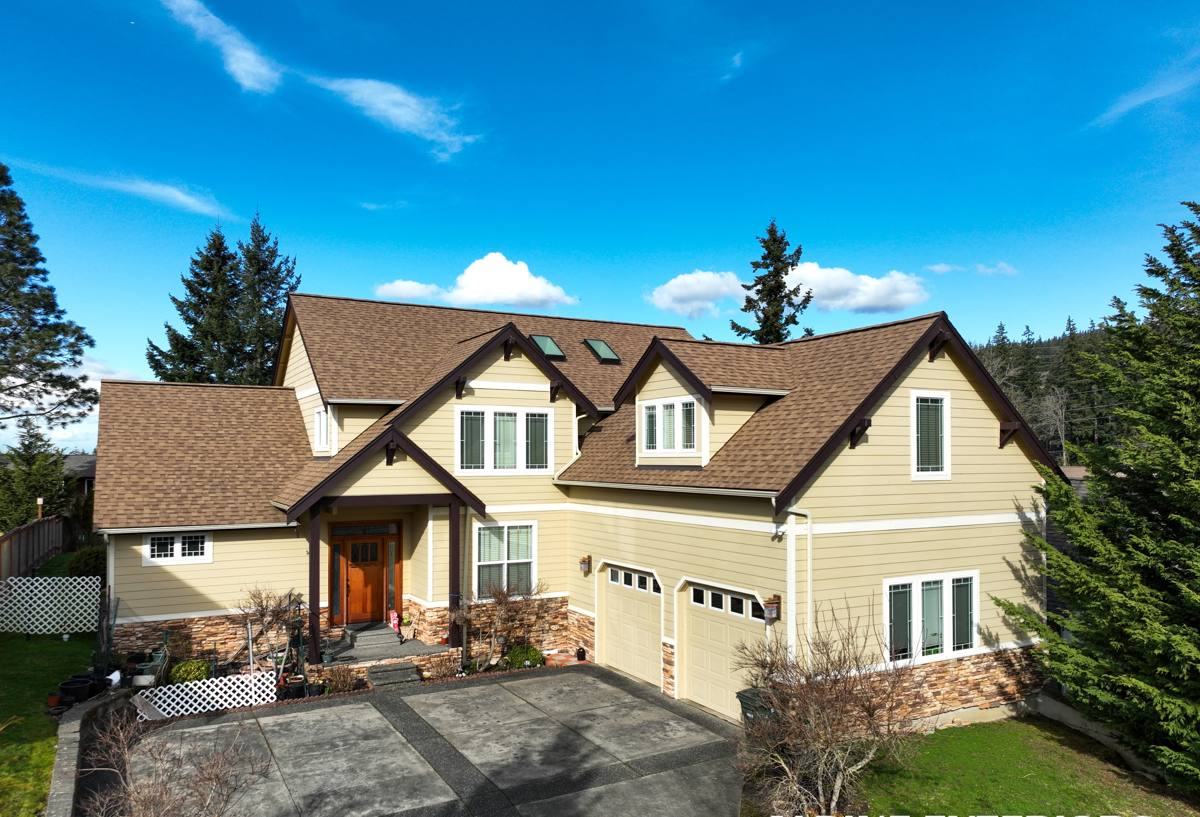
Signs a Lynden Home Needs Siding Replacement, Not Just Repair
Not every siding problem calls for a full tear-off. But in this climate, certain signs mean the damage almost always goes deeper than what's visible on the surface.
- Soft or spongy spots when you press on the siding, especially near the bottom courses and around window trim
- Persistent moss, algae, or dark streaking that comes back within weeks of cleaning
- Visible warping, cupping, or buckling panels, particularly on walls that face prevailing wind and rain
- Paint that's peeling or bubbling repeatedly in the same spots, even after repainting
- Gaps opening up at seams, corners, or trim where caulk has failed and won't hold a new bead
- A musty smell or visible staining on interior walls that share an exterior wall with problem siding
- Siding that's original to a home built more than 20-25 years ago with a wood-based or older composite product
Any one of these on its own might be repairable. Several together, especially combined with visible rot at the sheathing when a section is opened up, usually means the wall assembly has been taking on moisture for a while and a full replacement is the more honest fix.
What a Correct Siding Replacement Actually Involves
Tear-Off and Inspection
The old siding comes off in full, not patched around. That's the only way to see the sheathing underneath — which is where the real damage usually is. In Whatcom County's wet climate, we routinely find soft or delaminated sheathing behind siding that looked fine from the street. Any compromised sheathing gets identified and addressed before anything new goes up, because new siding over bad sheathing just hides the problem for another few years.
Moisture Barrier and Flashing
This is the step that matters most in a region with as much driving rain as this one, and it's also the step that gets skipped or shortcut most often on cheap jobs. A correct install uses a weather-resistant barrier installed shingle-style (upper layers overlapping lower ones) so water is always directed outward and down, never trapped behind the cladding. Flashing at windows, doors, roof lines, and any wall penetration has to be detailed correctly — this is where the majority of water intrusion problems actually originate, not in the siding material itself.
Installation to Manufacturer Spec
Proper fastener spacing, correct nail penetration depth, factory-specified gaps at butt joints and trim, and proper clearance from grade, roof lines, and decks all affect how the siding performs over the following decades. James Hardie publishes detailed installation specifications for exactly this reason — siding that looks the same from the curb can perform very differently depending on whether those specs were actually followed.
Why We Install Only James Hardie Fiber Cement
We get asked regularly why we don't offer vinyl, LP SmartSide, cedar, or other fiber cement brands. The honest answer is that after years of replacing siding in this climate, we standardized on one product because it holds up to what Whatcom County actually throws at a house.
| Material | How It Handles This Climate |
|---|---|
| Vinyl siding | Doesn't absorb moisture, but it expands and contracts with temperature swings, can crack or warp on cold nights, and offers no real fire resistance — a lower-cost option that's more prone to visible wear over time |
| LP SmartSide (engineered wood) | Improved resin-treated strand board, but it's still a wood-based product; any breach in the factory finish or caulking can let moisture in, and repeated wet-dry cycling is exactly the failure mode this region produces |
| Cedar / primed spruce | Attractive, traditional look, but requires ongoing sealing, staining, and vigilant caulk maintenance to resist rot and moss in a climate this consistently damp |
| James Hardie fiber cement | Non-combustible, dimensionally stable in wet-dry and hot-cold cycles, factory-applied ColorPlus finish resists fading and doesn't require repainting on the same schedule as wood-based products |
None of those other products are bad products in every application — they just each carry a maintenance burden or moisture vulnerability that we've decided isn't worth putting on a Lynden roofline, given what the climate here does to a wall over 15-20 years. James Hardie's HZ5 product line is engineered specifically for climates with freeze-thaw cycling and sustained moisture exposure, which describes Whatcom County well. Combined with a factory-baked ColorPlus finish and a strong transferable warranty, it's the system we're willing to put our name behind.
Our Process, Start to Finish
- Free on-site estimate — we walk the exterior, check problem areas, and give you a straight assessment of what's driving the need for replacement
- Sheathing and structural check — once old siding is off, we inspect what's underneath and flag anything that needs repair before new siding goes up
- Weather barrier and flashing installation — done to spec, not shortcut, since this is the layer doing the real water-management work
- James Hardie panel or lap siding installation — installed to manufacturer fastening and clearance specifications
- Trim, caulking, and final detail work — the finish details that determine how clean the job looks and how well it seals
- Final walkthrough — we go over the finished job with you before calling it complete
What Affects the Cost of a Siding Replacement in Lynden
| Factor | Why It Matters |
|---|---|
| Extent of sheathing damage | Rot discovered during tear-off has to be repaired before new siding can go on — this is the most common source of scope changes |
| Home size and wall complexity | More corners, dormers, and trim detail mean more labor and material cuts |
| Siding profile chosen | Lap siding, panel systems, and shingle-style Hardie products carry different material and labor costs |
| Story height and access | Two-story walls and difficult access points increase labor time and equipment needs |
| Trim and accessory scope | Full trim replacement alongside siding costs more than reusing sound existing trim |
We won't quote a number without seeing the house, because the sheathing condition alone can swing a project significantly once we're behind the old siding. What we can tell you upfront is that we price the job to be done right the first time — cutting corners on the weather barrier or flashing to hit a lower number just moves the cost to you a few years down the road.
Why a Crew That Already Works Lynden Matters
Siding installation isn't one-size-fits-all across regions. A crew that mainly works drier climates may not instinctively over-detail flashing and weather barrier work the way this area demands. Working regularly in Whatcom County means we already know which wall orientations take the worst of the driving rain, where moss tends to establish first, and how to sequence a tear-off so a home isn't left exposed if weather turns mid-project — which, in this region, it often does.
It also means we're not learning on your house. The installation details that matter most in this climate — barrier lap direction, flashing at every penetration, correct clearances at grade — are second nature on a crew that's done this work locally and repeatedly, not something being figured out for the first time.
Caring for Your New Siding
James Hardie siding is low-maintenance compared to wood-based alternatives, but "low-maintenance" doesn't mean "no maintenance," especially in a climate this wet.
- Rinse siding annually to keep moss and algae from establishing, particularly on shaded north- and east-facing walls
- Keep gutters clear so overflow doesn't run down the siding face repeatedly
- Trim back vegetation and landscaping so siding gets airflow and isn't held wet by leaves or shrubs
- Re-caulk joints and trim intersections if you notice any gaps opening up over time
- Address any impact damage promptly rather than letting a cracked panel sit exposed
If you're seeing warning signs on your Lynden home's siding, or you're just ready to stop maintaining a material that this climate keeps winning against, we'd be glad to take a look. Reach out for a free, no-pressure estimate using the form below.