 Birch Bay Siding
 Storm Damage Roof Repair in Lynden: Why This Climate Makes It a Different Job
Lynden sits inland in the Nooksack River valley in northern Whatcom County, and while it doesn't take the direct waterfront exposure that some of our other service areas do, it still gets hit hard by the same weather system that moves through this whole corner of Washington. Wind off the Strait pushes moist air up the valley, storms roll through with sideways rain instead of a straight downpour, and the mild, damp stretches between storms feed a moss season that runs most of the year on any roof plane that stays shaded. Storm damage here rarely looks like a single dramatic event. More often it's a windstorm that lifts a row of shingles nobody notices from the ground, followed by months of moss and moisture working into that opening before it finally shows up as a ceiling stain.
Birch Bay Siding Company works roofs, siding, windows, and decks across Whatcom County, and storm damage repair on a Lynden roof gets treated as its own kind of job — not a smaller version of a full replacement, and not a quick patch either. It calls for finding what a storm actually did, including the parts that aren't obvious yet, and repairing it in a way that holds up through the next one.
Wind-Driven Rain in the Nooksack Valley
Storms moving through this valley don't just drop rain, they drive it. Wind pushes water sideways into roof valleys, up under shingle tabs, and around any flashing that's even slightly lifted or under-lapped. A roof that looks intact from the driveway can still be taking on water at a chimney flashing or a roof-to-wall transition that a storm loosened weeks earlier. That's a different failure pattern than straight-down rain, and it's why storm damage assessment has to include those transition points, not just the shingle field.
A Long Moss Season That Hides Damage
Because this area rarely gets a long, hard dry stretch, moss and algae get a head start on any roof surface that a storm has opened up. A cracked shingle or a gap in flashing that would stay dry and obvious in a drier climate instead stays damp here, and moss moves into the opening within a season or two. That makes storm damage in Lynden easy to underestimate — by the time it's visible as a stain or a soft spot, the moisture has usually been working on the deck underneath for a while.
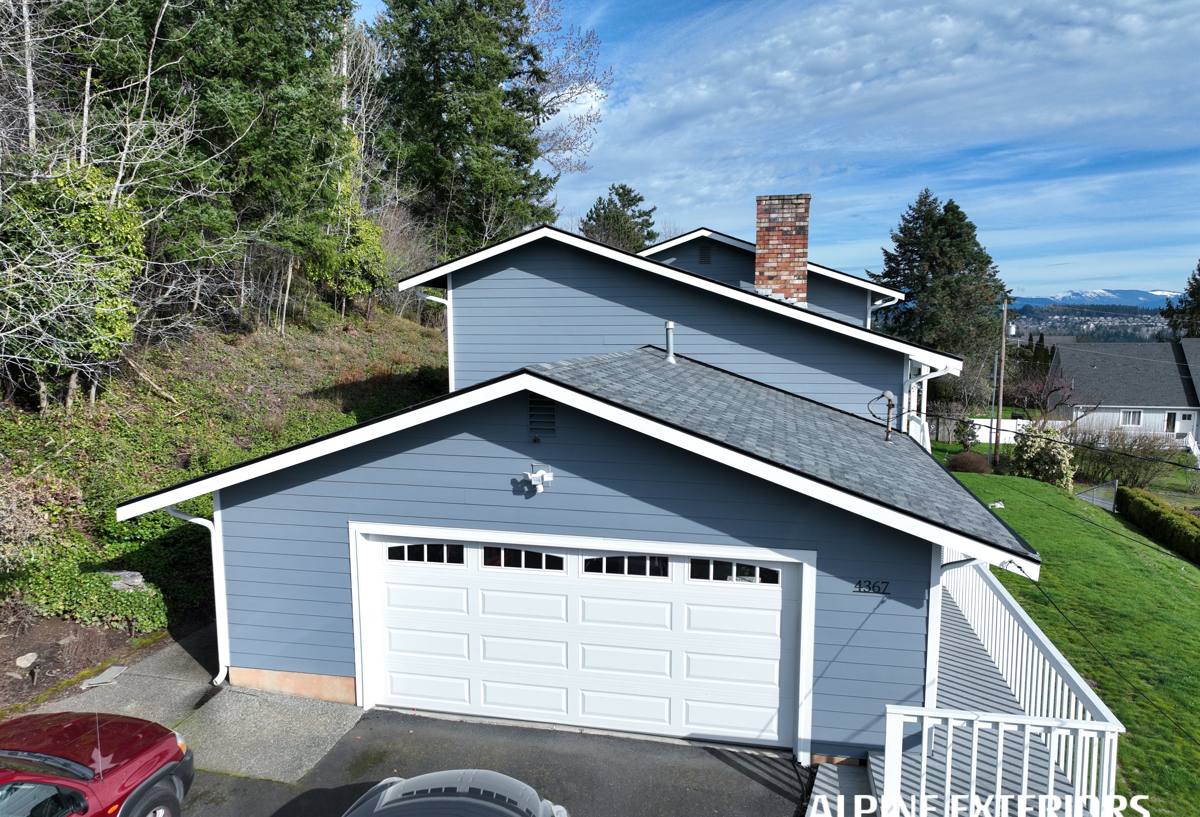
What Actually Counts as Storm Damage
Homeowners often picture storm damage as missing shingles scattered across the yard. That happens, but it's the easy case. A lot of the damage that actually costs money to fix long-term is quieter than that.
Damage You Can See
Missing, torn, or creased shingles, shingles blown into gutters or the yard, dented or torn metal flashing, damaged ridge caps, and debris punctures from fallen branches are all storm damage that's visible from the ground or a quick roof walk. This category is usually straightforward to diagnose and repair.
Damage That Hides Until It Leaks
Wind can lift shingle tabs just enough to break the seal without tearing the shingle off, which leaves the roof looking fine while water gets underneath every time it rains. Flashing can shift out of position at a valley or chimney without falling off. Fasteners can back out partway, leaving a small gap that widens with every freeze-thaw or wet-dry cycle. None of this shows up in a drive-by look, and all of it gets worse the longer it sits, especially in a climate where the roof rarely gets a long dry period to reveal a problem on its own.
What a Correct Storm Damage Repair Involves
Inspection Before Patching
The first step on any storm repair is a full inspection of the affected roof plane, not just the spot the homeowner pointed out. A storm that lifted shingles in one area usually stressed the fasteners and seal lines nearby too, and a repair that only addresses the obvious damage often leaves a second leak waiting to happen a few storms later.
Matching Materials and Blending Repairs
A repair should use shingles and flashing that match the existing roof as closely as possible, both for appearance and so the repaired section ages at the same rate as the rest of the roof. On older roofs where an exact match isn't available, we'll walk you through the realistic options rather than leaving a visibly mismatched patch.
Flashing and Underlayment, Not Just Shingles
Most storm-related leaks trace back to flashing or underlayment, not the shingles themselves. A correct repair replaces damaged underlayment underneath the affected shingles and re-laps or replaces flashing at valleys, chimneys, and vent penetrations rather than just sealing over what's there with roofing cement. Sealant over a bad flashing detail is a short-term cover-up, not a repair.
Repair Approach and Cost Factors
Storm damage repair costs vary more than a lot of homeowners expect, mostly because the visible damage doesn't always predict what's underneath it. These are the factors that actually move the number.
| Factor | What It Affects | Why It Matters in Lynden |
|---|---|---|
| Extent of hidden moisture damage | Whether deck sections need replacement, not just shingles | Long wet spells give moisture time to spread before it's found |
| Roof age and remaining material life | Whether a repair is cost-effective versus nearing replacement territory | Older roofs with moss history often have more underlying wear |
| Flashing complexity at the damage site | Labor time and detail work required to do it correctly | Valleys and roof-to-wall transitions take the brunt of wind-driven rain |
| Material availability and matching | Whether an exact shingle match is possible or a close match is needed | Discontinued or weathered products may require a broader color match |
| Number of separate damage locations | Whether this is one repair or several smaller ones across the roof | A single windstorm often damages more than one area of a roof plane |
We give you real numbers after the inspection, not a phone estimate. On a storm repair specifically, the gap between what looks like a $400 patch and what turns out to be a $2,500 repair is almost always hidden deck or flashing damage that wasn't visible until we opened it up.
Our Storm Damage Repair Process
- Inspection of the full affected roof plane, including flashing, valleys, and adjacent shingle courses, not just the reported damage spot
- Photo documentation of what we find, useful whether you're filing an insurance claim or just want a clear record of the work
- A written scope and cost estimate explaining exactly what needs to be repaired and why, before any work starts
- Removal of damaged shingles, underlayment, and flashing down to sound material
- Repair or replacement of flashing and underlayment at the affected area, matched to what a wind-driven rain climate actually needs
- Installation of matching shingles, properly sealed and fastened
- A final walk-through so you know what was done and what to watch for going forward
Insurance Claims and Storm Damage: What to Know
A lot of storm damage repair in this area does go through a homeowner's insurance policy, especially after a significant windstorm. We're not an insurance company and can't tell you what your specific policy covers, but we can give you a clear, documented inspection report and photos that support a claim, and we can explain what we're seeing in plain terms if your adjuster has questions. Be cautious of anyone who shows up unannounced after a storm offering a free inspection and pushing you to sign paperwork on the spot — a legitimate repair should start with a clear inspection and a written scope, not pressure to commit before you've had a chance to think it over.
Signs Your Lynden Roof Needs a Storm Damage Inspection
- Shingles visible in the yard, gutters, or on the ground after a windstorm
- A shingle that looks slightly lifted or out of line with the rest of the course
- New water staining on an interior ceiling or wall, especially near an exterior wall or chimney
- Granules collecting in gutters or downspouts beyond normal wear
- Flashing that looks bent, lifted, or separated from the roof surface
- Moss appearing quickly in one localized area rather than spread evenly across a shaded slope
- Any storm with sustained high wind, even if no damage is obvious from the ground
If you notice any of these after a storm, it's worth having it looked at before the next round of rain finds its way into the same spot.
Why a Crew That Already Works Lynden Matters
Storm damage repair rewards familiarity with how a specific area's weather actually behaves, not just general roofing knowledge. A crew that's repaired roofs across the Nooksack valley through multiple storm seasons knows which roof orientations tend to catch the worst of the wind, how far moisture typically travels from a damaged flashing detail before it's found, and which repairs from other contractors tend to fail early because they skipped the flashing and just resealed the surface. That local pattern recognition is what separates a repair that holds for the life of the roof from one that needs a second visit after the next storm.
Beyond the Roof
Storms that damage a roof often stress the rest of the exterior at the same time — wind can loosen siding panels, trim, and gutters, and wind-driven rain can find its way behind siding at the same wall-to-roof transitions where roof flashing fails. We handle siding, windows, and decks as well as roofing, so if a storm inspection turns up damage beyond the roof itself, we can address it as part of the same conversation instead of sending you to a second contractor.
Get a Free, No-Pressure Estimate
If a recent storm has left your Lynden roof with visible damage, or you just want a professional look after a rough windstorm, we're glad to come take a look and give you an honest, documented assessment of what it needs. Use the form below to schedule a free estimate — no pressure, no sales script.