 Birch Bay Siding
 Building Decks for the Marietta Area's Coastal Climate
Homes in and around Marietta sit close enough to the water that salt air is a daily fact of life, not an occasional nuisance. Add in the long stretch of wet months that Whatcom County sees every fall through spring, plus the shaded, damp conditions that let moss take hold on almost any outdoor surface, and you've got a climate that is genuinely hard on outdoor structures. A deck built the way it would be built in a dry inland climate simply does not hold up the same way out here. Fasteners corrode faster, wood decking stays wet longer between rain events, and moss and algae get a foothold on any surface that doesn't drain and dry properly.
We build decks for this specific climate, not a generic one. That means paying close attention to material selection, drainage, fastener grade, and the small construction details that determine whether a deck is still solid and safe in fifteen years or starting to show rot and soft spots in five.
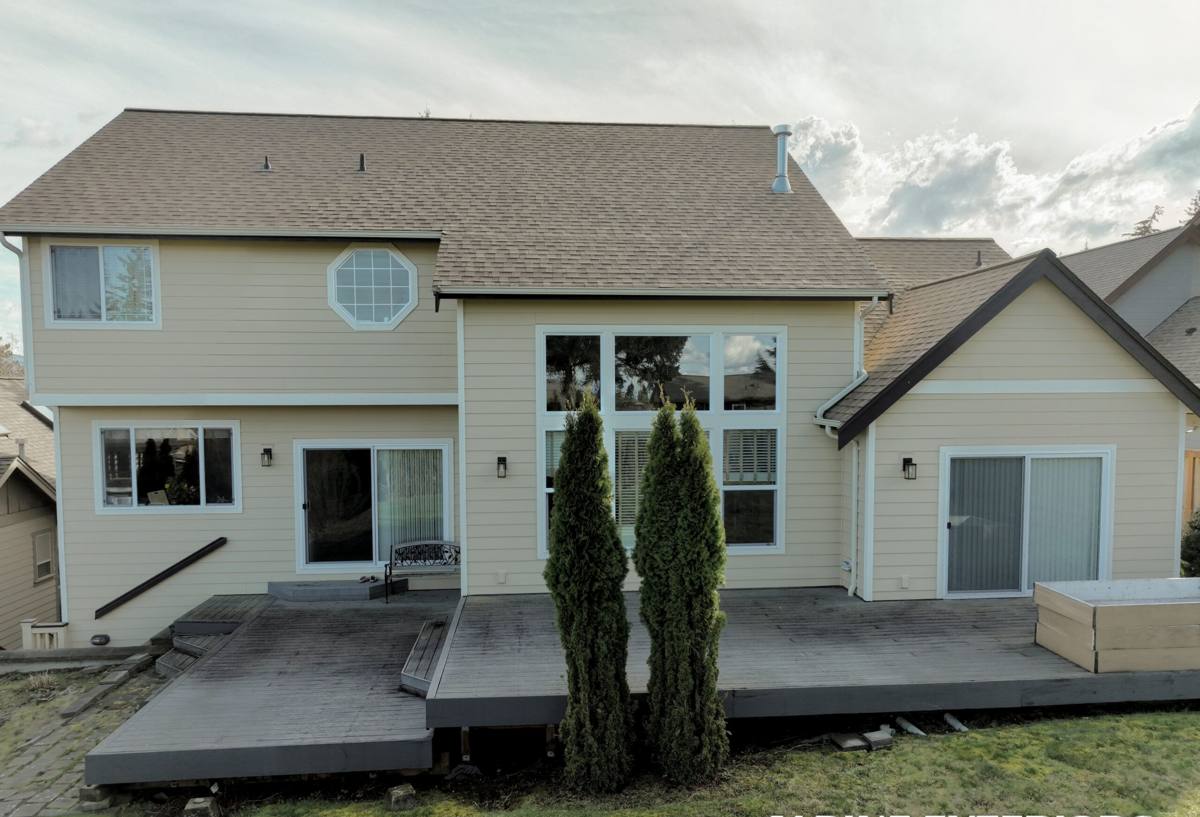
What a Deck Built for This Climate Actually Needs
Framing and Fasteners
The structural frame underneath the decking is where most premature failures start, and it's the part homeowners see least. In a salt-air, high-moisture environment, standard fasteners corrode from the inside out — you won't see it until a board is loose or a ledger connection has weakened. We use fasteners and structural hardware rated for coastal and treated-lumber exposure, not the cheapest option that happens to fit. The framing lumber itself needs the correct pressure-treatment rating for ground contact or above-ground use depending on where it sits, and every cut end needs to be sealed, because a factory-treated board with an unsealed cut is an open door for moisture.
Decking Material Choice
What you put on top of that frame matters just as much. Some materials shed water and resist moss growth better than others; some need regular upkeep to stay that way. We'll walk through the honest trade-offs of each option for your specific site — how much sun or shade it gets, how close it is to salt spray, and how much maintenance you actually want to do — rather than pushing one product because it's what we happen to have on the truck.
Drainage and Ledger Details
A deck that traps water against the house is a moisture problem waiting to happen, and it's one of the most common issues we find when we're called out to look at an older deck. Proper flashing where the deck ledger meets the house, a slight slope across the decking surface so water runs off instead of pooling, and gaps between boards sized correctly for airflow all matter more here than in a dry climate. These aren't upgrades — they're the baseline for a deck that's supposed to last in a place that gets this much rain.
Comparing Decking Materials for a Marietta Property
There's no single "best" decking material for every home — it depends on budget, how much maintenance you want to take on, and how exposed the deck is to salt air and shade. Here's how the common options compare for a coastal Whatcom County property:
| Material | Moss/Moisture Resistance | Maintenance | Typical Lifespan Here |
|---|---|---|---|
| Pressure-treated wood | Fair — needs sealing/staining to perform well | Annual cleaning and periodic re-sealing | 10-15 years with upkeep |
| Cedar | Good natural resistance, but still absorbs moisture | Regular cleaning and oiling to prevent graying and moss | 15-20 years with upkeep |
| Composite decking | Strong — resists rot and moisture absorption | Periodic washing to prevent surface moss/algae film | 20-25+ years, varies by product warranty |
| PVC/capped decking | Very strong — non-porous surface sheds water | Low — occasional rinsing | 25+ years, varies by product warranty |
Composite and PVC products cost more up front but ask less of you over time, which matters in a climate where an unmaintained wood deck can start showing moss and soft spots within a couple of wet seasons. Wood and cedar can absolutely work well here too — they just need a homeowner who's willing to stay on top of cleaning and sealing on a regular schedule. We'll give you a straight read on which fits your situation rather than steering you toward whatever has the highest margin.
Common Problems We Find on Older Decks in This Area
When we're called out to assess an existing deck near Birch Bay or Marietta, the issues tend to repeat themselves:
- Moss and algae buildup on decking boards that never fully dry between rain events, creating a slick and eventually structurally weakening surface
- Corroded fasteners and hardware, especially where the original build used standard-grade rather than coastal-rated connectors
- Soft or rotted framing at the ledger board where flashing was missing or installed incorrectly
- Cupped or warped decking boards from years of moisture cycling without adequate airflow underneath
- Railings and posts with hidden rot at the base, where water collects and doesn't drain away
None of these are unusual or a sign of a bad homeowner — they're what this climate does to a deck that wasn't built with driving rain and salt air specifically in mind. The good news is that most of them are preventable with the right materials and details at the time of construction.
Our Deck Building Process
Every deck we build follows the same disciplined process, adjusted for your site's specific exposure and how you plan to use the space:
- On-site assessment. We look at sun exposure, drainage patterns, proximity to salt spray, and how the deck will tie into the house before recommending anything.
- Material and design conversation. We go through decking, railing, and hardware options honestly, including what each choice will cost you in maintenance over the years, not just at purchase.
- Permitting. We handle the paperwork with Whatcom County so the deck is built to current code, including height, guardrail, and footing requirements.
- Framing and structural work. This is where we build in the drainage, flashing, and fastener details that determine long-term durability — the part that won't be visible once the decking goes down.
- Decking, railing, and finish work. Final surfaces are installed with correct spacing and slope, and all cut ends are sealed.
- Walkthrough. We go over the finished deck with you, including a realistic maintenance schedule for the materials you chose.
Permits and Code Considerations in Whatcom County
Most new decks and many significant deck rebuilds in unincorporated Whatcom County require a permit, particularly once the deck is elevated above a certain height or attached to the house structurally. Requirements cover things like guardrail height, baluster spacing, footing depth (which matters for frost and soil conditions here), and ledger attachment methods. Skipping the permit process might save time up front, but it can create real problems later — at resale, with insurance, or if the work needs to be inspected for any reason. We pull the necessary permits and build to code as a standard part of the job, not an add-on.
Maintenance Checklist for a Coastal Deck
Whatever material you choose, a little regular maintenance goes a long way in this climate. A basic seasonal routine looks like:
- Sweep debris off the deck regularly, especially in fall when leaves and needles trap moisture against the surface
- Clean moss and algae film off decking and stairs before it builds up and becomes slick or begins to hold moisture against the boards
- Inspect fasteners, railings, and post bases annually for corrosion or softness
- Check that gaps between boards are clear so water can drain and air can circulate underneath
- Re-seal or re-stain wood and cedar decking on the schedule the product calls for — don't wait until it's visibly gray or absorbing water
- Confirm gutters and downspouts near the deck are directing water away rather than onto or under it
A deck built correctly for this climate will still need this kind of upkeep — no material is maintenance-free when it's sitting under this much rain and salt air. The difference a good build makes is that the maintenance stays manageable instead of becoming a losing battle against moisture that was never properly managed in the first place.
Why Hiring a Crew That Already Works in This Area Matters
Deck building isn't exotic work, but building one that holds up specifically here — through a Whatcom County winter, with salt air off the water and a moss season that can stretch for months — takes knowing what actually fails in this climate and building against it from the start. A crew that works decks in dry, inland conditions may not think twice about fastener grade or ledger flashing details that matter enormously here. We work on homes throughout the Birch Bay and Marietta area regularly, so the climate-specific decisions — material choice, drainage, hardware — aren't an afterthought. They're built into how we plan the job from the first conversation.
If you're planning a new deck, replacing an aging one, or just want an honest read on whether your current deck has issues worth addressing, we're happy to take a look. Reach out for a free, no-pressure estimate using the form below.