 Birch Bay Siding
 Why Decks in Marietta Wear Out Faster Than the Warranty Card Suggests
Marietta sits close enough to the water that every deck built here is fighting a slower, quieter version of the same battle: moisture that never fully leaves. Whatcom County's marine climate means fog and dew settle into wood grain overnight even on days it never rains, and when the rain does come, it tends to arrive sideways and stay for days at a time. Add in the salt air drifting off the Salish Sea and you get a combination that ages fasteners, ledger boards, and footings faster than the same deck would age fifty miles inland.
None of that means a deck in Marietta can't last. It means the deck has to be built for the actual conditions here, not for the generic conditions printed on a lumber tag. That's the difference between a deck that needs full replacement at year twelve and one that's still solid at year twenty-five.
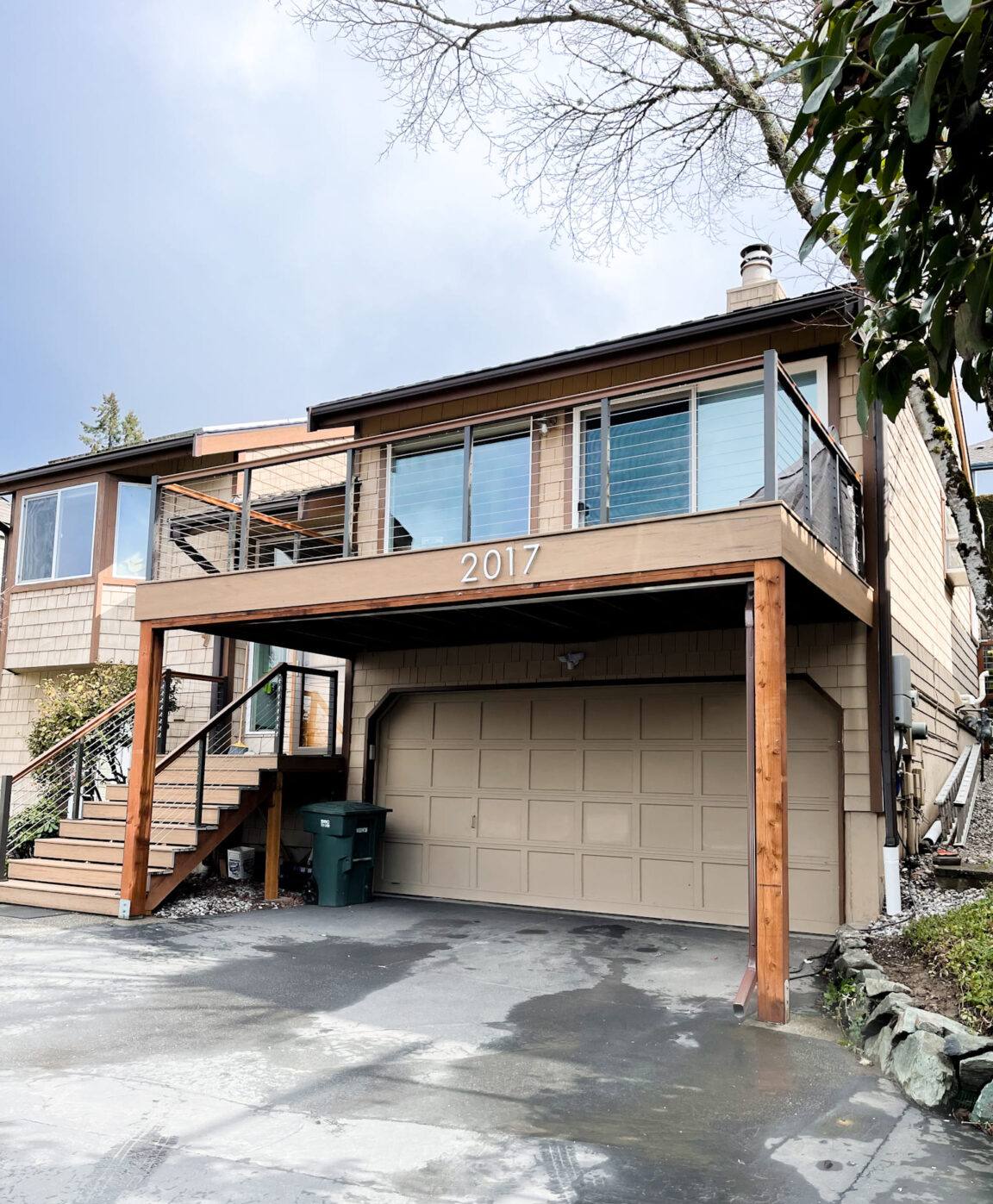
Repair or Replace? The Signs Worth Taking Seriously
Most decks don't fail all at once. They fail in the parts nobody looks at until something gives — the ledger connection to the house, the posts sitting in standing water, the joists under a spot where snow or leaves pile up every winter. A few patched boards can hide a structural problem for years, which is exactly why "it still looks fine" isn't the same as "it's still safe."
Warning signs that point to full replacement
- Soft or spongy spots when you walk across the deck, especially near the house
- Visible gaps, rust streaks, or dark staining around the ledger board where the deck attaches to the structure
- Posts or footings that feel loose, or a deck that sways noticeably under weight
- Persistent green or black growth on the underside of boards that comes back within weeks of cleaning
- Fasteners that are rusted, backed out, or snap when you try to remove them
- Framing lumber that's gray, punky, or crumbles when probed with a screwdriver
If you're only seeing one or two of these, a repair may still make sense. Once the ledger connection or the main framing is compromised, patching individual boards is just delaying a bigger job — and in the meantime, the deck is carrying weight it may not be rated for anymore.
What a Correct Deck Replacement Actually Involves
A deck replacement done right is a structural project, not a cosmetic one. The decking boards are the part everyone sees, but the parts that determine whether the deck survives another twenty years of Whatcom County weather are underneath.
Footings and framing
Footings need to sit below frost depth and bear on undisturbed, well-drained soil — a real concern in areas where clay-heavy ground holds water after a long fall and winter of rain. Undersized or shallow footings are one of the most common reasons decks develop movement over time. Framing lumber should be rated for ground contact where it's close to grade, and joist spacing needs to match the actual decking material going down, not whatever was standard when the original deck was built.
The ledger board and flashing
This is the single most important connection on the entire deck, and it's the one most likely to be done wrong on older builds. The ledger has to be properly flashed so water sheds away from the house rather than tracking behind the board and into the rim joist. In a climate that gets sustained, driving rain, a poorly flashed ledger is often the actual root cause when a deck looks fine on top but is soft and rotten where it meets the house.
Fasteners and hardware
Salt-laden air corrodes standard hardware faster than most homeowners expect. Structural connectors, joist hangers, and fasteners near the coast should be rated for corrosion resistance — not because it's a nice upgrade, but because standard hardware in this environment can start rusting within a few seasons, long before the wood or composite around it shows any wear.
Choosing a Decking Material for This Climate
There's no single "best" decking material — there's the material that fits your budget, your maintenance tolerance, and how much moss and rain you're willing to fight every year. Here's how the common options actually compare in a Marietta / Birch Bay setting.
| Material | Moss & moisture behavior | Maintenance | Typical lifespan | Relative cost |
|---|---|---|---|---|
| Pressure-treated wood | Absorbs moisture, needs sealing to resist rot and moss growth | Annual cleaning and re-sealing recommended | 10–15 years | Lowest upfront |
| Cedar | Naturally rot-resistant but still needs sealing near the coast | Periodic cleaning, re-staining every few years | 15–20 years | Moderate |
| Capped composite | Doesn't absorb water like wood; moss can still grow on the surface film in shaded, damp spots | Occasional washing, no staining or sealing | 25–30 years | Higher upfront |
| PVC decking | Fully synthetic, sheds water, most resistant to moss staining | Lowest — occasional washing | 25–30+ years | Highest upfront |
We install all of these depending on what the homeowner wants, but we're upfront about the trade-offs. Wood costs less to install and can look great, but in a climate with this much sustained moisture, it asks for a maintenance commitment — sealing, cleaning, spot-treating moss — that not every owner wants to keep up with. Composite and PVC cost more up front and take that maintenance burden off your plate, but they're less forgiving of poor substrate work underneath, since you won't see a moisture problem developing the way you would with bare wood. That's part of why the framing and flashing work matters just as much as the boards on top, regardless of which material you choose.
Our Deck Replacement Process
- On-site assessment. We check the ledger connection, footings, framing condition, and drainage before quoting anything — not just the visible boards.
- Written scope and estimate. You get a clear breakdown of what's being replaced, what materials are being used, and why, before any work starts.
- Permitting. We handle the Whatcom County permit application where one is required, so you're not left tracking that down yourself.
- Demolition and disposal. The old deck comes out, including any hidden rot in the framing that wasn't visible from the top.
- Structural rebuild. Footings, framing, ledger flashing, and hardware are brought up to current code, not just replaced like-for-like if the original build had a weak point.
- Decking installation. Boards, railing, and stairs go in per the manufacturer's fastening specs, which matters for both warranty coverage and how the deck performs over time.
- Final walkthrough. We go over the finished deck with you, including what maintenance (if any) the material you chose actually needs.
Permits and Code Requirements
Most deck replacements in Whatcom County require a permit, particularly when footings, framing, or the ledger connection are being rebuilt rather than just the surface boards. Guardrail height, baluster spacing, and stair rise/run all have to meet current code, which sometimes differs from what was allowed when an older deck was originally built. This is one of the more common surprises for homeowners doing a straight board-for-board replacement — code has often changed since the original deck went in, and a legitimate replacement needs to meet today's requirements, not the ones from twenty years ago. We pull the permit and handle inspections as part of the job so this isn't something you have to manage.
Keeping a New Deck Ahead of the Moss and Salt Air
A properly built deck in Marietta can go a long time between major maintenance, but "low maintenance" isn't the same as "no maintenance." A little attention a couple of times a year keeps small issues from becoming structural ones.
- Sweep debris off the deck surface regularly, especially under trees or in shaded corners where moss takes hold first
- Clean the surface at least once a year to stop moss and algae before they get established
- Check that gaps between boards stay clear so water can drain instead of pooling
- Inspect the ledger flashing and the area where the deck meets the house once a year
- Look underneath the deck occasionally for staining, rust on hardware, or soft framing
- Reseal wood decking on the schedule the product actually calls for — skipping a year is often where rot starts
Why a Crew That Already Works Marietta Matters
Building a deck that holds up in this climate isn't about a special trick — it's about not skipping steps that don't show up until years later. A crew that regularly works in Marietta and the surrounding Birch Bay area already knows how the local soil drains, how much moisture a ledger connection needs to shed on this stretch of coast, and which hardware actually holds up against the salt air instead of just looking fine on installation day. That's the kind of judgment that's hard to get from a crew that only passes through the area once or twice a year.
It also means straightforward accountability. If something needs a warranty follow-up or a maintenance question comes up two years down the road, you're calling a crew that's still working in your neighborhood, not tracking down someone from out of the area.
If your deck is showing any of the signs above, or you just want an honest read on whether it needs a repair or a full replacement, we're glad to come take a look. Estimates are free, there's no pressure, and you'll get a straight answer about what your deck actually needs — use the form below to get started.