 Birch Bay Siding
 Windows Built for Marietta's Coastal Conditions
Marietta sits close enough to the water that homes here deal with a different set of stresses than houses further inland in Whatcom County. Salt-laden air moves through window frames and hardware year-round, wind-driven rain finds its way into any gap in the flashing, and the long gray stretch of fall and winter keeps moisture sitting against glass and sills longer than most window products were designed to handle. When we talk about "energy-efficient windows" for a Marietta home, we're not just talking about a U-factor rating on a sticker. We're talking about a window and installation system that can shed water, resist corrosion, and hold its seal through decades of Pacific Northwest weather while also cutting your heating bill.
A lot of window sales pitches focus entirely on glass performance and skip the installation details that actually determine whether a window performs well in a marine climate like Birch Bay's. Both matter. We'll walk through what we look at on a Marietta job and why it's different from a standard replacement job in a drier part of the state.
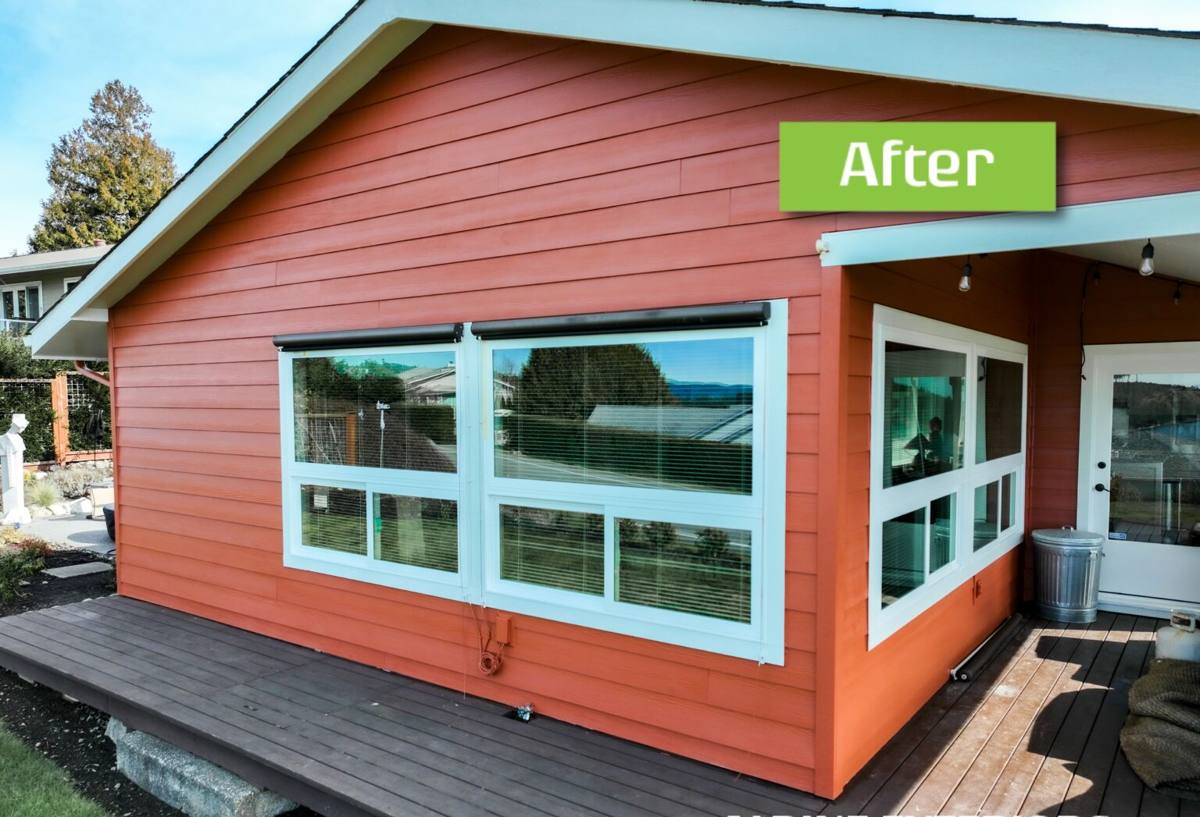
What Local Homes Actually Need From a Window Upgrade
Moisture and Air Sealing Come First
Before we talk about glass packages, the water management around the window has to be right. In Marietta, wind-driven rain doesn't just fall straight down — it gets pushed sideways against the wall, and a window that isn't flashed and sealed correctly will let water track behind the siding over time. That leads to rot in the framing long before anyone notices a problem on the interior side. Correct flashing integration with the wall's weather-resistive barrier is the single biggest factor in whether a window installation holds up here, more than the brand of window itself.
Corrosion-Resistant Hardware
Salt air accelerates corrosion on cheap hinges, locks, and balance systems. We look for hardware finishes and materials rated for coastal or marine exposure, not just standard residential-grade components. This is a detail that's easy to overlook when comparing window quotes, since it rarely shows up as a line item, but it's the difference between hardware that operates smoothly in year ten and hardware that's seized or corroded by year five.
Condensation and Moss-Season Humidity
Whatcom County's long moss season means extended stretches of high humidity and low sun exposure on north- and shade-facing walls. Older single-pane or early dual-pane windows tend to fog and sweat heavily during this stretch, which drives mold and mildew growth on sills and trim. A properly rated, well-sealed window reduces interior condensation significantly because the interior glass surface stays closer to room temperature instead of dropping to the outdoor temperature.
Glass and Frame Options for a Marietta Home
We don't push one window brand as the only right answer — the right choice depends on your home's exposure, your budget, and how long you plan to stay in the house. Here's how the common frame materials compare for a coastal Whatcom County property:
| Frame Material | Coastal/Salt Air Performance | Maintenance | Typical Fit |
|---|---|---|---|
| Vinyl | Good — won't corrode or rust, but can expand/contract with temperature swings | Low — no painting, occasional cleaning | Best value for most Marietta homes |
| Fiberglass | Very good — dimensionally stable, holds up well to moisture cycling | Low to moderate | Good for larger openings or higher-exposure walls |
| Aluminum-clad wood | Fair — attractive interior wood look, but cladding seams need monitoring near salt air | Moderate — exterior clad protects wood, interior wood needs periodic attention | Homeowners prioritizing interior wood aesthetics |
| Bare wood | Weak in this climate — prone to swelling, rot, and paint failure without diligent upkeep | High | Generally not recommended for direct coastal exposure |
For most Marietta homes, we steer clients toward vinyl or fiberglass frames specifically because of the salt air and rain exposure — not because other materials are bad products in general, but because they demand a level of upkeep that doesn't fit most homeowners' schedules on a coastal lot.
Glass Packages Worth Considering
- Dual-pane, low-E, argon-filled: The baseline for real energy performance in this climate — noticeably better than older dual-pane glass without the coatings and gas fill.
- Triple-pane: Worth discussing for north-facing rooms, bedrooms over unheated spaces, or homes right along the water where wind exposure is highest. Better sound dampening too, which matters near busier roads or open water.
- Warm-edge spacers: Reduces condensation right at the edge of the glass, which is usually the first place fogging and moisture staining shows up.
- Impact or laminated glass: Not required by code here, but some homeowners in wind-exposed spots choose it for added durability against storm debris.
How We Approach a Window Job in Marietta
1. On-Site Assessment
We start by looking at each window opening individually rather than quoting off a generic average. Sun exposure, wind exposure, existing rot or moisture damage, and the condition of the surrounding siding all factor into the plan. A window on a sheltered wall doesn't need the same spec as one facing open wind off the water.
2. Removal and Opening Inspection
Once the old window comes out, we check the framing and sheathing behind it for hidden water damage. This is common on older Marietta homes where flashing details weren't built for the volume of driving rain this area gets. Any soft or rotted framing gets addressed before a new window goes in — installing a new window over damaged framing just hides the problem for a few more years.
3. Flashing and Weather Barrier Integration
We integrate new flashing with the existing weather-resistive barrier using a shingled, lapped approach so water is always directed outward and down, never trapped behind the siding. This step matters more in Birch Bay's climate than almost anywhere else in the state.
4. Installation and Air Sealing
The window is set plumb, level, and square, shimmed correctly to avoid stress on the frame, and sealed with appropriate sealants and low-expansion foam where called for. Poor air sealing here is one of the most common reasons a "new" window still feels drafty.
5. Interior and Exterior Finish
Trim, caulking, and touch-up work are finished to match the surrounding siding and interior casing so the new window looks like it belongs, not like a patch job.
Signs a Marietta Home Needs Window Replacement
- Visible fog or moisture trapped between panes — a sign the seal has failed
- Persistent condensation on the interior glass or sill during moss season, even with normal ventilation
- Drafts you can feel near the frame on windy days
- Soft or discolored wood trim around the window, indicating water intrusion
- Windows that are difficult to open, close, or lock — often a sign of corroded or swollen hardware
- Noticeably higher heating bills compared to similar-sized homes nearby
- Paint or caulk failing repeatedly around the frame despite regular upkeep
Why Hiring a Crew That Already Works in Marietta Matters
Window installation quality depends heavily on understanding the specific building conditions of an area, not just general best practices. A crew that regularly works in Marietta and the broader Birch Bay area already knows which wall orientations take the worst weather, what kind of flashing details hold up against this specific rain pattern, and how salt air affects material choices over time. That local pattern recognition catches problems — like marginal framing rot or under-spec'd hardware — that a crew unfamiliar with the area might miss on a first pass.
It also means faster, more accurate quotes. Because we're not guessing at how Whatcom County's coastal conditions affect a project, we can tell you upfront what's likely involved once we open up your existing window openings, rather than surprising you with change orders mid-project.
Cost Factors to Expect
Every home is different, but a few factors consistently move the price on a Marietta window project:
| Factor | How It Affects Cost |
|---|---|
| Number and size of window openings | Larger and more numerous openings increase material and labor cost directly |
| Frame material chosen | Vinyl is generally the most budget-friendly; fiberglass and clad-wood run higher |
| Glass package (dual vs. triple-pane) | Triple-pane and upgraded coatings add cost but improve performance on exposed walls |
| Hidden framing repair | Rot or water damage found during removal adds labor and material not visible in an initial estimate |
| Wall exposure and access | Second-story or hard-to-access openings on wind-exposed walls can add labor time |
We'll always flag anything that changes the scope — like discovering rotted sheathing — before we proceed, so there are no surprises on the final invoice.
Maintaining Your New Windows
Even a well-installed, high-quality window benefits from a little seasonal attention in this climate:
- Rinse salt residue and debris from frames and tracks a couple of times a year, especially on wind-exposed walls
- Check and clear weep holes so water can drain properly rather than pooling in the frame
- Inspect exterior caulking annually and touch up any cracked or separated sections before moss season sets in
- Lubricate hardware periodically to keep locks and balances operating smoothly despite salt air exposure
- Watch for early condensation or fogging between panes, which signals a seal issue worth addressing before it worsens
Let's Look at Your Windows
If your Marietta home has drafty windows, fogged glass, or trim that's starting to show water damage, it's worth having someone look at the actual openings rather than guessing from a phone call. We offer free, no-pressure estimates for Marietta and the rest of the Birch Bay area — we'll walk the exterior with you, point out what we see, and give you a straightforward read on what your home actually needs. Use the form below to get started.