 Birch Bay Siding
 James Hardie Siding for Marietta Homes
Marietta sits close enough to Birch Bay to share the same demanding coastal exposure that shapes exterior work across this stretch of Whatcom County. Homes here deal with salt-laden marine air drifting in off the water, driving rain that arrives sideways as often as it falls straight down, and a moss season that can stretch across most of the year on shaded and north-facing walls. That combination wears through ordinary siding faster than people expect, and it's exactly the kind of climate James Hardie fiber cement was engineered to handle.
We install James Hardie siding exclusively for homes in Marietta and the surrounding Birch Bay area. This page focuses on what that means specifically here: what the local climate does to a home's exterior, what a correct Hardie installation actually involves, and why hiring a crew that already works this area on a regular basis matters more than it might seem.
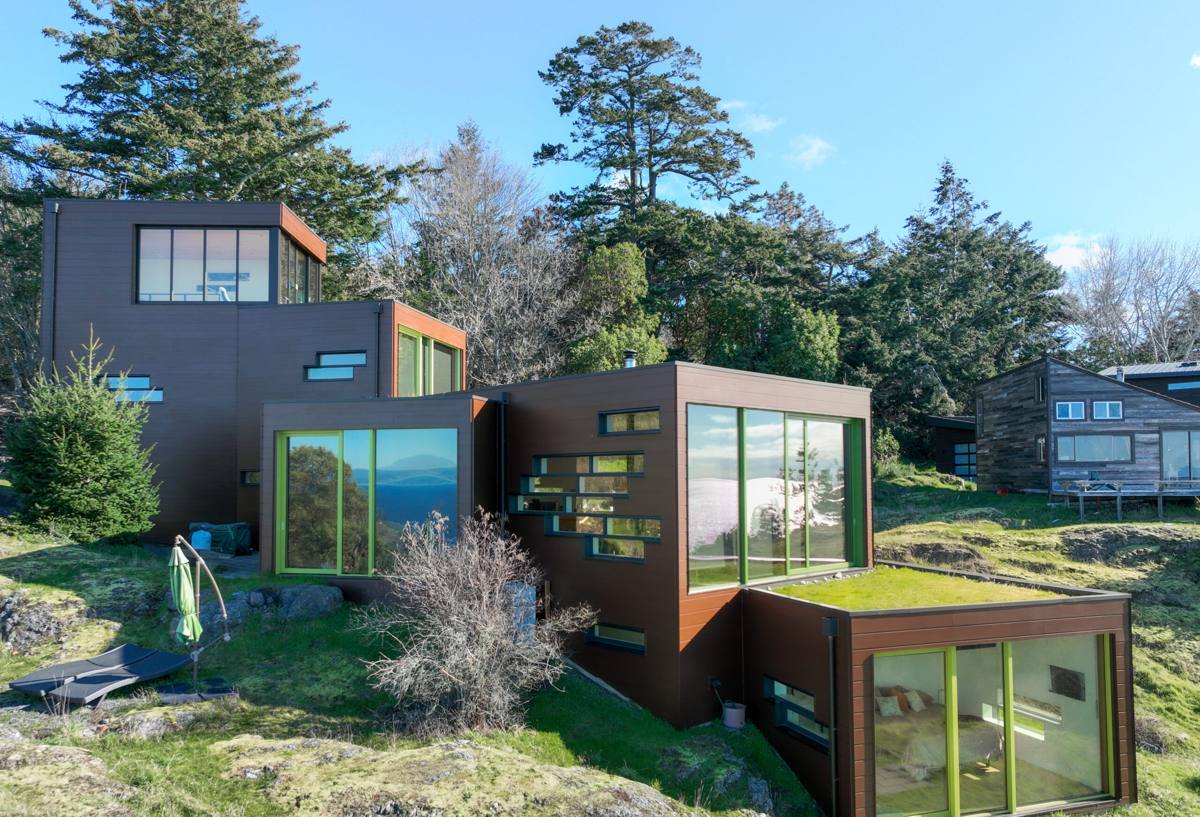
What Salt Air, Rain, and Moss Do to Marietta Siding
Salt Air and Corrosion
Proximity to the water means Marietta homes take on more salt exposure than properties further inland. Salt speeds up corrosion in fasteners, flashing, and any exposed metal trim, and it can break down a lower-quality paint finish well before its expected service life is up. Every fastener and piece of hardware on the exterior needs to be selected with that corrosion risk in mind, not just chosen for cost or convenience.
Driving Rain and Wind-Driven Moisture
Coastal exposure also brings more wind, and wind-driven rain behaves differently than a straightforward rainfall total suggests — it gets pushed sideways into siding seams, window flashing, and roof-to-wall transitions. Siding that isn't detailed and lapped correctly for sideways-moving water will eventually let moisture in at those points, even if it looks fine from the street. This is one of the main reasons installation quality matters as much as the material itself in a place like Marietta.
A Long Moss and Mildew Season
Mild temperatures, persistent dampness, and shaded wall area combine to give this part of Whatcom County a moss and mildew season that runs far longer than in drier regions of the state. Any siding material that's even slightly porous becomes a growth surface over time, holding moisture directly against the wall behind it. On most Marietta homes, north-facing walls and anything shaded by trees or a neighboring structure need more attention than sun-exposed sides.
Why We Install James Hardie Siding Exclusively Here
We used to offer a broader range of siding products before we narrowed to one system. That change came from what we consistently saw on tear-offs and service calls in this exact kind of marine climate — not from a supplier deal or a sales script. For a Marietta property dealing with salt air, sustained rain, and a long moss season, the case for fiber cement holds up better than the alternatives.
- Non-combustible core: Fiber cement doesn't feed a fire the way wood-based siding products can, which matters for safety and can matter for insurance underwriting.
- Factory-applied ColorPlus finish: Color is baked on under controlled factory conditions rather than brushed on in the field, so it resists fading, chalking, and moisture intrusion far longer than site-applied paint.
- Climate-engineered HZ product lines: Hardie's HZ5 formulation is built for regions with sustained moisture exposure and freeze-thaw cycling, a solid match for coastal Whatcom County.
- Dimensional stability: Fiber cement doesn't swell, cup, or warp the way engineered wood siding can after repeated wet-season moisture cycles.
- Strong transferable warranty: Hardie backs its products with one of the more robust warranty structures in the industry, provided the installation follows spec.
We don't install LP SmartSide, vinyl siding, Cemplank, Allura, primed spruce, or cedar. Each has a legitimate place in the broader market, and homeowners elsewhere are satisfied with them. But we made a professional decision to stand fully behind one system rather than offer a cheaper option that quietly shifts long-term maintenance risk onto the homeowner — especially on a property exposed to this much salt air and moisture.
Choosing the Right Hardie Product Line for a Marietta Home
| Product Line | Best Use | Why It Fits This Area |
|---|---|---|
| HardiePlank lap siding | Most single-family homes | Traditional lap profile sheds wind-driven rain well when overlapped and flashed correctly |
| HardiePanel vertical siding | Accent walls, gables, modern designs | Clean lines that pair well with contemporary or farmhouse-style homes in the area |
| HardieShingle siding | Craftsman-style homes, accent sections | Textured, shingle-style look without the moisture absorption of real wood shingle |
| HardieTrim boards | Corners, window and door casing, fascia | Factory-finished trim resists the same salt and moisture exposure as the field siding |
Profile and color choices come down to the individual home and the homeowner's preference, but the underlying approach stays consistent — we spec the product line to fit what a Marietta property's actual exposure calls for, not whatever is easiest to install.
What Correct Installation Involves
Material choice only gets a Marietta home halfway there. The rest comes down to installation detail: correct fastener type and spacing for coastal exposure, proper clearance from grade so siding isn't wicking moisture up from wet ground, joints that are lapped and sealed rather than simply butted together, and a weather-resistive barrier and flashing system that does the real work instead of relying on caulk to cover gaps. A Hardie product installed loosely will still develop moisture problems in this climate — the material only performs as well as the installation behind it.
Repair vs. Full Replacement
Not every siding issue on a Marietta home calls for a full re-side. Wind-damaged sections, an isolated trim failure near a window, or an impact-damaged board can often be repaired and matched into existing Hardie siding. But if moisture has been tracking behind the wall for a while, or a home still has an older, non-Hardie product reaching the end of its service life, patching it usually just delays a bigger job while hidden rot keeps spreading underneath. We'll tell you plainly which situation you're actually looking at.
Siding Readiness Checklist
- Walls checked for soft spots, staining, or visible gaps at seams and corners
- Trim and flashing around windows and doors inspected for cracking or separation
- North-facing and shaded walls checked for moss, mildew, or persistent dark staining
- Grade clearance confirmed so siding isn't sitting too close to wet ground
- Fasteners and metal trim checked for early signs of salt-driven corrosion
- Interior walls near exterior siding checked for staining after wind-driven storms
Comparing Siding Materials in a Marietta Climate
| Material | Moisture Behavior | Maintenance in Salt Air | Typical Longevity Here |
|---|---|---|---|
| James Hardie fiber cement | Dimensionally stable, resists swelling | Low; factory finish resists fading and chalking | 30+ years with correct install |
| Vinyl siding | Can warp or distort with heat and settle over time | Low upfront, but seams and fasteners are exposure points | Variable; shorter in wind-exposed coastal spots |
| LP SmartSide / engineered wood | Wood-based core is moisture-sensitive at cut edges and joints | Moderate; edge sealing and caulk maintenance matter | Depends heavily on installation and upkeep |
| Cedar / primed wood | Absorbs and releases moisture readily | High; regular refinishing needed in wet, salty air | Shorter without consistent maintenance |
Our Process
We start with an on-site assessment of the existing siding, looking specifically at how it's held up against salt exposure and moisture over time — not just how it looks from the curb. From there we put together a clear, written scope and timeline before any work begins. During the job, fastening, flashing, and drainage details that matter most in this climate are handled as standard practice, not offered as optional upgrades.
What to Expect When You Call Us
- A walk-through of the home's siding, trim, and any related roof or window connections
- An honest read on whether you're looking at a repair, a partial replacement, or a full re-side
- A clear explanation of why we recommend James Hardie for a property with this kind of exposure
- A written estimate with no pressure to sign on the spot
Why a Local Crew Matters in Marietta
A contractor who already works this stretch of Whatcom County coastline understands how salt air, wind exposure, and prolonged dampness behave on real homes here — not just how a product performs on a spec sheet. That experience shows up in the small decisions that determine whether siding lasts one wet season or several decades: which wall orientations stay damp longest, where extra flashing attention actually pays off, and which fastener grade is worth the added cost near the water. A crew that treats a Marietta property the same as a dry, sheltered inland lot is going to miss details that matter here.
If you're weighing options for new siding on a Marietta home near Birch Bay, we're glad to walk the exterior with you and give an honest read on what it needs. Reach out below for a free, no-pressure estimate.