 Birch Bay Siding
 Why Marietta Homes Go Through Siding Faster Than You'd Expect
Marietta sits close enough to the water that homes here take a different kind of beating than houses further inland in Whatcom County. Salt-laden air off the bay works its way into seams, fasteners, and any exposed wood trim, accelerating corrosion and breaking down finishes years before their time. Add in the driving rain that comes sideways off Puget Sound during fall and winter storms, and siding here has to shed water horizontally, not just vertically, which is a harder job than most products were designed for.
Then there's the moss season, which around here isn't really a season at all — it's most of the year. Shaded north walls, tree-lined lots, and the persistent damp mean algae and moss get a foothold on any siding material that holds moisture at the surface. Once that green film sets in, it traps even more water against the wall, and the cycle feeds itself. This is the environment any siding replacement in Marietta has to be engineered for, not just installed in.
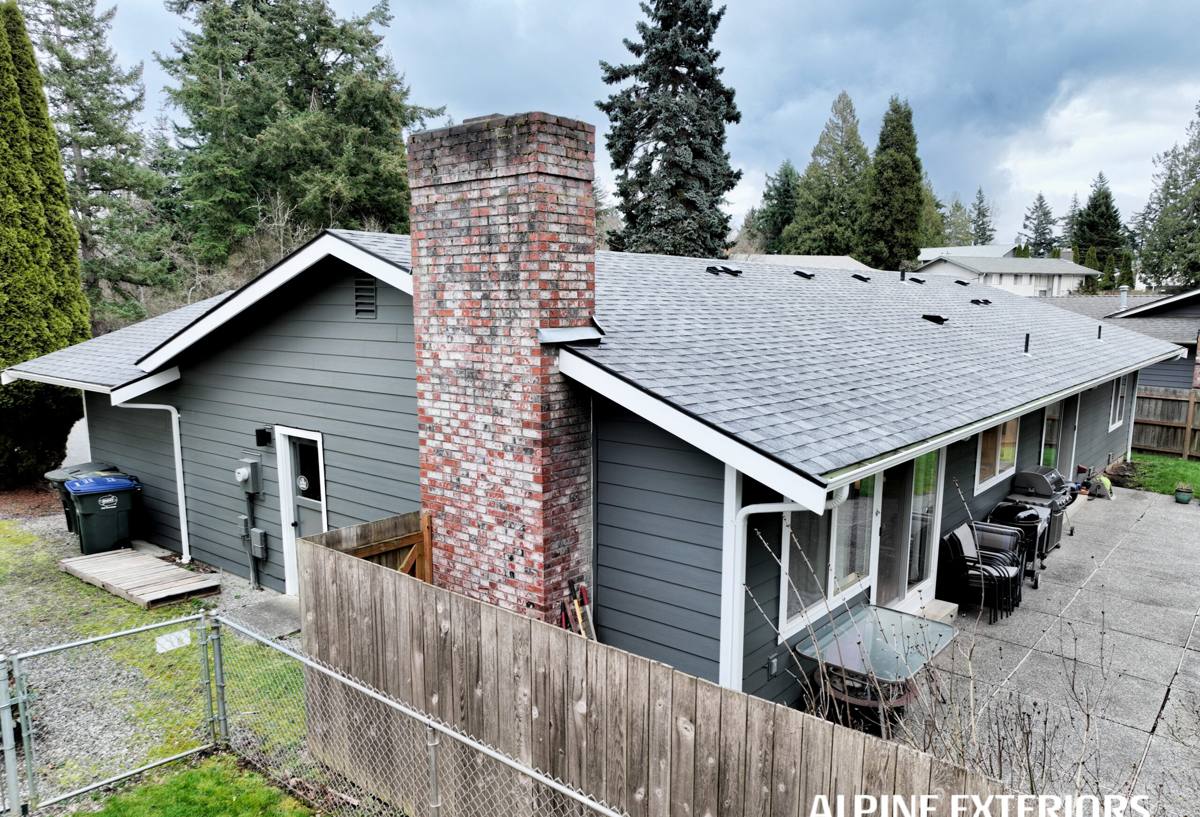
What a Correct Siding Replacement Actually Involves
A siding replacement is not the same job as re-siding over what's already on the wall. Done right, it's a full reset of everything between your framing and the outside world, and the parts nobody sees matter more than the parts everyone does.
Removing the Old Siding Without Cutting Corners
Full tear-off means stripping the old siding down to the sheathing so the crew can actually see what's underneath. In a wet, salty environment like Marietta, that inspection step is where problems get caught early — soft sheathing, rusted fasteners, rot around window and door openings, or old flashing that was never installed correctly in the first place. Skipping this step and covering over hidden damage is how homeowners end up paying for the same repair twice.
The Water-Management Layer Most Homeowners Never See
Underneath the siding itself is a weather-resistive barrier and a system of flashing at every window, door, and penetration that directs water down and out instead of letting it collect behind the wall. In a climate with this much driving rain, that drainage plane is doing as much work as the siding on top of it. A rain screen gap — a small air space between the siding and the wall — is also worth discussing on Marietta homes with heavy shade or tree cover, since it lets the wall dry out between storms instead of staying damp.
Why We Only Install James Hardie Fiber Cement
We made a deliberate decision as a company to install James Hardie fiber cement siding exclusively. We don't install vinyl, LP SmartSide, Cemplank, Allura, or raw wood siding like primed spruce or cedar, and that's not a marketing position — it's a maintenance and durability call based on what actually holds up in a marine, moss-heavy climate over the long term.
Built for This Exact Climate
James Hardie's HZ5 product line is engineered specifically for the wetter, more humid climate zones the Pacific Northwest sits in, which includes the Birch Bay and Marietta area. Fiber cement doesn't absorb water the way wood-based products can, so it doesn't swell, warp, or rot from prolonged moisture contact the way an engineered wood or raw wood product can if a seal fails. It's also non-combustible, which matters more each year as wildfire smoke and dry summer stretches become a bigger part of the regional picture. The factory-applied ColorPlus finish is baked on and warrantied against fading and cracking, which means less repainting over the life of the siding — a real advantage in a climate where exterior paint takes a beating from both sun and salt.
We're not going to tell you vinyl or engineered wood siding is garbage — plenty of it is installed correctly and performs fine for years. But vinyl can warp in direct sun and gets brittle in cold snaps, and any wood-based siding is only as good as the paint film and caulking sealing it, which is ongoing maintenance homeowners have to stay on top of forever. In a climate that's actively working against painted seams and exposed wood grain nearly year-round, we'd rather put a product on your home that doesn't depend on that maintenance cycle to perform.
Our Process, Start to Finish
Every siding replacement we run in the Marietta area follows the same sequence, because skipping steps is exactly how callbacks happen.
- Walk the exterior with you and inspect the current siding, trim, and any visible problem areas before we quote anything.
- Full tear-off to the sheathing, with an honest look at what's underneath before we cover it back up.
- Repair or replace any damaged sheathing, framing, or trim we find — this gets discussed with you before we proceed, not after.
- Install a new weather-resistive barrier and correctly flashed openings at every window, door, and penetration.
- Install James Hardie fiber cement panels or planks to spec, with manufacturer-approved fasteners and clearances.
- Final walk-through so you can see the finished work and ask questions before we call the job done.
Cost Factors for Marietta Siding Replacement Projects
Every home is different, so we won't quote a number here that doesn't mean anything without seeing your house. What we can do is lay out the variables that actually move the price, so you know what you're evaluating when you get an estimate.
| Factor | Why It Matters Here |
|---|---|
| Extent of hidden damage | Older homes near the water often have more sheathing or framing repair needed once the old siding comes off |
| Home size and wall complexity | Dormers, multiple stories, and cut-up wall lines take more labor and material than a simple rectangular footprint |
| Trim and accessory work | Fascia, soffits, and trim boards are often replaced alongside siding since they take similar weather exposure |
| Siding profile chosen | Lap siding, shingle-style panels, and board-and-batten all price differently in materials and install time |
| Access and site conditions | Tree cover, tight lot lines, and shaded, damp crawlspaces common in this area can add setup and drying time |
Signs a Marietta Home Needs Siding Replacement Now
Some damage is obvious. Some of it hides until you know what to look for. Walk your exterior and check for these:
- Soft or spongy spots when you press on the siding, especially near the bottom courses
- Persistent moss or algae growth that comes back within weeks of cleaning
- Paint that's peeling, bubbling, or wearing thin faster than it used to
- Visible gaps, warping, or buckling in siding panels or boards
- Rusted or popped fasteners, especially on walls facing the water
- Rising energy bills that don't match any other change in the home
- Musty smell or visible staining on interior walls that back up to exterior siding
Any one of these on its own might not mean a full replacement. Several together, especially on a home that's had the same siding for a couple of decades, usually does.
Why Hiring a Crew That Already Works Marietta Matters
Siding installation isn't uniform everywhere in the country, and it shouldn't be. A crew that installs mostly in dry, inland climates makes different assumptions about flashing details, rain screen gaps, and fastener spacing than a crew that works this specific stretch of Whatcom County coastline every week. We know which walls in this area take the worst of the wind-driven rain, which lots stay shaded and damp long enough to grow moss on almost anything, and how to detail a James Hardie installation so it's actually built for those conditions rather than a generic spec sheet.
That local familiarity also shows up in smaller, practical ways — knowing which permit and inspection steps apply in this part of the county, sequencing work around the weather patterns that actually hit Marietta, and having a realistic sense of timelines instead of a schedule built for a different climate entirely.
What to Expect After Installation
James Hardie siding installed to spec is genuinely low-maintenance, but low-maintenance isn't the same as no-maintenance. An occasional gentle rinse to keep salt residue and organic growth from building up will go a long way in this environment. Keep an eye on caulking at trim joints and penetrations over the years, since caulking is the one component that isn't part of the Hardie warranty and does eventually need attention. Beyond that, the ColorPlus finish and fiber cement construction are built to hold up against the salt air, rain, and moss pressure that define this climate, backed by a manufacturer warranty that transfers if you sell the home.
If your Marietta home's siding is showing its age, or you just want an honest read on whether repair or full replacement makes more sense, we're happy to take a look. Reach out for a free, no-pressure estimate using the form below.