 Birch Bay Siding
 Storm Damage in Marietta: What This Coastline Puts Roofs Through
Marietta sits close enough to Birch Bay and the Whatcom County shoreline that its roofs take a different kind of beating than homes further inland. Wind off the water arrives with force and with salt, Pacific storm systems bring driving rain that hits shingles sideways instead of straight down, and the shade from mature evergreens combined with near-constant coastal moisture keeps moss growing for most of the year. None of these things individually would wreck a roof overnight. Together, over years, they wear down the small details — fasteners, flashing seams, granule coverage — that a roof depends on to shed water correctly.
Storm damage repair out here isn't just about patching whatever the last windstorm knocked loose. It's about recognizing that a roof in this part of Whatcom County is already working harder than a roof in a drier, calmer climate, and repairing it in a way that accounts for that — not just cosmetically, but structurally.
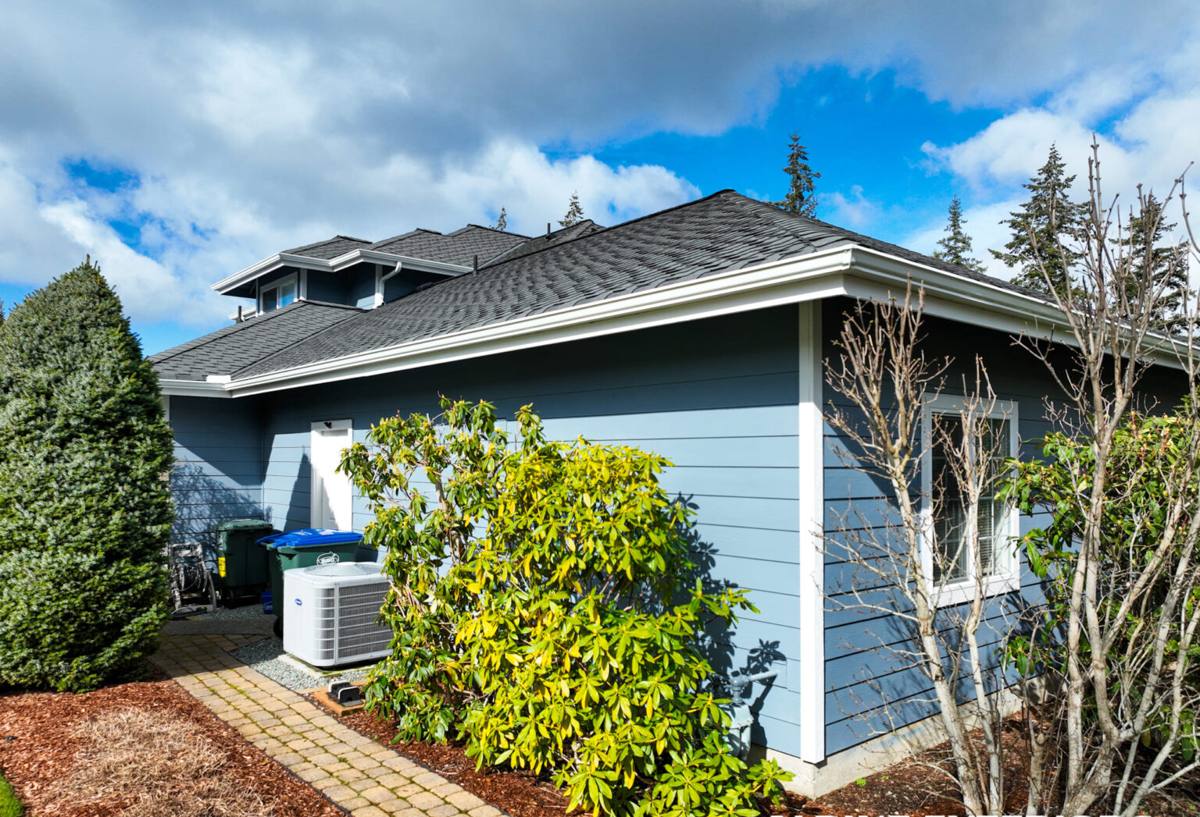
Signs a Marietta Roof Has Storm Damage
Some storm damage is obvious. A lot of it isn't, especially under moss or in valleys where debris collects. After any significant wind event, it's worth checking for the following:
- Shingles that are lifted, curled, cracked, or missing entirely, especially on the side of the roof that faces prevailing wind and water
- Granules collecting in gutters or at the base of downspouts, which signals accelerated wear on the shingle surface
- Bent, loose, or separated flashing around chimneys, vents, and roof-to-wall transitions
- Soft or spongy spots when the roof is walked, which can mean the decking underneath has taken on moisture
- Water stains or discoloration on ceilings or in the attic, even faint ones
- Thick moss mats that hide cracked or displaced shingles underneath rather than causing damage themselves
- Exposed or backed-out nail heads, which are common failure points after repeated wind-flex
Any one of these on its own might just need monitoring. Several together, or any sign of active water intrusion, means it's time for a proper inspection rather than a wait-and-see approach.
What a Correct Storm Damage Repair Actually Involves
A Full Inspection Before Any Repair Starts
A storm damage repair that's done right starts with looking at the whole roof, not just the spot the homeowner noticed. Wind damage is rarely limited to one shingle — it tends to loosen a run of fasteners or lift an edge that will keep failing if it's ignored. We check the field of the roof, all penetrations, valleys, and the roofline edges before writing up a scope of work.
Checking the Decking, Not Just the Surface
If water has been getting under the shingles for any length of time, the plywood or OSB decking underneath can soften or delaminate. Replacing shingles over compromised decking just hides a problem that will resurface, often as a sag or a soft spot. Any repair scope should include opening up the affected area enough to confirm the decking is sound before new material goes down.
Flashing First, Shingles Second
Most leaks that get blamed on shingles actually originate at flashing — around chimneys, skylights, vent pipes, and where a roof plane meets a wall. In a marine climate, flashing corrodes faster than people expect, and a storm can bend or separate a seam that was already weakened by salt exposure. We treat flashing repair as its own line item, not an afterthought to shingle work.
Matching Materials, Not Just Colors
A patch repair should match the existing roof in more than appearance. Shingle profile, exposure, and weight all affect how well a patch ties into the surrounding roof and sheds water at the seams. A repair that looks fine from the ground but doesn't match the existing course pattern can create a new place for wind-driven rain to work its way underneath.
Our Process, Step by Step
- Inspection and assessment. We walk the roof, check the attic if accessible, and document what we find with photos.
- Written scope and estimate. A clear breakdown of what needs repair, what materials will be used, and what it costs — no vague line items.
- Temporary protection, if needed. If there's active leaking or a hole in the roof, we get it covered and protected before scheduling the full repair.
- The repair itself. Decking replaced where needed, flashing corrected, shingles matched and properly fastened and sealed.
- Cleanup and haul-away. Old material, nails, and debris removed from the property, including a magnetic sweep of the ground.
- Final walkthrough. We go over what was done and answer questions before calling the job complete.
Repair vs. Replace: How We Weigh It
Not every storm-damaged roof needs to come off. But sometimes a repair is a short-term fix on a roof that's already near the end of its service life, and it's worth knowing which situation you're in before spending money.
| Factor | Points Toward Repair | Points Toward Full Replacement |
|---|---|---|
| Roof age | Under 15 years, or well-maintained architectural shingles | Approaching or past manufacturer's expected lifespan |
| Extent of damage | Isolated to one slope, valley, or penetration | Spread across multiple slopes or the whole roof |
| Decking condition | Solid, no soft spots found on inspection | Widespread soft spots or delamination |
| Prior repair history | First significant repair on this roof | Several patch repairs already done in different areas |
| Moss and moisture history | Managed with regular cleaning | Long-term moss buildup with underlying wear |
We'll tell you honestly which side of that table your roof falls on. A repair that's just delaying an inevitable replacement isn't a good use of your money, and we'd rather say so upfront.
Materials That Make Sense for This Climate
Not every roofing product performs the same way in a coastal, moss-prone environment, and material choice matters as much on a repair as it does on a full replacement.
- Wind and impact-rated shingles hold up better against the gusts that come through off the water, reducing the odds of another wind-lift repair a year or two later.
- Self-adhering underlayment at eaves and valleys gives an extra layer of protection in the exact spots where wind-driven rain and moss-related moisture cause the most trouble.
- Corrosion-resistant flashing matters more here than in a drier inland climate, since standard flashing can start showing wear from salt exposure well before it would elsewhere.
- Proper attic ventilation helps a roof dry out between storms and slows the conditions that let moss take hold in the first place.
We don't push a specific brand for the sake of it — we use products with a track record that fits how hard this coastline is on a roof, and we're upfront about the trade-offs of any material we recommend.
Insurance Claims and Documentation
Storm damage repairs are one of the few times an insurance claim is often on the table. If a claim is involved, documentation matters — clear photos of the damage, a written scope tied to what the storm actually caused (as opposed to older wear), and straightforward communication with an adjuster if one is assigned. We provide the documentation homeowners need to support a claim honestly, and we won't inflate a scope to pad a claim — that kind of thing tends to cause problems for the homeowner down the line, not just us.
Why a Crew That Already Works Marietta Matters
A roofing crew that regularly works the Birch Bay and Marietta area knows what this specific stretch of Whatcom County coastline does to a roof over time — which slopes tend to take the worst of the wind, how long moss season really runs here, and what flashing and fastener wear looks like after a few winters of salt air. That's different from general roofing knowledge, and it shows up in the details of a repair: where we look first during inspection, which materials we default to, and how we sequence a job around this area's weather windows.
It also matters for response time. After a significant windstorm, a lot of homes in the same area need attention at once, and a crew already working locally can get to an active leak faster than one coming from further away.
After the Repair: Keeping It From Happening Again
A good storm repair should reduce how often you need another one. A few habits help:
- Clean moss off the roof surface on a regular schedule rather than letting it build up for years between treatments
- Keep gutters clear so water isn't backing up under the shingle edge during heavy rain
- Trim back tree limbs that overhang the roof, both for direct impact risk and to reduce the shade that keeps moss growing
- Have the roof looked at after any unusually strong windstorm, even if nothing looks obviously wrong from the ground
None of this is complicated, but it's the kind of maintenance that gets skipped until a storm forces the issue. Staying ahead of it is cheaper than catching up after a leak has already reached the decking.
If a recent storm has left your Marietta-area roof with missing shingles, damaged flashing, or a leak you're not sure about, we're happy to come take a look. The estimate is free, there's no pressure to move forward, and you'll get an honest read on whether you're looking at a repair or something bigger — the form below will get you started.