 Birch Bay Siding
 Why Blaine's Location Changes What a Roof Needs to Do
Blaine sits right where Whatcom County meets the water, and that location shapes everything about how a roof ages here. Homes close to Semiahmoo Bay and Drayton Harbor take on salt-laden air almost year-round, which is a different kind of wear than roofs see even a few miles inland. Add in the long stretches of driving rain that come off the water and the shaded, damp conditions that let moss take hold on north-facing slopes, and you have a climate that's genuinely harder on a roof than most manufacturers' warranty language assumes. A roofing system that performs fine in a drier, sunnier region can start showing problems here in half the time.
Metal roofing, installed correctly, holds up well against all three of those pressures. But "installed correctly" is doing a lot of work in that sentence — the material only performs as well as the details underneath it, and in a marine climate like Blaine's, those details matter more than the panel color or profile most homeowners focus on first.
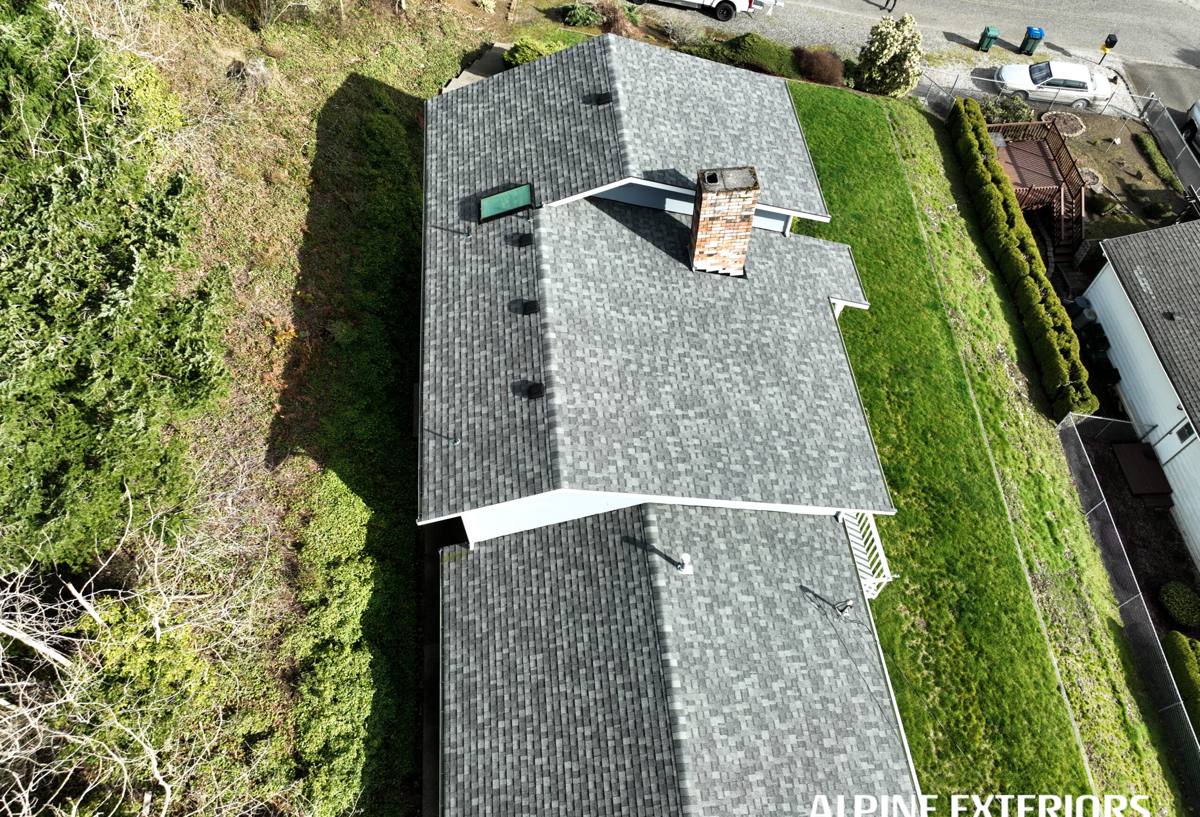
The Three Things Working Against a Roof Here
Salt Air and Metal Corrosion
Airborne salt accelerates corrosion on unprotected or poorly coated metal, and it doesn't stop at the roof edge — it works into fasteners, flashing seams, and cut edges where bare metal is exposed. This is why the specific coating and fastener spec matter so much closer to the water. A panel system rated for inland use but installed without attention to galvanic compatibility (mixing incompatible metals at fasteners or flashing, for example) can corrode from the inside of a joint long before the panel face shows any wear.
Wind-Driven Rain
Rain in Blaine rarely falls straight down. Wind off the water pushes it sideways and up under laps, ridge caps, and trim that would shed water fine in a calmer climate. This is a flashing and underlayment problem more than a panel problem — the metal itself sheds water easily, but wind-driven rain finds every gap in the details around penetrations, valleys, and eaves. A roof that leaks in a coastal storm almost never fails at the panel; it fails at a seam, a flashing lap, or a fastener that wasn't sealed for this kind of exposure.
Moss and Shaded, Damp Roof Sections
Between the tree cover common on Birch Bay and Blaine lots and the long wet season, north- and east-facing roof slopes stay damp far longer than they would in a drier climate. On asphalt shingles that means moss roots into the granule surface and lifts it over time. Metal doesn't give moss the same foothold, but debris buildup at valleys, behind chimneys, and around dormers can still trap moisture against trim and fasteners if the roof wasn't detailed to shed debris cleanly.
Choosing a Metal Panel System That Fits This Climate
Not all metal roofing is built the same way, and the right choice for a Blaine home depends on the roof's pitch, exposure, and how much of the coastal weather it actually takes. Here's how the common options compare for a home in this area:
| System | Best for | Coastal durability | Maintenance |
|---|---|---|---|
| Standing seam (concealed fastener) | Most Blaine homes, especially water-facing slopes | Excellent — no exposed fasteners to corrode or loosen | Low; occasional debris clearing |
| Exposed-fastener panel (corrugated/ribbed) | Outbuildings, garages, lower-budget projects | Good if fasteners and gaskets are maintained; more failure points | Moderate; fastener washers need periodic inspection |
| Stone-coated steel | Homes wanting a shingle or shake look with metal's lifespan | Good; coating protects the steel but scratches need touch-up | Low to moderate |
For most homes we work on in Blaine, we lean toward standing seam on the primary roof, especially on slopes that face the water directly. The concealed fastener system removes the weakest point in a coastal install — exposed screws working loose or corroding over years of salt exposure and thermal movement.
What a Correct Installation Actually Involves
The panel is the visible part of the job, but most of what determines whether a metal roof performs for decades happens underneath it. A proper installation in this climate includes:
- A full deck inspection and repair before anything goes down — metal will telegraph an uneven or soft deck, and it traps problems rather than fixing them
- A high-temperature synthetic underlayment, with self-adhering ice-and-water membrane at eaves, valleys, and any low-slope transitions where wind-driven rain is most likely to back up
- Fastener spacing and type matched to the manufacturer's spec for wind exposure, not a generic default
- Galvanically compatible flashing and trim metal at every penetration, so dissimilar metals aren't accelerating corrosion at the joints
- Closures and sealant at ridge, hip, and eave details sized for the actual wind-driven rain this area sees, not just standard rainfall
- Attention to panel overlap direction relative to prevailing wind and water flow on each slope
Skipping any one of these doesn't usually show up as a problem in year one. It shows up in year eight or ten, as a leak at a valley, a streaking corrosion line below a fastener, or trim that's worked loose from repeated wind-driven rain cycles. That's the trap with roofing in general and metal roofing in particular — the mistakes are invisible until they aren't.
Our Process for a Blaine Metal Roofing Project
We keep the process straightforward and walk you through each stage before it happens, not after:
- On-site inspection and estimate. We look at your current roof, deck condition, slope orientation relative to prevailing wind and water, and any trouble spots like valleys or chimney flashing.
- System selection. We talk through panel options honestly, including trade-offs in cost, appearance, and long-term maintenance — not just the option with the best margin for us.
- Tear-off or deck assessment. Metal roofing can sometimes go over an existing layer, but in a climate this wet, we typically recommend a full tear-off so we can inspect and repair the deck rather than roof over a problem.
- Underlayment and flashing install. This is where the coastal-specific detailing happens — ice-and-water membrane at vulnerable areas, compatible metal at every flashing point.
- Panel installation. Panels go down with fastener spacing and sealant matched to wind exposure, not a one-size default.
- Trim, ridge, and cleanup. Final trim work, a full site cleanup including magnetic sweep for stray fasteners, and a walkthrough so you know exactly what was done.
What Influences Cost on a Metal Roofing Project
Metal roofing costs more upfront than asphalt shingles, and homeowners deserve a straight answer on why, and what actually moves the price on a given home:
| Factor | Why it matters |
|---|---|
| Panel system (standing seam vs. exposed fastener) | Concealed-fastener systems cost more in material and labor but remove the most common coastal failure point |
| Roof complexity | Valleys, dormers, and multiple planes mean more flashing and cutting, which adds labor |
| Tear-off vs. overlay | A full tear-off costs more upfront but lets us catch and repair deck problems before they're covered up |
| Access and pitch | Steeper roofs and difficult site access add time and equipment cost |
| Coating and gauge | Heavier gauge steel and better coatings cost more but hold up longer against salt air |
We'd rather give you a range grounded in what your specific roof needs than a number pulled from a generic price list. That's part of what the on-site estimate is for.
Maintaining a Metal Roof in a Coastal Climate
One of the real advantages of metal roofing is how little routine maintenance it needs compared to shingles — but "little" isn't "none," especially this close to the water. A short annual routine goes a long way:
- Clear debris from valleys and behind chimneys or dormers before the wet season sets in
- Check gutters and downspouts for buildup that can back water up under eave flashing
- Look for any streaking or discoloration near fasteners or flashing, which can be an early sign of a coating breach
- Trim back overhanging branches that keep sections of the roof shaded and damp longer than necessary
- After major windstorms, do a visual check for lifted trim or loosened fasteners rather than waiting for a leak to show up inside
Why It Matters That We Already Work in Blaine
A crew that only occasionally works this close to the water can install a metal roof that looks correct and still misses the details that matter here — the right underlayment at eaves, compatible flashing metal, fastener spacing built for wind-driven rain rather than a generic spec sheet. Working regularly in Blaine and the surrounding Birch Bay area means we're not guessing at how this coastline treats a roof; we're building to what we've seen hold up and what we've seen fail. That includes knowing which slopes on a typical local lot take the worst of the weather, and detailing those areas accordingly rather than treating every roof plane the same.
It also means straightforward answers instead of upsells. If a lower-cost exposed-fastener system is genuinely the right call for a detached garage or outbuilding, we'll say so. If your main house roof needs the extra investment in standing seam because of its exposure, we'll explain why rather than just quoting the higher number.
Get a Straight Answer for Your Roof
If you're weighing a metal roof for your Blaine home, we're happy to take a look and give you an honest read on what your roof actually needs — no pressure, no inflated scare tactics about moss or storm damage. Use the form below to request a free estimate, and we'll walk the roof with you and talk through real options for your budget and your home's exposure.