 Birch Bay Siding
 Metal Roofing Built for Nooksack's Valley Climate
Nooksack sits well up the river valley in northern Whatcom County, inland from the open water but still inside the same wet, marine-influenced weather system that shapes roofing across this whole corner of Washington. Salt-tinged air moves up the valley on the prevailing weather, driving rain comes in sideways more often than it falls straight down, and mild, damp conditions give moss a long season to work on any roof surface that doesn't dry out quickly. None of that rules out any particular roofing material, but it does mean a roof has to be chosen and installed with those specific stresses in mind rather than treated as a generic product going on a generic house.
This page is about metal roofing specifically for homes in and around Nooksack — what the local climate actually demands from a metal roof, what separates a correct installation from a rushed one, how our process runs from first look to final cleanup, and why it matters to hire a crew that already works in this area rather than one passing through.
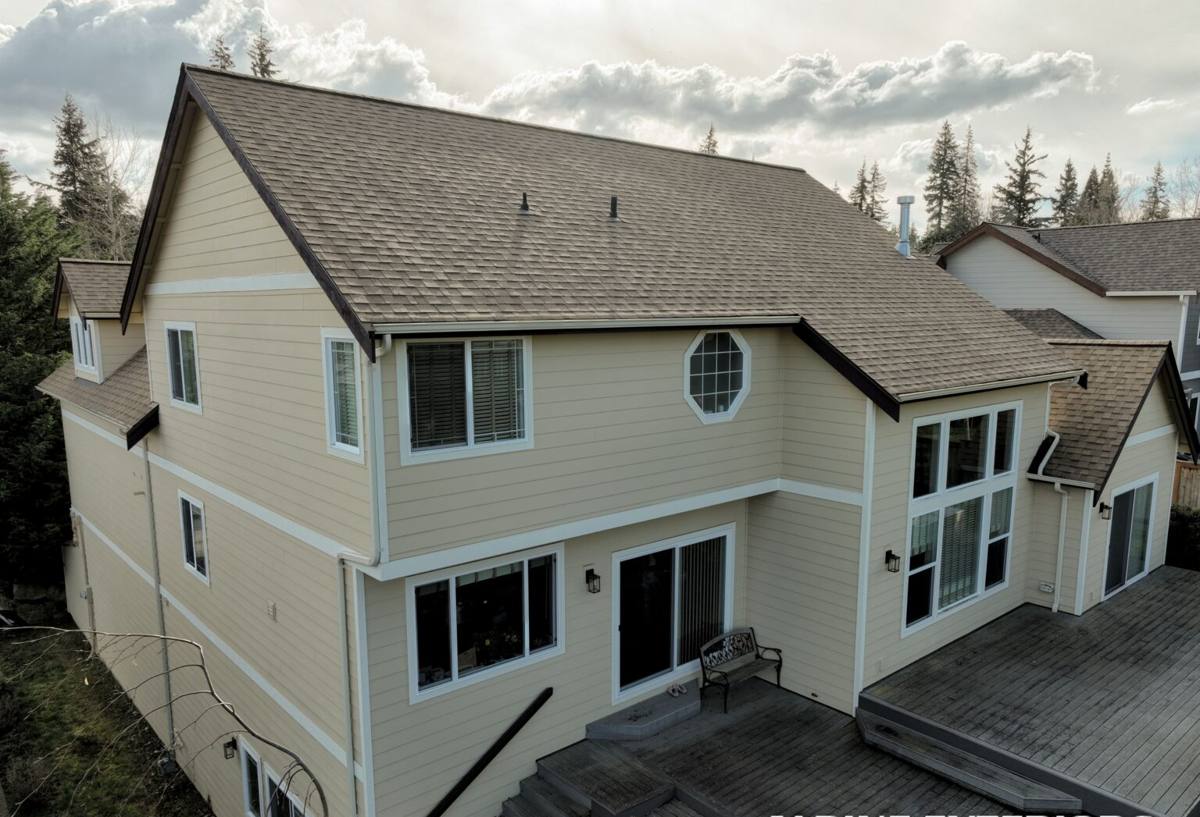
What This Climate Demands From a Metal Roof
Moss and Slow-Drying Roof Planes
Moss is less of a problem on metal roofing than it is on more porous materials, simply because a smooth painted steel or aluminum surface doesn't give moss spores much to grip onto and doesn't hold moisture against itself the way a shingle or shake roof can. That said, it isn't immune. Debris that collects in valleys, around chimney crickets, or behind roof-mounted vents still holds moisture, and moss will take hold in that trapped organic material even on a metal roof. Shaded, north-facing slopes around Nooksack still need attention, just less of it than an asphalt or wood roof in the same spot.
Wind-Driven Rain at Valleys and Penetrations
Rain here rarely falls straight down for long. When wind pushes it sideways, water gets forced up under panel laps, into open valleys, and around any roof penetration — vent pipes, skylights, chimneys — that isn't flashed correctly. A metal roof sheds standing water extremely well, but that only holds true if every seam, lap, and penetration is detailed to handle rain moving sideways and occasionally upward, not just rain falling and running off in a straight line.
Corrosion From Marine-Influenced Air
Salt-tinged air moving up the valley off the Sound accelerates corrosion on unprotected or lower-grade metal over time, the same way it does on flashing and fasteners in any Whatcom County roofing system. Metal roofing is more exposed to this than a shingle roof, since the entire roof surface is the metal in question, not just the trim. That's why panel material, coating, and fastener grade all matter more here than they would in a dry inland climate with no marine influence at all.
Choosing the Right Metal Roofing System
"Metal roofing" covers a few genuinely different systems, and picking the wrong one for a given home is a common source of problems down the road. The right choice depends on roof pitch, budget, and how the homeowner weighs upfront cost against long-term maintenance.
| System | How It's Fastened | Fit for Nooksack Conditions |
|---|---|---|
| Standing seam | Concealed clips under raised, interlocking seams — no exposed fasteners on the field of the panel | Best long-term choice for shedding wind-driven rain; handles panel expansion and contraction cleanly over decades |
| Exposed-fastener panel | Screws driven directly through the panel face into the deck or purlins | Lower upfront cost, but each fastener and its rubber washer is a potential leak point that needs periodic inspection and eventual replacement |
| Stone-coated steel | Overlapping panels fastened similarly to traditional shingle or tile roofing | Mimics a shingle or shake look while keeping a steel substrate; a reasonable middle ground where appearance matters more than a clean modern profile |
For most Nooksack homes, standing seam is the system we recommend first. The lack of exposed fasteners on the roof field removes the single most common long-term failure point on a metal roof, and the concealed clip system is built to let panels expand and contract with temperature swings without stressing the fasteners themselves. Exposed-fastener panels still have a place on outbuildings, shops, and budget-conscious projects, but we're upfront that they carry a different maintenance timeline than standing seam does.
What a Correct Metal Roof Installation Involves
Underlayment and Ice-and-Water Protection
A metal roof still needs a full underlayment system underneath it, not just bare decking. High-temperature synthetic underlayment across the full roof, with self-adhered ice-and-water membrane at eaves, valleys, and other high-risk transitions, gives the roof a real secondary water barrier if wind ever drives moisture past the panel seams themselves.
Flashing at Valleys, Chimneys, and Wall Transitions
Most leaks on any roof, metal included, start at flashing rather than in the open field of the roof. Valleys, chimney crickets, skylight curbs, and the transitions where a roofline meets a wall all need flashing that's custom-formed to the panel profile and properly integrated with the underlayment beneath it, not just caulked into place after the fact.
Fastening and Panel Expansion
Metal panels expand and contract with temperature more than shingles do, and a system that doesn't account for that movement will eventually stress its seams, fasteners, or sealant. On standing seam, that means clips designed to let the panel float slightly as it moves. On exposed-fastener systems, it means correct fastener spacing and torque, since an overdriven screw crushes its rubber washer and creates a leak point almost immediately.
Ventilation
Balanced intake and exhaust ventilation keeps the underside of the roof deck dry, which matters for the wood structure underneath the metal even though the panels themselves aren't moisture-absorbent. Poor attic airflow can also lead to condensation forming on the underside of metal panels in the right conditions, which is a problem specific to metal roofing that a ventilation plan needs to account for.
Our Process, Start to Finish
- In-person inspection: We walk the existing roof and attic ourselves, check deck condition, and note pitch, penetrations, and any existing moisture damage before quoting anything.
- Written estimate: You get an itemized bid covering panel system, underlayment, flashing scope, and any tear-off or deck repair work, not a single vague number.
- Scheduling around weather: We build reasonable flexibility into the timeline, since wet-season delays are a normal part of roofing work in this valley, not an excuse we reach for after the fact.
- Tear-off and deck repair: Old roofing comes off completely where a tear-off is called for, and any rot or soft decking we find gets repaired before new roofing goes down.
- Underlayment, flashing, and panel installation: Each layer goes on to manufacturer specification, with extra time spent at valleys, penetrations, and wall transitions.
- Final walkthrough and cleanup: We review the finished roof with you, check every flashing detail together, and do a full site and magnetic sweep for stray fasteners before calling the job done.
What Metal Roofing Costs to Consider
Metal roofing bids can vary widely even for similar-sized homes, and the difference usually comes down to real scope rather than one contractor padding the number. Understanding what drives cost makes it much easier to compare estimates that look nothing alike on paper.
| Factor | What It Affects |
|---|---|
| Panel system and gauge | Standing seam typically costs more upfront than exposed-fastener panel, but shifts less maintenance burden onto the homeowner over time |
| Roof pitch and complexity | Steep pitches, multiple valleys, and dormers all add labor time and increase the amount of custom flashing required |
| Tear-off vs. install over existing roofing | Whether hidden deck damage gets found and repaired before new roofing goes down |
| Snow retention and gutter protection | Snow guards and properly sized gutters matter more on a smooth metal surface that sheds snow and water faster than shingles do |
| Flashing and penetration count | Chimneys, skylights, and vent pipes each add custom flashing work that a flat, simple roof plane wouldn't need |
A written estimate that breaks these components out separately tells you far more than a single lump-sum figure. It's worth asking any contractor to walk you through what's actually included, line by line, before comparing two prices side by side.
Keeping a Metal Roof Performing Long-Term
Metal roofing needs less regular attention than shingles, but "low-maintenance" isn't the same as "no-maintenance," especially in a valley climate with a long wet season.
- Clear debris from valleys and around penetrations at least once a year so trapped organic material doesn't hold moisture against the panel
- Check exposed-fastener panels periodically for backed-out screws or worn rubber washers, since those are the most common source of small leaks
- Keep gutters clear so water sheds cleanly off the roof edge instead of backing up under the drip edge
- Inspect flashing around chimneys, skylights, and vents after major windstorms
- Watch for scuffed or scratched panel coating near foot traffic areas, since exposed bare metal underneath can eventually corrode
- Trim back overhanging branches that drop needles, leaves, or moss spores directly onto the roof
Why Hire a Crew That Already Works in Nooksack
Metal roofing rewards installation precision more than most roofing materials do — a slightly wrong flashing detail or a mis-torqued fastener shows up as a leak years earlier than the same mistake would on a forgiving shingle roof. A crew that already works roofs across this valley has seen firsthand how wind-driven rain finds its way through underspecified flashing, which roof orientations hold moss longest through the wet months, and how marine-influenced air affects fastener and coating choices over the life of the roof. That's practical, earned knowledge that shows up in dozens of small decisions on install day, not something a crew unfamiliar with this specific valley climate would necessarily think to account for.
Birch Bay Siding Company also handles siding, windows, and decks, and we treat the roof as one connected part of the exterior system rather than an isolated trade. If a roof project turns up moisture damage at a wall-to-roof transition or aging trim nearby, we can address it as part of the same conversation instead of sending you to find a second contractor.
If you're weighing metal roofing for a home in Nooksack, we're happy to walk the existing roof with you and give an honest read on what it actually needs — no pressure, no upsell script. Use the form below to request a free estimate.