 Birch Bay Siding
 Why Nooksack-Area Roofs Wear Differently
Homes in the Nooksack area, tucked into the Birch Bay region of Whatcom County, sit under a roof climate that's tougher than it looks from the ground. It isn't one dramatic storm that wears out a shingle roof out here — it's the steady, year-round combination of salt-tinged coastal air, rain that comes in sideways as often as it comes straight down, and a moss season that can run eight months or longer. A shingle system built for a drier inland climate, or installed without the details this region demands, tends to show its age early: curling edges, granule loss, dark streaking, and soft spots around the flashing. A roof built correctly for this specific climate holds up the way it's supposed to.
This page covers what asphalt shingle roofing actually needs to succeed on a Nooksack-area home — what the climate does to a roof over time, what a correct installation includes, how to think about shingle choice and repair-versus-replace decisions, and how our process works from first estimate to final cleanup.
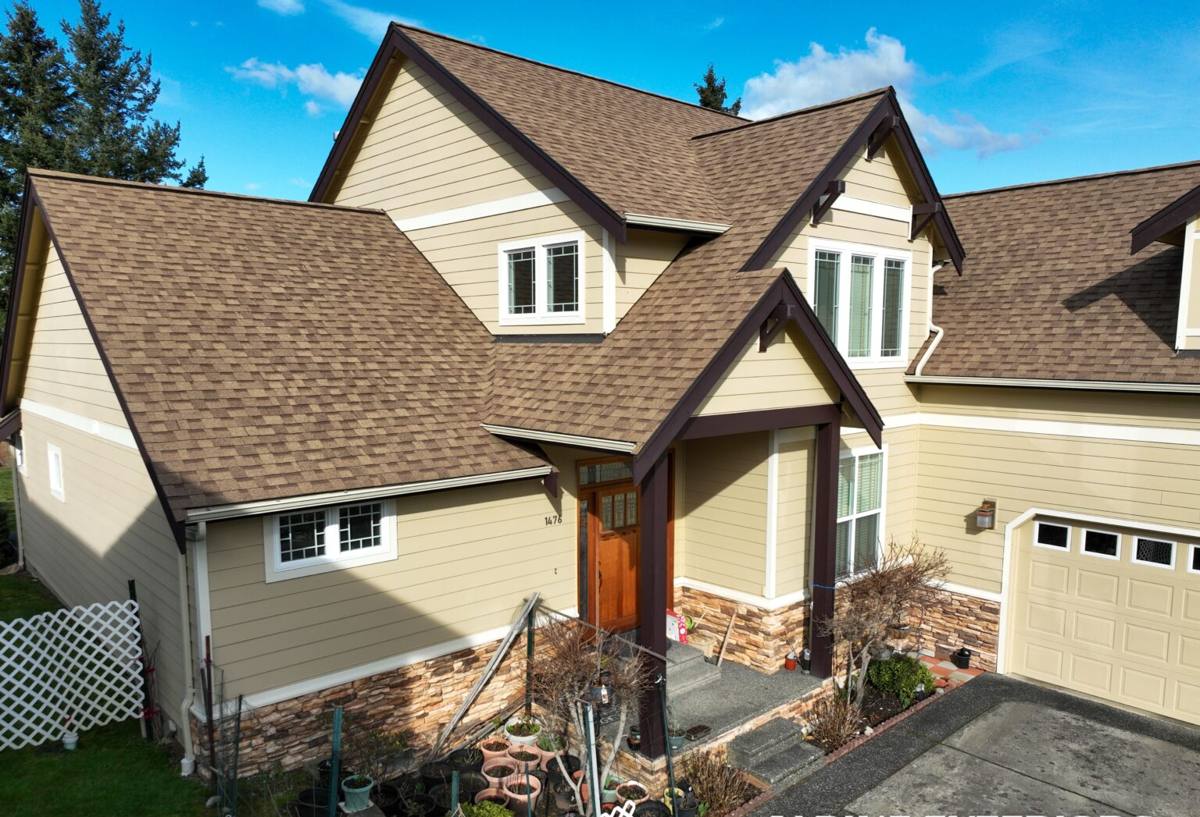
What Salt Air and Driving Rain Do to a Shingle Roof
Salt-laden air
Proximity to the Salish Sea means the air moving through this part of Whatcom County carries a fine load of salt. Over years, that salt settles on roofing, siding, and exposed metal alike. On a shingle roof, the concern isn't the shingles themselves so much as the metal components — flashing, drip edge, roof vents, and fasteners. Lower-grade or improperly coated metal corrodes faster in this air than it would twenty miles inland, and once flashing starts to pit or thin, water finds its way underneath the shingle field long before the shingles themselves are due for replacement.
Driving, wind-blown rain
Rain here rarely falls straight down for long. Wind off the water pushes it sideways and up under laps, edges, and penetrations that a purely vertical rain would never reach. That's why lapping, sealant strips, and underlayment coverage matter more here than the shingle brand printed on the wrapper. A roof that would perform fine in a calmer inland climate can leak within a few seasons here if the underlayment, flashing details, and starter courses weren't built with wind-driven rain specifically in mind.
Moss and the Long Wet Season
Whatcom County's wet season is long, shaded roof planes stay damp for weeks at a stretch, and moss takes hold wherever moisture lingers — north-facing slopes, valleys, and areas under overhanging trees are the usual starting points. Moss isn't just cosmetic. As it establishes, it lifts shingle edges, holds water against the granule surface, and works its root structures under the tabs. Left unchecked over several seasons, moss growth shortens the practical life of a shingle roof significantly, independent of how good the shingles were to begin with.
The fix isn't aggressive pressure washing, which strips granules and does its own damage. It's a combination of shingle selection, careful low-pressure cleaning when needed, and keeping the roof's edges and valleys clear so water sheds instead of sitting.
What a Correctly Installed Asphalt Shingle Roof Includes
An asphalt shingle roof is a system, not a single product. Every layer underneath the visible shingle does real work, and skipping or shortcutting any one of them is where most premature failures in this climate start.
- Full ice-and-water shield at eaves, valleys, and around every penetration — not just the minimum code strip, given how much wind-driven rain this coastline sees
- Synthetic underlayment across the full deck, correctly lapped so every course sheds onto the one below it
- Corrosion-resistant flashing at all walls, chimneys, skylights, and roof-to-wall transitions, sized and formed for the actual detail rather than a generic bend
- Proper starter course and drip edge at eaves and rakes, sealed to resist wind uplift and wind-driven rain intrusion
- Correct nailing pattern — nails placed and driven to the shingle manufacturer's specification, not just "close enough," since underdriven or overdriven nails are a leading cause of early shingle loss in windy coastal conditions
- Balanced intake and exhaust ventilation so the attic can dry out between wet spells instead of trapping moisture against the deck
Any one of these done poorly can undercut an otherwise good roof. This is also where hiring a crew that already understands the local demands pays off — the difference between a roof that lasts and one that doesn't is almost always in these details, not in which shingle bag the crew opened.
Choosing the Right Shingle for This Climate
Not every asphalt shingle product performs the same way once it's exposed to salt air, driving rain, and long moss seasons year after year. We walk homeowners through the trade-offs honestly rather than defaulting to whatever's cheapest or most heavily marketed.
| Shingle Type | Best For | Moss/Algae Resistance | Wind Rating | Relative Cost |
|---|---|---|---|---|
| 3-tab shingles | Budget-conscious re-roofs, secondary structures | Standard — needs proactive cleaning | Lower | Lowest |
| Architectural (laminate) shingles | Most Nooksack-area homes; the standard recommendation | Better base performance, best with algae-resistant granules | Higher | Moderate |
| Algae-resistant (AR) laminate shingles | Shaded lots, north-facing roof planes, homes with a history of moss | Best available in asphalt | Higher | Moderate to higher |
| Impact-resistant (Class 4) shingles | Homes wanting longer-term durability and possible insurance credit | Good, especially in AR versions | Highest | Highest |
For most homes in this area, an architectural shingle with algae-resistant granules is the practical sweet spot — meaningfully better moss and streak resistance than a standard shingle, a heavier wind rating than 3-tab, and a cost that doesn't require justifying a premium product on a roof that doesn't need one. We'll always tell you plainly when a home's exposure or roof shape doesn't call for the upgraded option, rather than upselling by default.
Repair, Full Replacement, or Recover — Making the Right Call
Not every roof problem means a full tear-off. We evaluate the roof honestly and lay out the real options rather than defaulting to the most expensive answer.
| Situation | What It Means | When It Makes Sense |
|---|---|---|
| Localized repair | Fixing flashing, a section of storm damage, or isolated shingle loss | Roof is otherwise sound and within its expected service life |
| Recover (new layer over existing) | Installing new shingles over one existing layer, where code and roof condition allow | Deck is in good shape but this is rarely our first recommendation given moisture-trapping risk in a wet climate |
| Full tear-off and replacement | Removing all existing roofing down to the deck, inspecting and repairing the deck, then installing a full new system | Roof is at or past its expected life, deck moisture is suspected, or multiple layers already exist |
In a climate this wet, we lean toward full tear-off more often than a recover, because it's the only way to actually inspect the deck and underlayment for hidden moisture damage — something a recover simply covers up rather than solves.
Our Process, Start to Finish
Every job starts with an honest look at the roof, not a sales pitch.
- On-site inspection — we get on the roof (weather permitting) and check the deck, flashing, ventilation, and shingle condition, not just what's visible from the ground
- Clear, written estimate — options laid out plainly, including repair versus replacement where both are realistic
- Scheduling around the weather — coastal Whatcom County weather windows matter, and we plan tear-off and dry-in around forecasted rain rather than gambling with an open deck
- Tear-off and deck inspection — old material removed, deck checked and repaired as needed before anything new goes down
- Full system installation — ice-and-water shield, underlayment, flashing, ventilation, and shingles installed to manufacturer and code specification
- Final walkthrough and cleanup — site cleared, magnetic sweep for stray fasteners, and a final review with the homeowner before we consider the job done
Keeping Your Roof Healthy Between Services
A well-installed roof still benefits from basic upkeep in this climate. Most of it is simple and doesn't require getting on the roof yourself.
- Keep gutters and valleys clear of needles and debris so water has a clean path off the roof
- Watch for dark streaking or green growth on north-facing slopes and shaded sections
- Trim back overhanging branches that keep roof sections shaded and damp
- Have flashing and roof penetrations checked every few years, since that's where most leaks actually start
- Address small issues — a lifted shingle tab, a small area of moss — before the next wet season rather than after
- Avoid high-pressure washing, which strips protective granules and shortens shingle life
Why Local Experience Matters for This Work
A roof built for a dry inland subdivision and a roof built for the Nooksack area near Birch Bay aren't the same job, even if the shingle bag looks identical. Flashing that would be fine somewhere calmer needs to be heavier and better sealed here. Ventilation that's adequate elsewhere may not keep up with this area's moisture load. A crew that already works this stretch of Whatcom County knows which roof planes tend to hold moss, which details fail first in wind-driven rain, and which shortcuts simply don't hold up out here — because we've already seen what happens when they don't.
If you're weighing a repair, a full replacement, or just want an honest read on where your roof stands, we're glad to take a look. Reach out for a free, no-pressure estimate using the form below — we'll walk the roof, tell you what we actually see, and lay out your options in plain terms.