 Birch Bay Siding
 Roofing in a Climate That Doesn't Let Up
Homes in the Nooksack area near Birch Bay sit under some of the toughest roofing conditions in Whatcom County. You've got salt-laden air drifting in off the water, long stretches of driving rain that finds every weak seam, and a moss season that can run most of the year in shaded, north-facing spots. None of these problems are dramatic on their own. What they do is work slowly, quietly, and constantly — which is exactly why so many roofs in this area fail from the inside out, well before a homeowner notices a leak.
A roof replacement done right for this region isn't just about swapping old shingles for new ones. It's about building a roof system that's specifically prepared for salt exposure, wind-driven water, and moss growth, using materials and installation details suited to the job. That's the standard we hold every replacement to.
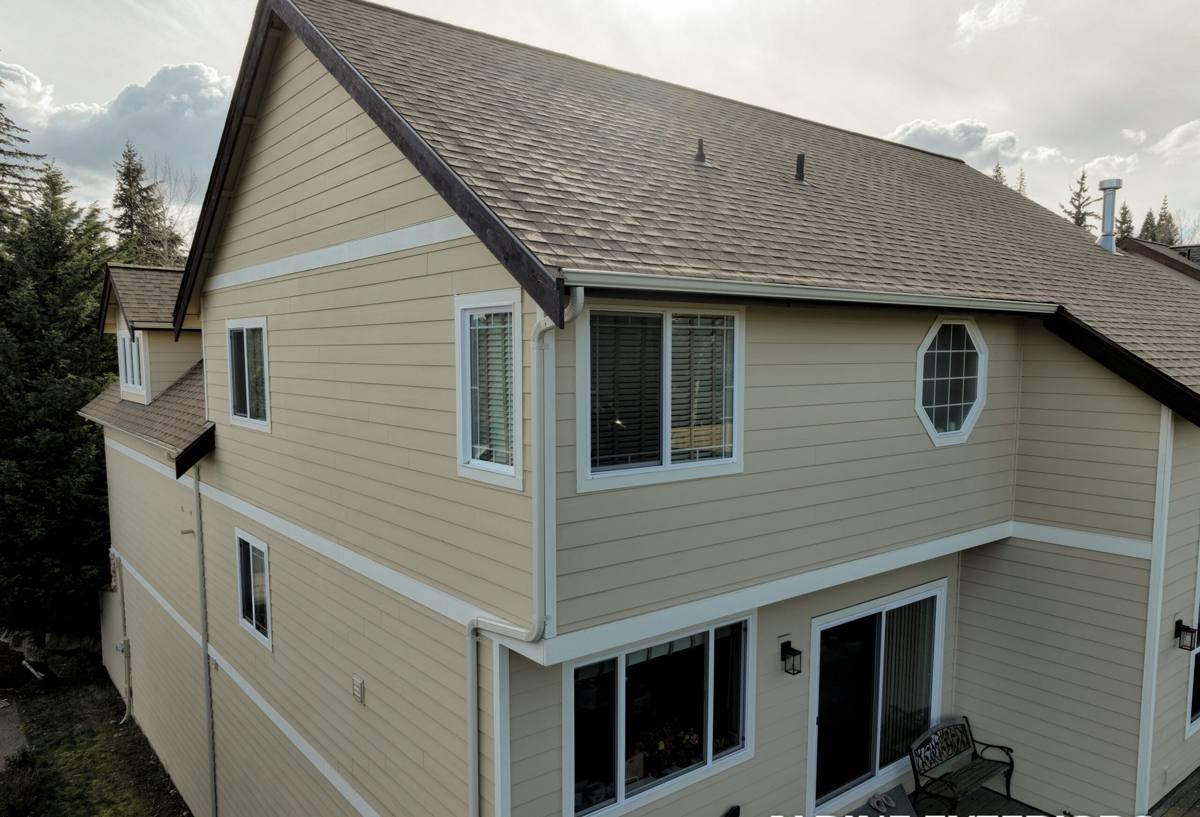
Why Birch Bay-Area Roofs Wear Out Faster Than the Manufacturer's Warranty Suggests
Salt Air and Metal Corrosion
Coastal salt air accelerates corrosion on anything metal — nails, flashing, vents, and fasteners. Once corrosion starts on a fastener or flashing edge, it doesn't stay contained. A single failed nail can let water track under a shingle course, and a corroded flashing seam around a chimney or skylight can leak for months before it shows up as a stain on a ceiling.
Driving Rain and Wind-Driven Water
Rain in this part of Washington rarely falls straight down. Wind off the water pushes it sideways, forcing water up and under shingle edges, into vents, and around anything that penetrates the roof deck. A roof that would perform fine in a calmer inland climate can leak here simply because the flashing and underlayment weren't detailed for wind-driven water in the first place.
Moss and Shaded Roof Sections
Moss doesn't just look bad — it holds moisture directly against the roofing material, keeps shingles from drying out between storms, and can work its way under shingle tabs and lift them. North-facing slopes and roof sections shaded by trees are the most common trouble spots, and they're usually the first areas to show granule loss, soft spots, or early shingle failure.
Signs a Nooksack-Area Roof Needs Replacement, Not Another Repair
Repairs make sense when a roof has isolated damage and the rest of the system is sound. Replacement makes sense when the roof's underlying materials — the deck, the underlayment, the flashing system — have aged out or been compromised broadly enough that patching one area just shifts the problem elsewhere. Signs it's time to talk replacement rather than repair include:
- Granule loss heavy enough that you can see bare, shiny patches on shingles
- Shingles that are curling, cupping, or cracking across multiple roof sections
- Moss or algae streaking that keeps coming back within a season of cleaning
- Soft or spongy spots underfoot when walking the roof, suggesting deck damage
- Daylight visible through the roof deck from inside the attic
- Repeated leaks in different locations rather than one recurring spot
- A roof approaching or past the practical service life of its material in this climate
If only one or two of these apply and the rest of the roof is in decent shape, a repair may still be the right call. We'll tell you honestly which situation you're in — we don't sell replacements to homeowners who don't need one.
What a Correct Roof Replacement Actually Involves
Full Tear-Off and Deck Inspection
We don't install new roofing over old layers. A full tear-off is the only way to see the actual condition of the roof deck underneath — soft, rotted, or delaminated sheathing has to be found and replaced before anything new goes down, or the new roof is being built on a bad foundation.
Underlayment Built for Wet, Wind-Driven Conditions
In a climate that pushes rain sideways, underlayment choice matters more than in drier regions. We use synthetic or self-adhered underlayment in vulnerable areas — eaves, valleys, and low-slope sections — to give the roof a second line of defense if wind-driven water ever gets past the surface layer.
Flashing Details Around Every Penetration
Chimneys, skylights, vent stacks, and roof-to-wall transitions are where most leaks start, not in the open field of shingles. Proper step flashing, counter-flashing, and sealed penetrations are what actually keep water out over the long run, and they're also the details that get rushed or skipped on a low-quality job.
Ventilation That Matches the Home
Poor attic ventilation traps moisture, which speeds up deck rot, encourages moss and mold, and can void a shingle manufacturer's warranty. Balanced intake and exhaust ventilation is part of a correct replacement, not an optional add-on.
Comparing Roofing Materials for a Salt Air, High-Moss Climate
Every material has trade-offs. Here's how the common options generally hold up under the conditions typical of the Nooksack and Birch Bay area:
| Material | Moss & Moisture Resistance | Wind & Salt Air Performance | Typical Lifespan Here |
|---|---|---|---|
| 3-Tab Asphalt Shingle | Fair — susceptible to moss lift over time | Lower wind rating, budget option | 15-20 years |
| Architectural Asphalt Shingle | Good — thicker profile resists lifting | Higher wind rating, good all-around choice | 25-30 years |
| Standing Seam Metal | Excellent — moss struggles to hold on smooth metal | Very strong wind and salt performance with proper coating | 40-50+ years |
| Composite/Synthetic Shake | Good — engineered to resist moisture absorption | Strong wind rating, consistent appearance | 30-40 years |
We generally steer homeowners in this climate toward architectural shingles or metal roofing over budget 3-tab products. It's not that 3-tab shingles are a bad product everywhere — it's that their thinner profile and lower wind rating make them a poor match for a coastal, moss-prone, wind-driven-rain environment. That's a maintenance and durability trade-off worth understanding before you buy, not a knock on any manufacturer.
Cost Factors on a Nooksack-Area Roof Replacement
We don't publish flat prices because roofs vary too much for that to be honest. What actually drives cost on most jobs in this area includes:
| Factor | Why It Affects Cost |
|---|---|
| Roof size and pitch | Steeper roofs take longer, need more safety equipment, and use more material |
| Number of layers to tear off | Multiple existing layers mean more labor and disposal cost |
| Deck condition | Rotted sheathing found during tear-off has to be replaced before new roofing goes on |
| Material choice | Metal and premium shingle products cost more upfront but last longer in this climate |
| Roof complexity | Valleys, dormers, chimneys, and skylights all add flashing labor |
| Access and site conditions | Tree cover, tight lot access, or a second story affect setup time |
The only way to give you an accurate number is to actually look at the roof. That's what a free estimate is for.
How Our Replacement Process Works
- On-site inspection. We walk the roof and attic, check deck condition, ventilation, and flashing, and photograph anything that needs attention.
- Written estimate. You get a clear scope of work and pricing — no pressure, no rushed decision.
- Material selection. We walk through the material options that make sense for your home's exposure, budget, and how long you plan to stay in the house.
- Scheduling around the weather. Given how much rain this area gets, we plan tear-off and dry-in carefully so your home isn't left exposed longer than necessary.
- Tear-off, deck repair, and installation. Old roofing comes off, the deck gets inspected and repaired as needed, and the new roof system goes on with proper underlayment and flashing.
- Final walkthrough and cleanup. We inspect the completed roof with you and make sure the property is cleared of debris and nails before we consider the job done.
Why Local Experience in Nooksack and Birch Bay Actually Matters
A roofing crew that mostly works drier, inland climates isn't automatically going to make the right calls on flashing details, underlayment placement, or ventilation for a home dealing with salt air and near-constant moisture. Working this specific area regularly means we've already seen how roofs here fail — where moss tends to build up first, which flashing details hold up to wind-driven rain, and which materials are worth the extra upfront cost in this environment. That experience shows up in fewer callbacks and a roof that actually performs the way it's supposed to, year after year, not just on a sunny installation day.
It also means faster response when something goes wrong. A storm-damaged roof or a sudden leak doesn't wait for a convenient time, and a crew already familiar with the Whatcom County area can get to your home and get a tarp up faster than one traveling in from farther away.
Keeping a New Roof Performing After Installation
A quality replacement is the foundation, but a few habits keep it performing for its full lifespan in this climate:
- Have moss treated or removed at the first sign of regrowth rather than letting it establish
- Keep gutters clear so water isn't backing up under the roof edge during heavy rain
- Trim back tree limbs that keep sections of the roof shaded and slow to dry
- Schedule a roof check after major windstorms, especially for flashing and vent seals
- Address any small leak immediately — in this climate, small leaks don't stay small for long
If your roof in the Nooksack or greater Birch Bay area is showing its age, dealing with recurring moss, or you're just not sure whether it needs repair or full replacement, we're happy to take a look. Fill out the form below for a free, no-pressure estimate.