 Birch Bay Siding
 Point Roberts Decks Live in a Tougher Climate Than Most Builders Plan For
Point Roberts sits out on its own peninsula at the southern tip of the Tsawwassen headland, surrounded by water on three sides and cut off from the rest of Washington State by land — the only way to drive here is through Canada. That geography matters for more than logistics. A property this exposed to open water and prevailing marine wind takes a harder beating than a deck built a few miles inland in Whatcom County. Salt-laden air, near-constant humidity, and long stretches of overcast, wet weather are simply part of building here, and a deck that isn't designed with that in mind will show it within a few seasons.
We build decks for homes in Point Roberts and throughout the Birch Bay area, and the difference between a deck that lasts and one that doesn't almost always comes down to decisions made before the first board goes down: what the frame is made of, how the fasteners are rated, how the structure sheds water, and whether anyone accounted for how much moss and algae this climate grows.
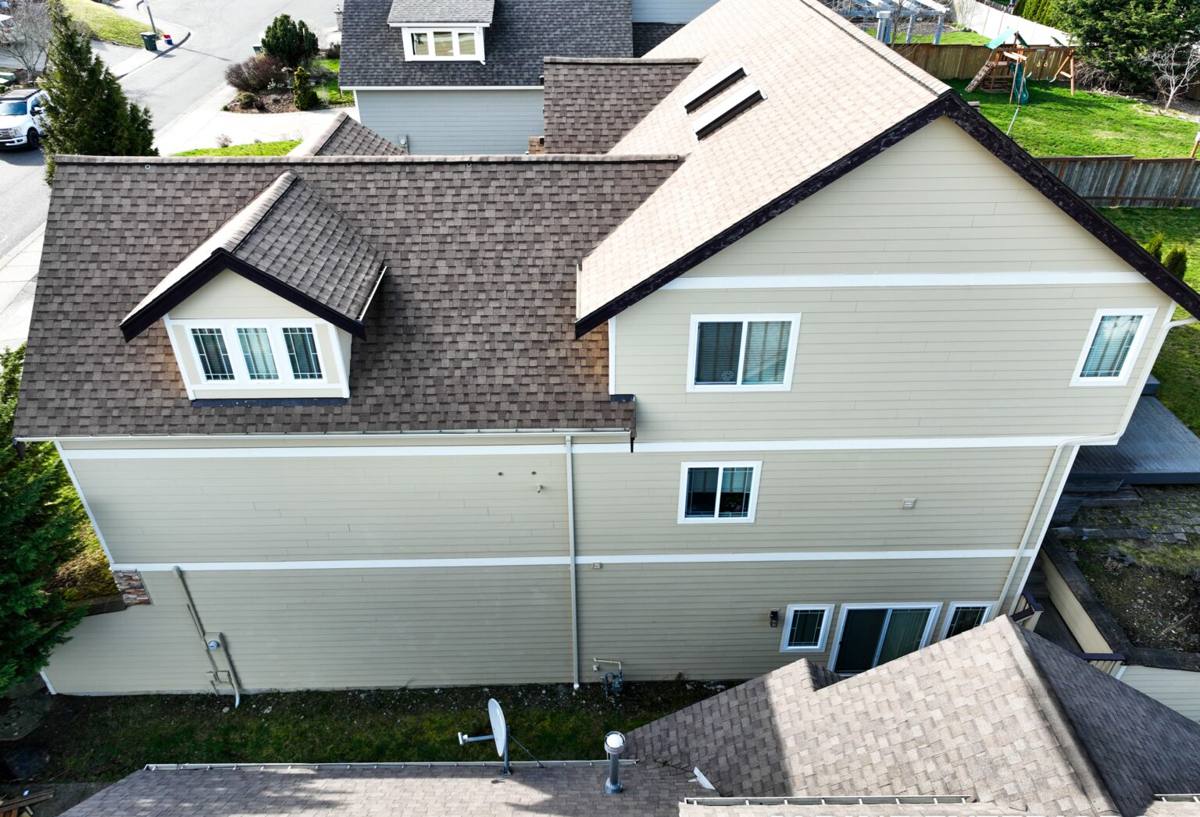
What Salt Air, Driving Rain, and Moss Actually Do to a Deck
Salt Air and Corrosion
Airborne salt doesn't just affect homes right on the waterfront — it travels on wind and settles on any exposed metal, and Point Roberts gets more of it than most of Whatcom County because there's water on nearly every side. Standard coated fasteners, cheap hardware, and unprotected steel connectors corrode faster here than they would ten or fifteen miles inland. Once a fastener starts rusting, it weakens, stains the wood around it, and can eventually fail structurally — which is a much bigger problem than a cosmetic one on a deck people are standing on.
Driving Rain and Water Intrusion
This is a wet climate with weather that frequently comes in sideways off the water, not just straight down. That means ledger boards, rim joists, and any wood-to-house connection point need real flashing and drainage detailing, not just caulk. Decks that look fine from the top can be rotting from the inside where water has been sneaking behind ledger boards or pooling on top of joists for years.
Moss, Algae, and the Long Wet Season
Whatcom County's mild, damp climate means moss and algae growth is a near year-round concern, not a seasonal nuisance. On a deck, that growth does two things: it holds moisture against the wood surface longer than open air would, accelerating rot, and it makes surfaces slick — a real safety issue on stairs and low-light areas. Deck design that ignores drainage, airflow, and surface choice ends up fighting a losing battle against moss almost immediately.
Choosing the Right Decking Material for This Climate
There's no single "best" decking material for every home — it depends on budget, how much maintenance you're willing to do, and how exposed the site is. Here's how the common options actually perform under Point Roberts conditions:
| Material | Moisture & Salt-Air Performance | Moss Resistance | Maintenance |
|---|---|---|---|
| Pressure-treated lumber | Good if properly sealed and re-sealed; treatment resists rot but doesn't stop surface weathering | Low — porous surface holds moisture and organic growth | Annual cleaning and re-sealing recommended |
| Cedar | Naturally rot- and insect-resistant; still needs periodic sealing near salt air | Moderate — better shedding than PT but still needs cleaning | Sealing every 1-2 years, regular cleaning |
| Composite decking | Excellent — doesn't absorb moisture or rot | Moderate to good depending on brand/texture; still needs washing | Periodic washing, no sealing or staining |
| PVC decking | Excellent — fully impervious to moisture and salt | Good — smoother, less porous surface | Lowest — occasional washing only |
We're honest with clients that composite and PVC decking cost more up front but remove the moisture-absorption problem entirely, which matters more here than in a drier climate. Wood decking isn't wrong for Point Roberts — it just requires an owner who's committed to sealing and cleaning on a real schedule, not "when I get around to it."
Framing, Fasteners, and Footings Done Right
The parts of a deck nobody sees are the parts that determine whether it's still standing safely in fifteen years. In a marine climate like this, we treat a few details as non-negotiable:
- Stainless or heavy hot-dip galvanized fasteners rated for both pressure-treated lumber and coastal exposure — standard electro-galvanized hardware corrodes too fast here.
- Proper ledger flashing where the deck attaches to the house, so driving rain can't work its way behind the band board and rot the rim joist from the inside.
- Footings set below frost depth and sized for the actual soil on site — coastal and peninsula soils vary block to block, and guessing costs you later.
- Joist tape or a drainage gap on top of framing members to keep water from sitting directly on the wood under the decking boards.
- Airflow underneath the deck — enough clearance and ventilation that moisture doesn't just sit trapped beneath the structure feeding rot and moss.
Skipping any one of these doesn't show up on day one. It shows up in year four or five, as soft spots, rust streaks, or a deck that feels less solid than it used to.
Our Point Roberts Deck Building Process
1. On-Site Assessment
We walk the site, look at exposure to prevailing wind and rain, check existing structures if this is a rebuild, and talk through how the deck will actually be used before we talk materials.
2. Design and Material Selection
We lay out layout, railing, and material options with real trade-offs explained — not just what's cheapest or what has the highest margin, but what fits your budget and your appetite for maintenance.
3. Permitting
Deck projects in Whatcom County typically require a building permit, and requirements can vary by size, height, and whether the deck is attached to the house. We handle that process as part of the job so it isn't left for the homeowner to untangle.
4. Build
Footings, framing, flashing, and decking go in with the fastener and drainage details above treated as standard, not upgrades.
5. Walkthrough and Care Guidance
Before we consider the job done, we walk the finished deck with you and explain what maintenance it actually needs given the material you chose — cleaning schedule, sealing schedule, and what to watch for.
Why It Matters to Hire a Crew That Already Works Point Roberts
Point Roberts is a unique place to build. Because it's only accessible by land through Canada, material deliveries, scheduling, and crew logistics all take a little more planning than a typical Whatcom County job — a contractor who hasn't worked out here before can run into delays they didn't budget for, which turns into your project taking longer. A crew that's already familiar with the area's access points and exposure conditions plans around that from the start instead of learning it on your job.
Just as important is familiarity with how this specific microclimate treats a deck. A contractor who mostly builds inland may not default to stainless fasteners, may not think twice about ledger flashing, and may not warn you that a bare cedar deck facing open water is going to need more attention than the same deck built a few miles inland. None of that is exotic knowledge — it's just experience with this stretch of coastline specifically.
Deck Care Checklist for Point Roberts Homeowners
- Sweep debris and standing moisture off the deck surface regularly, especially in fall and winter
- Wash the surface at least once a year to remove algae and moss buildup before it takes hold
- Check and re-seal wood decking on the schedule appropriate to your product — don't wait until it looks dry and gray
- Inspect fasteners and hardware annually for rust streaks or corrosion, especially near the waterline of the property
- Keep gutters and downspouts clear so roof runoff isn't dumping extra water onto or near the deck structure
- Look underneath the deck occasionally for trapped moisture, moss growth, or soft framing members
- Clear moss from stairs and high-traffic areas promptly — it's a slip hazard, not just a cosmetic issue
What a Correct Job Costs to Get Right
Deck pricing depends heavily on size, material, height off grade, and site access — and Point Roberts logistics can be a real factor in that last one. We won't quote a number without seeing the site, but we will tell you honestly where the money matters most: footings and framing done to spec, proper flashing at the house connection, and corrosion-resistant hardware. Those are the items that are expensive to fix later and nearly invisible once the deck is finished — which is exactly why they're worth paying for up front rather than cutting on a bid that looks cheaper.
Get an Honest Look at Your Deck Project
Whether you're planning a new deck, replacing one that's showing its age, or just want a straight answer about whether your current deck is holding up the way it should, we're happy to take a look. Reach out for a free, no-pressure estimate — we'll assess your site, talk through material options that make sense for Point Roberts conditions, and give you a straightforward plan, no upsell required. The form below is the easiest way to get started.