 Birch Bay Siding
 Siding Built for a Peninsula, Not a Subdivision
Point Roberts sits on its own piece of ground — a small peninsula surrounded by water on three sides, connected to the rest of Whatcom County only by a drive through Canada. That geography isn't just a curiosity for homeowners here; it shapes what a house's exterior has to put up with every single day. Wind off the Strait of Georgia carries salt spray onto siding, roofs, and trim. Rain comes in sideways more often than straight down. And because the peninsula stays shaded and damp for long stretches of the fall and winter, moss and algae get a real foothold on anything that holds moisture. A siding product and installation method that work fine forty miles inland can fail early out here.
This page is about one job in one place: installing James Hardie fiber cement siding correctly on Point Roberts homes. Not a general overview of siding, and not a sales pitch for Hardie as a brand — a straight explanation of what this climate demands, what a correct installation actually involves, and why the crew doing the work matters as much as the material itself.
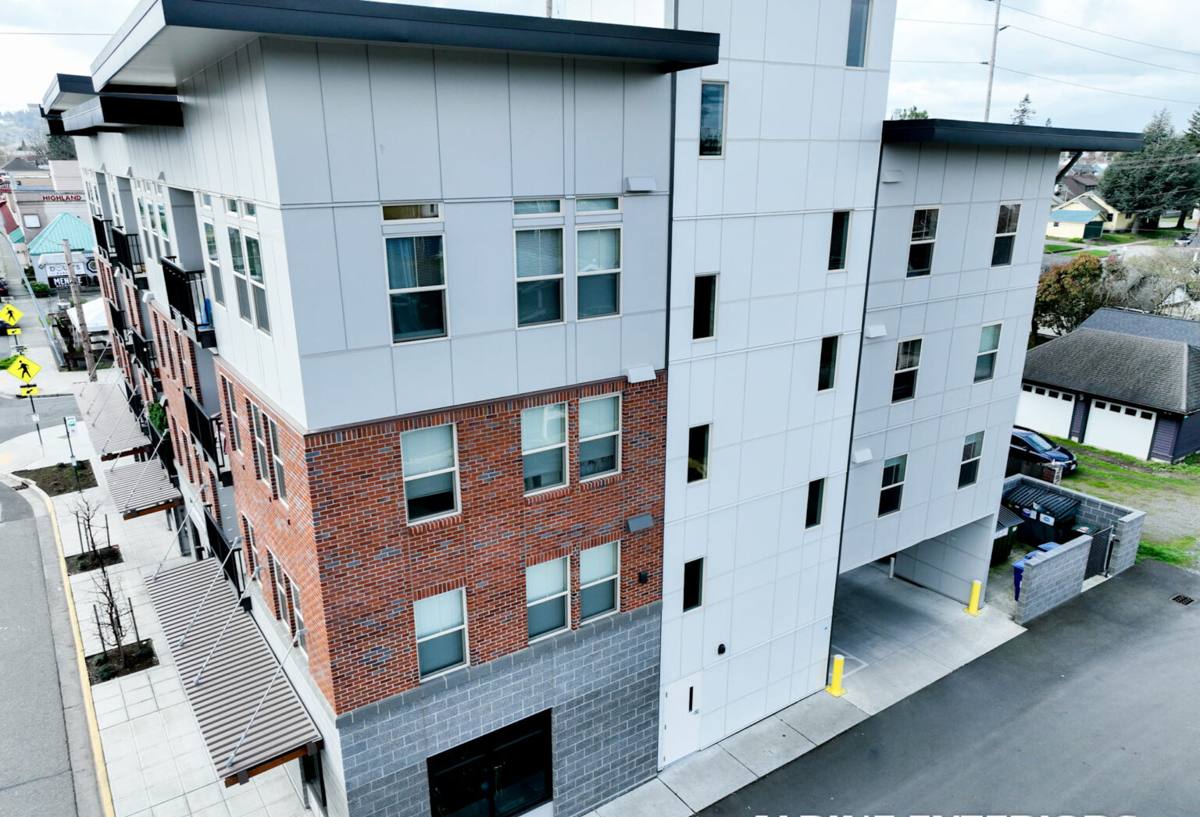
What Salt Air, Driving Rain, and Moss Season Actually Do to a House
Each of these three conditions attacks siding differently, and a good installation has to account for all three at once, not just the most obvious one.
Salt Air
Airborne salt is corrosive to metal fasteners, flashing, and trim that isn't rated for coastal exposure. Over years, it also accelerates the breakdown of paint films and coatings that aren't formulated to resist it. Siding on a peninsula like Point Roberts needs a finish system that's genuinely engineered for marine exposure, not just labeled "exterior grade."
Driving, Wind-Driven Rain
Rain that's pushed sideways by wind doesn't just run down a wall — it gets forced into every gap, seam, and fastener hole it can find. A siding system with weak seams or a drainage plane that's poorly detailed will let that water behind the cladding, where it can sit against sheathing and framing for weeks at a time in our wet season.
Moss and Algae Season
Shaded, moisture-retentive surfaces on the north and west sides of a house are where moss and algae take hold first. Once established, they hold water against the siding surface even longer, compounding the moisture problem. A siding material that resists organic growth — and a finish that doesn't give algae anything to grip — matters more here than in drier parts of the state.
Why We Install Only James Hardie Fiber Cement Here
We don't install LP SmartSide, vinyl, Cemplank, Allura, primed spruce, or cedar. That's a deliberate standard, not a limitation of what we're capable of installing. Each of those alternatives has real strengths — cedar looks the way people picture a Pacific Northwest home, vinyl is inexpensive and low-maintenance in mild conditions, engineered wood products are lighter and faster to install. But in a marine exposure environment like Point Roberts, each carries a trade-off we're not willing to put our name behind:
- Cedar and primed wood need ongoing refinishing, and any lapse in that maintenance schedule lets moisture in fast, especially with the amount of rain and shade this area sees.
- Vinyl can warp or become brittle with UV and temperature cycling over time, and it doesn't offer the fire-resistance or impact durability that fiber cement does.
- Engineered wood products (like LP SmartSide) perform well when installation is flawless, but they're more sensitive to sustained moisture exposure at cut edges and seams than fiber cement — a real concern given how much rain this peninsula absorbs.
James Hardie fiber cement is non-combustible, dimensionally stable in wet-dry cycling, and available in climate-specific HZ formulations. Combined with the factory-applied ColorPlus finish, it gives us a siding system engineered to hold up to the specific combination of salt, rain, and shade that Point Roberts homes deal with — without asking the homeowner to maintain it aggressively to keep that protection intact.
What Correct Installation Actually Involves
Fiber cement siding is only as good as the installation behind it. Hardie's own product warranty is conditioned on installation following their published specifications — and in a high-moisture coastal environment, the margin for error is smaller than it is inland.
Drainage Plane and Rainscreen Gap
Given how much wind-driven rain this area sees, a proper water-resistive barrier and a ventilated rainscreen gap behind the siding aren't optional extras — they're what lets any moisture that does get past the cladding drain and dry out instead of sitting against the wall assembly.
Fastening and Clearances
Fasteners need to be corrosion-resistant and set at the correct depth and spacing — over-driven or under-driven nails are one of the most common causes of early siding failure, and salt air exposure makes fastener quality even more important. Hardie also specifies minimum clearances from grade, roof lines, and decks so water has somewhere to go instead of wicking up into the board.
Joints, Trim, and Flashing
Butt joints, corners, and penetrations (vents, light fixtures, hose bibs) are where water intrusion actually starts on most homes. Correct flashing and sealant details at every one of these points — done to Hardie's spec, not just "close enough" — is what keeps a wind-driven rain event from becoming a moisture problem behind the wall.
Installation Checklist We Follow on Every Point Roberts Job
- Inspect and repair sheathing before any new siding goes up — covering a hidden problem never ends well
- Install a continuous water-resistive barrier with properly lapped and taped seams
- Set a ventilated rainscreen gap for drainage and drying
- Use corrosion-resistant fasteners rated for coastal/marine exposure
- Maintain Hardie's specified clearances from grade, roofing, and decking
- Flash and seal every joint, corner, and penetration to spec
- Confirm caulking and paint touch-up at cut edges before the job is called finished
Choosing the Right HZ Line and Finish for This Location
James Hardie makes climate-engineered HZ product lines specifically because siding needs differ by region. For a peninsula environment with heavy moisture exposure and salt air, we lean toward selections and detailing suited to wet marine climates rather than a generic inland spec. The ColorPlus factory finish is part of that decision — it's baked on and cured under controlled conditions, which gives it more consistent resistance to fading, chalking, and moisture than a field-applied paint job, and it holds up better against the salt exposure this area sees.
Board profile matters too. Lap siding, panel systems, and trim combinations each shed water differently, and the right choice depends on the specific home's exposure — how much of it faces prevailing wind and rain, how shaded it stays, and what's already happening with moss or staining on the existing exterior.
Cost Factors on a Point Roberts Siding Job
Every home is different, so we don't quote a number until we've walked the property, but the factors that move a project's cost up or down are consistent. Broad ranges only — an accurate number comes from an in-person estimate.
| Factor | Tends to Lower Cost | Tends to Raise Cost |
|---|---|---|
| Existing siding removal | Simple tear-off, one layer | Multiple layers or rot repair needed |
| Home shape | Simple rectangular footprint | Many corners, dormers, or roof intersections |
| Trim detail | Standard trim package | Custom trim, extensive window/door casing |
| Sheathing condition | Sound, dry sheathing | Moisture damage found once old siding is off |
| Access and logistics | Easy material delivery and staging | Tight lot access, extra logistics for a peninsula site |
That last row matters more here than in most parts of Whatcom County. Point Roberts is reached from the mainland by driving through Canada, which means material deliveries and crew scheduling need more lead time than a typical job in Birch Bay or Blaine. It's a logistics factor, not a technical one — but it's one we plan around from the first estimate rather than discovering mid-project.
How Our Process Works
The process is the same discipline we use on every home, adjusted for this location's logistics:
- Walkthrough and estimate — we look at the home's exposure, existing siding condition, and any moisture or moss issues already visible.
- Scope and product selection — we recommend the HZ line, profile, and ColorPlus color suited to that specific home's sun and weather exposure.
- Scheduling — because reaching Point Roberts takes extra travel time, we batch material delivery and crew days efficiently so the project isn't stretched out waiting on logistics.
- Tear-off and sheathing check — old siding comes off, sheathing gets inspected and repaired before anything new goes up.
- Installation to spec — barrier, rainscreen, fastening, and flashing done to Hardie's published requirements, not shortcuts.
- Final walkthrough — we go over the finished work with the homeowner before calling the job complete.
Why a Crew That Already Works Point Roberts Matters
Plenty of siding contractors will take a job anywhere in Whatcom County. Fewer have actually worked through the specific realities of a Point Roberts project — the border crossing for every crew day and material delivery, the exposure patterns on a home surrounded by water on three sides, and the moss and staining patterns that show up on north- and west-facing walls out here faster than almost anywhere else in the county. A crew that's done this before doesn't have to learn those lessons on your house. Scheduling gets planned correctly the first time, and the installation detailing accounts for exposure conditions instead of treating every home the same regardless of where it sits.
Keeping Your Siding in Good Shape After Installation
James Hardie fiber cement with a ColorPlus finish is low-maintenance, but "low" isn't "none," especially in this environment. A short seasonal routine goes a long way:
- Rinse salt residue and grime off the siding a couple of times a year, especially on wind-exposed walls
- Check north- and west-facing walls for early moss or algae growth and address it before it spreads
- Keep gutters clear so overflow doesn't run down and stain the siding face
- Trim back vegetation that keeps siding shaded and damp longer than necessary
- Touch up any caulking at trim joints or penetrations if it starts to crack or pull away
Homes near the water need a little more attention than homes further inland, but the difference is a maintenance routine, not a bigger repair bill down the road, when the siding and installation were done right in the first place.
If you're planning a siding project on Point Roberts, we're happy to walk the property and put together a free, no-pressure estimate — fill out the form below and we'll get in touch.