 Birch Bay Siding
 Point Roberts sits in a category of its own. It's part of Whatcom County, but it's cut off from the rest of Washington by land — the only way in by road is through Canada, across the Tsawwassen peninsula, and back into the U.S. at the border station. That geography shapes everything about how a house here holds up, and it shapes how a window replacement job needs to be planned, not just installed.
Add in the exposure — open water on multiple sides, salt-laden wind, driving rain, and a moss season that runs long and wet most of the year — and windows in Point Roberts tend to show wear earlier than the same units would a few miles inland. This page covers what that means for a window replacement project here: what fails first, what a correct job looks like, and why the logistics of this particular community are worth asking about before you hire anyone.
Why Point Roberts Windows Wear Out Ahead of Schedule
Windows are rated and warrantied against fairly generic conditions — a moderate climate, occasional wind-driven rain, normal humidity. Point Roberts doesn't offer moderate conditions on most of its exposed sides. Homes facing open water take wind and salt spray more days than not, and that steady exposure works on window components faster than a manufacturer's standard testing accounts for.
The parts that go first are rarely the glass. It's the hardware — locks, hinges, and cranks corroding from salt air — the weatherstripping compressing and hardening years ahead of schedule, and the seals around the glass unit failing early enough that you start seeing fog or moisture between the panes well before the window's rated lifespan is up. Wood sills and trim on older homes take the brunt of driving rain and moss growth, softening from the outside in long before anyone notices a problem from indoors.
Building Stock in This Community
A lot of homes in Point Roberts started as seasonal cabins or vacation properties, built to a lighter standard than a year-round primary residence would call for today. Many have been added onto, upgraded, or converted to full-time use over the years, and the original windows — sometimes decades old, sometimes builder-grade replacements from a prior remodel — are often the weakest link in an otherwise updated house. That mix of older openings and inconsistent past work is common enough here that we plan for it rather than treat it as a surprise.
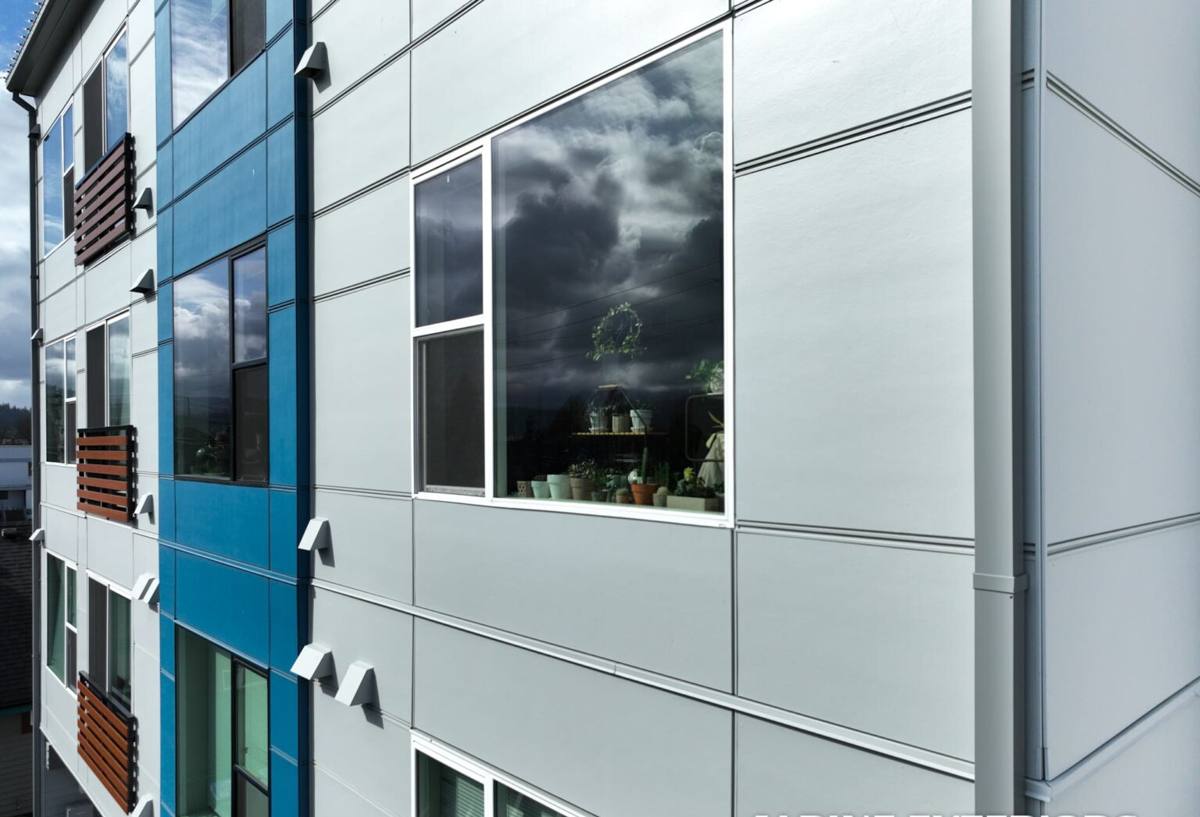
The Three Climate Factors That Actually Drive Failure
Three conditions do most of the damage to windows in this part of Whatcom County, and they don't act independently — they compound each other.
Salt Air
Airborne salt is corrosive to metal hardware, fasteners, and lower-grade frame reinforcement. On a coastal exclave like Point Roberts, that exposure is close to constant rather than occasional, which is why locks, balances, and cranks on older windows often bind or fail well before the glass or frame does.
Driving Rain
Storms off open water push rain sideways into wall assemblies and window flashing instead of letting gravity carry it straight down. That means water reaches gaps and seams that a calmer inland installation would never test. A window that's flashed correctly sheds that water outward; one that isn't will eventually let it track into the wall framing, usually well before it shows up as a visible leak indoors.
A Long Moss Season
Shade, dampness, and mild temperatures support moss and mildew growth on north- and water-facing walls for most of the year here, not just a few winter months. On windows, that shows up as green or black growth on sills, trim, and lower sashes, and it holds moisture against wood and painted surfaces longer than it would in a drier climate — which accelerates rot in anything that isn't well-sealed or naturally resistant.
Signs It's Time to Replace Rather Than Repair
Not every window problem calls for full replacement — some are legitimately fixable with new weatherstripping, hardware, or glazing. But certain signs point toward replacement being the more honest recommendation:
- Visible fog, haze, or moisture trapped between panes of a double-pane unit — the seal has failed and can't be repaired
- Soft, spongy, or discolored wood at the sill or lower frame corners
- Windows that won't stay open, won't latch securely, or bind when opening or closing
- Noticeable drafts or cold spots near the window frame even with it fully closed
- Visible daylight or gaps around the frame where it meets the wall
- Peeling paint, warping, or corrosion on hardware that's beyond simple cleaning or lubrication
- Higher heating bills without another clear explanation, especially in a room with older windows
If a window is showing one or two of these on an otherwise sound frame, repair may be the right call. If several are present, or the frame itself has moisture damage, replacement is usually the more cost-effective long-term decision — patching a failing frame tends to buy a year or two at most in this exposure.
What a Correct Window Replacement Job Involves
Assessment and Measuring
We start by looking at the actual condition of the opening, not just the window itself — checking the sill, the framing behind it, and whether prior flashing or caulking has been doing its job. Every opening gets field-measured; we don't assume a house this age has perfectly standard dimensions.
Removal and Opening Prep
Old units come out carefully so we can see what's actually going on behind them. This is often where hidden rot or past water intrusion gets found — better to catch it here than to seal a new window over a problem that's just going to keep spreading.
Flashing and Weatherproofing
This step matters more here than almost anywhere else in the county. Flashing has to be sequenced to shed wind-driven rain outward and downward, lapped correctly at every seam, and tied cleanly into the surrounding wall assembly. A window can be a good product and still fail early if this step is rushed or generic.
Installation and Sealing
The new unit gets set square and level, shimmed correctly so it operates smoothly for years rather than just on installation day, and sealed with materials suited to sustained moisture and salt exposure rather than a bargain caulk that hardens and cracks within a season or two.
Trim and Finish
Exterior trim gets integrated to match the surrounding siding, with attention to how it'll shed water and resist moss growth going forward — sloped sills, proper caulking lines, and finish materials that hold up to this climate rather than needing yearly touch-up.
Choosing a Frame Material for This Exposure
Frame material has a real impact on how long a window keeps performing in salt air and sustained moisture. We'll walk through the honest trade-offs for your specific home rather than defaulting to whichever product is fastest to install.
| Frame Material | Performance in This Climate | Trade-Off |
|---|---|---|
| Vinyl | Doesn't corrode or rot; handles salt air and moisture well | Lower upfront cost, but frame color and finish options are more limited |
| Fiberglass | Very stable in temperature swings and moisture; strong long-term durability | Higher upfront cost than vinyl; fewer installers stock it regionally |
| Wood-clad | Attractive interior look; exterior cladding protects the wood from direct weather | Needs the cladding and seals to be flawless — any breach exposes wood to this climate's worst conditions |
| Aluminum | Strong and slim sightlines, but conducts heat and cold readily | Prone to condensation and, without a thermal break, corrosion in salt air over time |
For most fully exposed, water-facing homes in Point Roberts, we lead with vinyl or fiberglass because they hold up to sustained salt exposure with the least ongoing maintenance. Wood-clad can still be the right call for homes where the interior look matters most, provided the exterior cladding and every seal around it is done correctly and inspected periodically — it's a trade-off worth discussing against your specific home and budget, not a one-size answer.
What Affects the Cost of a Window Replacement Project
We won't quote a number without seeing the windows and openings in person, but the factors that typically move price are consistent from job to job:
- Number of windows being replaced and whether they're being done in one visit or phased over time
- Frame material and glass package selected
- Condition of the existing opening — sound framing costs less to work with than one that needs repair
- Standard versus custom sizing, especially on older or previously modified openings
- Access and site logistics, including travel and scheduling for a location like Point Roberts
- Whether trim, siding, or interior finish work needs to be integrated around the new units
Our Process, Start to Finish
- On-site assessment — we look at every window being considered, check the condition of the openings, and give an honest read on repair versus replacement
- Product recommendation — frame material, glass package, and sizing suited to this specific home and its exposure
- Scheduling and ordering — built around realistic lead times and the logistics of reaching Point Roberts, discussed upfront so there are no surprises
- Removal and prep — old units come out, and any hidden framing or moisture issues get addressed before the new window goes in
- Installation and flashing — set, shimmed, and flashed to a sequence built for this climate, not a generic template
- Trim, finish, and walkthrough — exterior trim matched to the home, and a final check with you before we call the job done
Why a Crew That Already Works Point Roberts Matters
Point Roberts is a genuine exclave — reaching it by land means crossing an international border twice, once each way. That's not a detail most contractors think about when they bid a job, and it's a real reason some crews avoid the community altogether or pad their price to cover the uncertainty. A crew that already works here has that logistics figured out: material orders get planned around the crossing and realistic delivery windows, work gets scheduled in efficient blocks rather than piecemeal trips, and nobody's improvising a fix because a part didn't make it across on time.
That familiarity extends past logistics. A crew that has actually installed windows on this stretch of coastline knows which parts of a manufacturer's standard guidance hold up here and where extra time on flashing or sealant is worth it even when it isn't strictly required somewhere calmer. Those are the decisions that determine whether a window is still performing cleanly in fifteen years or showing drafts and soft trim in five.
What to Ask Before Hiring for Window Work Here
- Ask whether they've completed projects in Point Roberts specifically, not just elsewhere in Whatcom County
- Ask how they plan material delivery and scheduling around the border crossing
- Confirm current Washington contractor licensing and insurance
- Get a written scope of work, including what's covered under labor warranty versus manufacturer warranty
- Ask how they'd sequence flashing for a fully exposed, water-facing wall specifically
If your windows are showing their age or you're planning ahead for a remodel, it's worth having someone look at the actual openings before you start comparing products or prices. We offer free, no-pressure estimates for window replacement in Point Roberts and the surrounding area — use the form below to get a time on the schedule.