 Birch Bay Siding
 Deck Repair for Point Whitehorn Homes
Point Whitehorn sits along the bluffs and shoreline north of Birch Bay proper, in the stretch of Whatcom County that faces straight out onto the Strait of Georgia. Homes here get less shelter than properties tucked back from the water, which means decks in this part of the county take a harder, steadier beating from salt air, wind-driven rain, and a moss season that runs most of the year. A deck that would hold up fine a few miles inland can start showing real problems out here well ahead of schedule.
This page covers deck repair specifically for the Point Whitehorn area — what the local exposure actually does to a deck, how to tell repair from replacement, what a correct repair job involves, and why it matters to have a crew that already works this stretch of coastline rather than one learning it on your project.
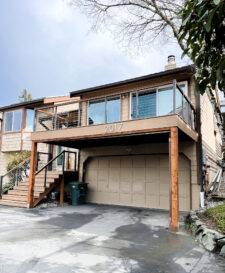
What This Stretch of Coastline Does to a Deck
Salt Air Off the Strait
Being this close to open water means a steady, low-grade dose of salt-laden air hits every exposed surface on a deck, not just the boards. Fasteners, joist hangers, post brackets, and railing hardware all take the brunt of it, and corrosion in structural metal doesn't announce itself the way a faded board does — a screw or hanger can be losing holding strength well before it looks obviously bad. On a structure people stand and walk on, that's the part worth catching early.
Wind-Driven Rain
Storms coming off the Strait rarely fall straight down by the time they reach a bluff-top or shoreline property near Birch Bay. Wind pushes rain sideways, driving it up under railings, into ledger connections, and between deck boards that were never gapped to shed water moving at an angle. A deck that looks tight and dry on a calm day can still be taking on moisture at every one of those connection points the moment wind gets involved — and out here, wind is involved often.
A Moss Season That Doesn't Really End
Mild temperatures and near-constant dampness give moss and mildew a long growing season in this part of Whatcom County, and a horizontal deck surface is one of the first places it takes hold. Shaded decks, north-facing surfaces, and anywhere water tends to sit a little longer than it should are usually first to show green growth. Left alone, moss doesn't just look bad — it holds moisture against the board surface and accelerates whatever rot or wear is already starting underneath it.
Signs Your Deck Needs Repair
Some deck problems are obvious. Others hide underneath a surface that still looks acceptable from a few feet away. Worth checking for, especially heading into the wet months:
- Boards that feel soft, spongy, or give slightly underfoot, especially near the house or along the deck's edge
- Rust streaking or dark staining around screws, bolts, or metal connectors
- A railing or post that wiggles, flexes, or feels less solid than it used to
- Gaps opening up where the deck meets the house, or daylight visible behind ledger flashing
- Persistent moss or dark staining that keeps coming back within weeks of cleaning
- Stairs that feel uneven, bouncy, or have visibly shifted from level
- Visible cracking, splitting, or checking along structural framing members, not just surface boards
- A musty smell coming from underneath the deck, which usually points to trapped moisture
Any one of these on its own might be a minor fix. A few of them together, especially involving the framing or ledger connection, usually mean it's time for a proper structural look rather than a cosmetic patch.
Common Deck Repair Issues We See Around Point Whitehorn
The specific repairs a deck needs out here follow a fairly consistent pattern, driven by the same salt air and wind-driven rain every property in this stretch deals with.
Ledger Board and Flashing Failures
The ledger board — where the deck attaches to the house — is one of the most common failure points on any deck, and wind-driven rain makes it worse here than in more sheltered parts of the county. When flashing at that connection was installed poorly, or has simply worn out, water gets behind it and into the rim joist and house framing before anyone notices from the outside. By the time staining or softness shows up on the surface, the damage underneath is usually further along than it looks.
Fastener and Hardware Corrosion
Standard fasteners and joist hangers weren't built for sustained salt exposure, and it shows in the form of rust streaking, weakened connections, and hardware that's lost its grip well before the wood around it has failed. This is one of the most common reasons we get called out to a deck that otherwise still looks structurally sound — the metal holding it together is the actual problem, not the boards.
Rot in Framing and Decking
Wherever moisture sits and doesn't fully dry — under railings, between poorly gapped boards, around post bases set in or near grade — rot gets a foothold. In this climate, wood that isn't rated or sealed for sustained dampness can go from a small soft spot to a real structural concern faster than homeowners expect, simply because it rarely gets a long enough dry stretch to recover between storms.
Railing and Post Movement
Loose or wobbly railings are usually a sign of failing fasteners, a rotting post base, or both, and it's one of the more safety-relevant repairs we handle. Given how much wind this area sees, a railing connection that's been slowly weakening isn't something to leave for "next season" — it's meant to hold a person's weight under load, not just look fine when nobody's leaning on it.
Repair or Replace? How We Decide
Not every deck problem calls for a full rebuild, and not every deck is worth patching indefinitely either. We look at a few factors before recommending one path over the other:
| Factor | Points Toward Repair | Points Toward Replacement |
|---|---|---|
| Framing condition | Solid, dry, structurally sound underneath | Widespread rot, soft joists, or a compromised ledger connection |
| Age of the deck | Newer build with isolated issues | Older deck nearing the end of its material lifespan |
| Extent of damage | Localized to a few boards, posts, or connections | Spread across multiple structural areas |
| Fastener condition | Isolated corrosion, easily replaced | Widespread hardware failure throughout the structure |
| Code compliance | Meets current railing and structural standards | Outdated railing height, spacing, or footing that no longer meets code |
In a lot of cases the honest answer is a hybrid: repair what's sound, replace what isn't, rather than defaulting to either extreme. We'd rather tell a homeowner their deck has a few good years left in it with the right repairs than sell a full rebuild that isn't actually necessary yet — and we'll say so plainly if a repair genuinely isn't the better long-term value.
What a Correct Deck Repair Involves
A repair that actually holds up in this environment goes beyond swapping out the board or bracket that's visibly failed. It means tracing the problem back to its source and addressing what let the damage happen in the first place. That generally includes:
- A full structural assessment — not just the visible symptom, but the framing, ledger connection, and hardware around it
- Removing and replacing any rotted or compromised framing members, sized and rated correctly for the load they carry
- Re-flashing the ledger connection where the deck meets the house, since that's the point most likely to be the actual source of a moisture problem
- Replacing corroded fasteners and hardware with stainless steel or coastal-grade corrosion-resistant equivalents, not standard hardware that will fail again on the same timeline
- Correcting board gapping or drainage issues that are letting wind-driven rain sit where it shouldn't
- Securing and reinforcing railing and post connections to current structural standards
- A final check of the repaired area under load, not just a visual sign-off
Skipping any of those steps tends to produce a repair that looks fine for a season or two and then fails again in the same spot, for the same reason. Out here, that's close to a guarantee if the actual cause — usually moisture intrusion or fastener corrosion — never gets addressed.
How Our Process Works
We start with an on-site assessment, looking at the framing from underneath where we can access it, checking the ledger connection, and testing boards, railings, and posts for soft spots or movement rather than relying on a surface look alone. From there we walk through what we're seeing with the homeowner directly — what needs repair now, what's worth watching, and what the realistic cost difference is between a targeted repair and a larger rebuild.
Any work that touches structural framing, footings, or railing height gets handled to current code requirements, and if the scope requires a permit through the county, we take care of that as part of the job rather than leaving it for the homeowner to sort out. Once the plan is set, repair work follows the sequence above — structural issues and moisture sources first, then hardware, then surface-level work like decking boards or railing components. We finish with a walkthrough covering what to watch for going forward, specific to the materials and repairs on your deck.
Keeping a Repaired Deck Sound in This Climate
A well-done repair still needs some routine attention out here to actually last. Worth building into a yearly routine:
- Rinse the deck surface periodically to clear salt residue and organic buildup before it works into the wood or board surface
- Keep gaps between boards clear of leaves, needles, and debris so water can actually drain the way the design intends
- Check railing posts and hardware once a year, ideally before the wettest months, for early corrosion or loosening
- Trim back any overhanging vegetation that's holding moisture against the deck surface or blocking sun and airflow
- Watch the ledger connection and any area that stayed damp before — that's the spot most likely to need attention again if something was missed
- Address soft spots or standing water underneath right away; it's a structural issue, not a cosmetic one, and it doesn't improve on its own
Why a Crew That Already Works Point Whitehorn Matters
A contractor who mostly works further inland can still do competent deck repair, but this stretch of coastline has variables that don't come up as often elsewhere in Whatcom County — sustained salt exposure that ages hardware faster than standard fastener grades are built for, wind-driven rain patterns that concentrate moisture at specific connection points, and a moss season that runs longer here than in more sheltered towns. Working this area regularly means we're not guessing at any of that on your project.
We've seen which fastener grades actually hold up against this exposure, which framing details tend to fail first on bluff-top and shoreline decks, and where the real problem usually hides when a homeowner calls about a soft board or a wobbly railing. That familiarity shows up in smaller judgment calls too — knowing where to check first during an assessment, and being straightforward about what your specific deck actually needs versus what's just an upsell.
Get a Straight Assessment of Your Deck
If your deck near Point Whitehorn has a soft spot, a wobbly railing, or you're just not sure whether it needs a repair or something bigger, we're happy to take a direct look and give you an honest read on it. Reach out below for a free, no-pressure estimate.