 Birch Bay Siding
 Roof Repair Built for Point Whitehorn's Coastal Exposure
Point Whitehorn sits close enough to the water that its roofs live under different conditions than a roof ten miles inland in Whatcom County. Salt-laden air off the Strait of Georgia works on metal fasteners and flashing year-round. Driving rain off the water finds its way sideways under shingle tabs and around vent boots that would stay dry in a more sheltered spot. And the long, wet moss season here does more than make a roof look neglected — it holds moisture against the roofing material for months at a time. A roof repair that doesn't account for all three of those factors tends to fail again within a season or two. One that does account for them can add years of service life to a roof that isn't ready for full replacement.
We repair roofs in Point Whitehorn regularly, which means we're not guessing at how this particular stretch of coastline treats a roof. We know which details fail first out here and which ones hold up.
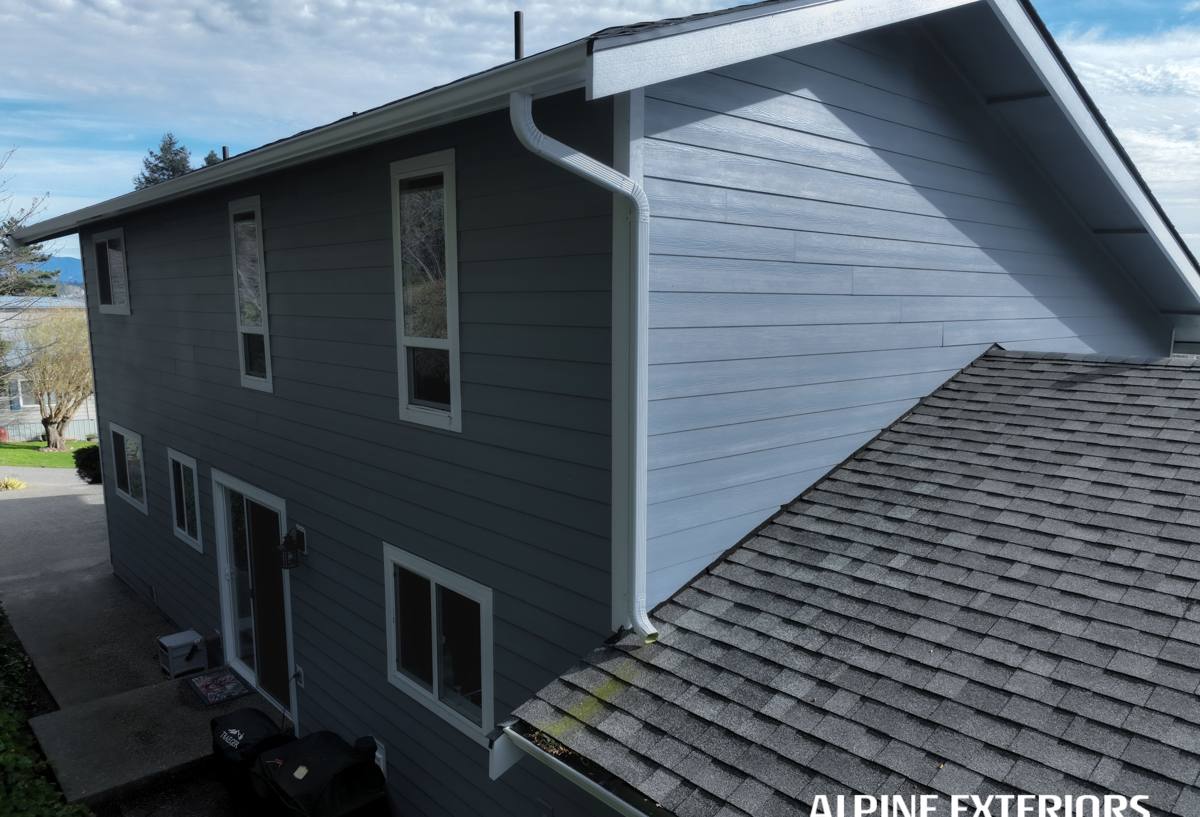
Common Roof Problems We See in Point Whitehorn Homes
Moss and Organic Growth
Birch Bay's tree cover and marine humidity give moss everything it needs to establish itself, especially on north-facing slopes and anywhere shade lingers. Left alone, moss lifts shingle edges, traps water against the roof deck, and accelerates granule loss. By the time moss is visible from the ground, it's often already working its way under the shingles at the butt edges.
Flashing and Fastener Corrosion
Salt air is hard on exposed metal. Nail heads, step flashing, valley metal, and vent boot collars all corrode faster near the water than they would further inland. Corrosion doesn't just look bad — it's usually where the first active leaks start, because a corroded fastener loses its grip and a corroded flashing seam opens a path for water.
Wind-Driven Rain Intrusion
Open exposure toward the water means rain doesn't always fall straight down. Driving rain can push up and under shingle tabs, ridge caps, and poorly sealed penetrations that would shed water fine in calmer conditions. This is one of the most common reasons we get called to a roof that "shouldn't" be leaking based on its age.
Deck and Sheathing Damage
Where moisture has been sitting for a while — under moss, behind failed flashing, around a chimney or skylight — the plywood or board sheathing underneath can soften or delaminate. This is usually discovered once we pull back the roofing material, not before, which is why an honest inspection matters more than a quick surface look.
Signs Your Roof Needs Repair Now
Most roof problems give warning signs well before they become an interior leak. Worth checking for, or asking us to check for:
- Granules collecting in gutters or at downspout outlets
- Moss or dark streaking on shaded or north-facing slopes
- Curling, cracked, or missing shingle tabs
- Rusty streaks below metal flashing or vent boots
- Soft or spongy spots when walked (we check this — homeowners shouldn't walk their own roof)
- Daylight visible through the attic roof deck
- Water stains on interior ceilings, especially after a windy rainstorm
- Sagging along a ridge or valley line
Any one of these on its own doesn't necessarily mean a full replacement. It usually means it's time for a closer look before the problem spreads.
Repair vs. Replacement: How We Help You Decide
Not every roof problem in Point Whitehorn calls for a full tear-off, and we won't push you toward one if a targeted repair will genuinely hold. The honest factors we weigh:
| Factor | Favors Repair | Favors Replacement |
|---|---|---|
| Roof age | Under roughly 15 years, or well under material's rated life | Near or past the roofing material's expected lifespan |
| Extent of damage | Isolated to one slope, valley, or penetration | Multiple slopes affected, or widespread granule loss |
| Deck condition | Sheathing solid where checked | Soft or delaminated sheathing found in more than one area |
| Moss history | First occurrence, caught early | Repeated moss damage over multiple seasons |
| Underlayment condition | Still intact and doing its job | Brittle, torn, or failing in multiple spots |
We'll tell you plainly which side of that line your roof falls on, and why — including when a repair is the right call even though a replacement would obviously be more work for us.
Our Roof Repair Process
1. Inspection
We start on the roof itself, not just from the ground, checking flashing, valleys, penetrations, ridge lines, and shaded slopes where moss tends to establish first. We also check the attic side where accessible, since deck damage often shows up there before it shows up outside.
2. Honest Assessment
You get a clear explanation of what's actually wrong, what's causing it, and what a proper repair involves — not a scare tactic toward a bigger job than the roof needs.
3. Moss and Debris Removal
Where moss or organic buildup is part of the problem, it gets removed correctly — not power-washed in a way that strips granules or drives water under the shingles, which does more harm than good.
4. Targeted Repair
Damaged shingles, flashing, or underlayment get replaced with materials matched to what's already on the roof wherever possible, tied in correctly at seams and laps so the repair sheds water the same way the original installation was designed to.
5. Verification
We check the repair against the specific failure point that brought us out — if wind-driven rain was the issue, we make sure the fix addresses that exposure, not just the visible damage.
Materials and Methods for Coastal Durability
For repairs in a salt-air, high-moisture environment like Point Whitehorn, a few choices matter more than they would further inland:
- Fasteners and flashing: We favor corrosion-resistant materials for any flashing or fastener replacement near the coast — standard-grade hardware corrodes faster here and turns into a repeat callback.
- Sealants: Products rated for sustained UV and moisture exposure, not general-purpose caulk that dries out and cracks within a season or two.
- Underlayment: When a repair opens up enough roof area to matter, we use underlayment suited to the region's rain load, not the minimum the material manufacturer allows.
- Ventilation check: Poor attic ventilation traps moisture and speeds up deck and shingle failure, so a repair visit is also a chance to flag ventilation issues that make future problems more likely.
These aren't upsells — they're the same materials we'd want on our own roofs if we lived a quarter mile from the water.
Cost Factors in a Point Whitehorn Roof Repair
Every roof and every repair is different, so we won't quote a number without seeing the roof. What generally moves the price:
| Factor | Effect on Cost |
|---|---|
| Size of the damaged area | Larger or multi-slope damage costs more than an isolated spot repair |
| Roof pitch and access | Steeper roofs or difficult access add labor and safety setup time |
| Sheathing replacement | Rotted or soft deck found underneath adds material and labor beyond the surface repair |
| Material match | Older or discontinued shingle profiles can take longer to source a close match for |
| Flashing scope | Full flashing replacement at a valley or chimney costs more than sealant touch-up but lasts far longer |
We'd rather walk you through these factors on your actual roof than throw out a broad estimate that doesn't hold up once we're up there.
Why Local Experience in Point Whitehorn Matters
A roof repair crew that only occasionally works the coast tends to treat every job the same way they'd treat one twenty miles inland. That's how you end up with a repair that looks fine going in but fails again in a year because it wasn't built for salt exposure or wind-driven rain. Working Birch Bay and Point Whitehorn regularly means we already know which slopes on a coastal roof tend to hold moss, which flashing details are most exposed to driving rain, and which materials actually hold up under Whatcom County's marine conditions instead of just meeting a minimum spec. That's the difference between a repair that lasts and one that's a temporary patch.
After the Repair: Keeping It That Way
A good repair buys you time — a little basic upkeep protects that investment:
- Keep gutters clear so water isn't backing up under the roof edge
- Trim back overhanging branches that keep shaded areas damp
- Have moss removed at the first sign of regrowth, before it re-establishes
- Schedule a roof check after any major windstorm off the water
- Address small leaks immediately — they rarely stay small on a coastal roof
If your roof in Point Whitehorn is showing moss, missing granules, or a leak that seems to show up only when the wind's blowing off the water, we're glad to take a look. We'll give you a straight answer on what it needs and a free, no-pressure estimate — just fill out the form below to get started.