 Birch Bay Siding
 Siding Repair Built for the Point Whitehorn Shoreline
Point Whitehorn sits along the Strait of Georgia just north of Birch Bay, and that stretch of Whatcom County shoreline doesn't treat exterior siding gently. Homes here face a combination that most inland siding never has to survive: near-constant marine air carrying salt, long stretches of driving rain pushed in by wind off the water, and a moss and algae season that can run most of the year in our climate. We work this stretch of coastline regularly, and the repair calls we get from Point Whitehorn homeowners follow a pretty consistent pattern once you've seen enough of them.
This page is about one thing: repairing existing siding on Point Whitehorn homes correctly, not just patching over a problem that will resurface in a year or two. If your siding is failing early, staining, cracking, or letting water in around a window or corner, here's what's actually going on, what a proper repair looks like, and how we approach the job.
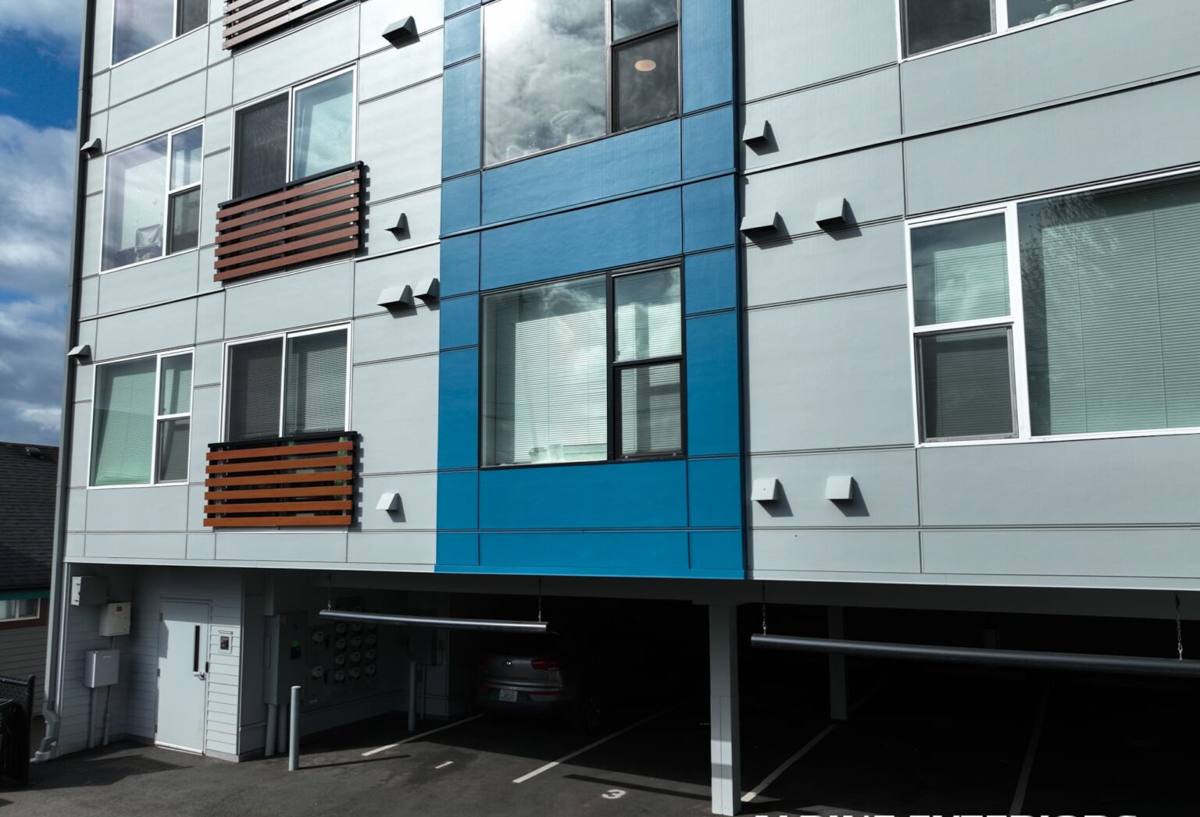
Why Siding Fails Faster Near the Water
Salt air is corrosive to metal fasteners, flashing, and trim in ways that inland homes never experience. Combined with wind-driven rain that gets forced sideways into joints, seams, and fastener holes, exterior siding along the water takes on moisture load that manufacturers' standard installation specs weren't always built to fully account for in every case. Add Whatcom County's damp, low-sun winters and you get extended periods where siding surfaces simply don't dry out — which is exactly the condition moss, algae, and mildew need to take hold.
None of this means siding is doomed near Point Whitehorn. It means the material, the installation details, and the maintenance schedule all matter more here than they would forty miles inland. Repairs that don't account for this — a quick caulk-and-paint patch, for example — tend to fail again within a season or two.
What We Typically See on Point Whitehorn Repair Calls
- Swollen, delaminating, or soft siding near ground level, downspouts, or splashback zones
- Cracked or gapped caulking at trim joints and window/door casings, letting wind-driven rain behind the siding
- Moss and dark algae staining concentrated on north- and west-facing walls that stay shaded and damp
- Corroded or failing fasteners and flashing, especially on older installations using non-coastal-rated hardware
- Warped, cracked, or bowed panels on walls that catch direct wind off the water
- Paint or finish failure well ahead of the expected service life, usually tied to trapped moisture underneath
Repair or Replace? How We Make That Call
Not every damaged section needs full replacement, and not every homeowner needs to hear "you should re-side the whole house" when a targeted repair will hold up fine. We look at three things before recommending a path: how much of the wall is actually compromised, whether the underlying water-resistive barrier and sheathing are still sound, and whether the existing siding material is even worth repairing versus phasing it out.
| Situation | Usual Recommendation |
|---|---|
| Isolated damage — one section, corner, or trim run | Targeted repair, matched material and finish |
| Damage tracks back to a flashing or window-integration failure | Repair the water management detail first, then the siding around it |
| Soft or delaminated sheathing found once siding is opened up | Repair scope expands to address the sheathing, not just the surface |
| Widespread moss, staining, and finish failure across most walls | Full re-side is usually more cost-effective long term than repeated patching |
| Original material is a moisture-sensitive product nearing end of service life | We'll be upfront if repair is just delaying an inevitable replacement |
We'll always tell you honestly which category your home falls into. A repair that's really just postponing a bigger failure isn't a favor to you — it's a favor to whoever has to deal with it two winters from now.
What a Correct Repair Actually Involves
A siding repair that holds up on the Point Whitehorn shoreline isn't just about matching color and texture. The parts nobody sees are what determine whether the repair lasts through a few more wet seasons or fails again.
Water Management First
Before we replace a single piece of siding, we check what's behind it. If water got in, something let it in — a gap in the house wrap, a missing or improperly lapped flashing, a caulk joint that should have been a mechanical flashing detail instead. Replacing the visible siding without fixing that entry point just resets the clock on the same failure.
Matching Material and Fastening
Patch repairs need to match the existing siding's profile, exposure, and finish closely enough that they don't stand out and, more importantly, don't create a mismatched water path. Fasteners and flashing components should be corrosion-resistant hardware suited to a marine environment — not the standard-grade hardware that's fine forty miles inland but corrodes early this close to the water.
Sealant Done Right, Not Overdone
Caulk is a backup, not a primary water barrier. A repair that leans entirely on caulking to keep water out is a repair that will need to be redone. Proper flashing and correct lapping order come first; sealant fills the small gaps flashing can't.
Moss, Algae, and Staining: Repair or Just Cleaning?
Surface staining from moss and algae is common on shaded Point Whitehorn walls and doesn't always mean the siding itself has failed. We check whether the staining is cosmetic — sitting on a sound painted or factory-finished surface — or whether it's a sign that the substrate underneath has stayed wet long enough to start breaking down. Cosmetic staining can often be cleaned and the finish restored. Staining tied to soft, swollen, or delaminating material underneath is a repair issue, not a cleaning issue, and we'll tell you which one you're looking at rather than guessing.
Our Repair Process
- On-site inspection. We walk the exterior, identify every problem area (not just the one you called about), and check for related issues like gutter overflow or grading that's feeding the damage.
- Probe and diagnose. Where we suspect trapped moisture, we open the area up enough to confirm what's happening behind the siding before quoting anything.
- Written scope. You get a clear explanation of what's damaged, what's causing it, and what the repair includes — no vague line items.
- Fix the source, then the surface. Flashing and water management details get corrected first; siding and trim go back over a properly sealed assembly.
- Finish match. We match paint, caulk lines, and reveal spacing so the repair blends into the existing wall rather than standing out as an obvious patch.
Repair Cost Factors
We don't quote pricing without seeing the wall, but these are the variables that actually move the cost of a Point Whitehorn siding repair up or down:
| Factor | Why It Matters |
|---|---|
| Extent of hidden moisture damage | Sheathing or framing repair adds scope beyond the visible siding |
| Wall height and access | Second-story and steep-grade walls near the bluff take longer and need more setup |
| Material availability | Matching an older or discontinued profile can take more effort than a current product |
| Flashing and window integration work | Fixing the actual water entry point, not just the siding around it |
| Finish matching | Custom color matching versus a stock factory finish |
Why We Only Use James Hardie for Repair Sections
When a repair calls for replacing damaged boards or panels, we use James Hardie fiber cement — the same standard we install on full re-sides. It's non-combustible, engineered for wet climates in its HZ5 product line, and the factory ColorPlus finish holds color and resists the kind of moss and algae staining we see so often on Point Whitehorn's shaded, damp-facing walls. That matters for a repair specifically: a patch section that weathers, fades, or absorbs moisture differently than the surrounding siding is a patch that will look wrong and perform worse within a couple of years. Fiber cement doesn't swell or delaminate the way wood-based or moisture-sensitive siding products can, which is exactly the failure mode we're called out for most often near the water.
If your existing siding is a product we don't install — vinyl, LP SmartSide, or a primed wood product, for example — we'll still repair it honestly where a repair makes sense, and we'll tell you straight if the material itself is what's working against you long term.
Why Hire a Crew That Already Works Point Whitehorn
Coastal Whatcom County siding work isn't the same trade as siding work forty minutes inland. A crew that regularly works the Birch Bay and Point Whitehorn shoreline already knows which wall orientations take the worst of the wind-driven rain, which fastening and flashing details actually hold up against salt air, and what moss and staining patterns mean versus what they just look like. That's the difference between a repair that lasts and one you're calling someone back for in eighteen months.
What to Check Before You Hire
- Washington state contractor licensing and current liability insurance
- Experience specifically with coastal or marine-exposure siding repair, not just general remodeling
- A written scope that explains the cause of the damage, not just the fix
- Willingness to open up a suspect area and show you what they find before quoting
- Straight answers about repair versus replacement, without automatically upselling a full re-side
If you're seeing staining, soft spots, cracked trim joints, or water intrusion on a Point Whitehorn home, we're glad to take a look. The estimate is free, there's no pressure, and you'll get an honest read on whether you need a repair, a bigger fix, or just a good cleaning — use the form below to get started.