 Birch Bay Siding
 Point Whitehorn's Climate Is Harder on Siding Than Most Homeowners Realize
Point Whitehorn sits close to the water on the Whatcom County coastline, and that proximity shapes everything about how siding ages here. Salt-laden air moves inland off the Strait, driving rain comes in sideways during fall and winter storms, and the tree cover and marine humidity that make this stretch of shoreline so pleasant to live on also keep exterior surfaces damp for long stretches of the year. Add in a moss season that can run from late fall through spring, and you have a set of conditions that will find every weak point in a siding system: a poorly lapped joint, a gap in flashing, a fastener that wasn't rated for coastal exposure.
None of this means siding replacement in Point Whitehorn has to be a losing battle. It means the job has to be done with those specific stressors in mind, not with a generic approach borrowed from a drier inland climate. That's the difference between siding that looks good for two seasons and siding that holds up for decades.
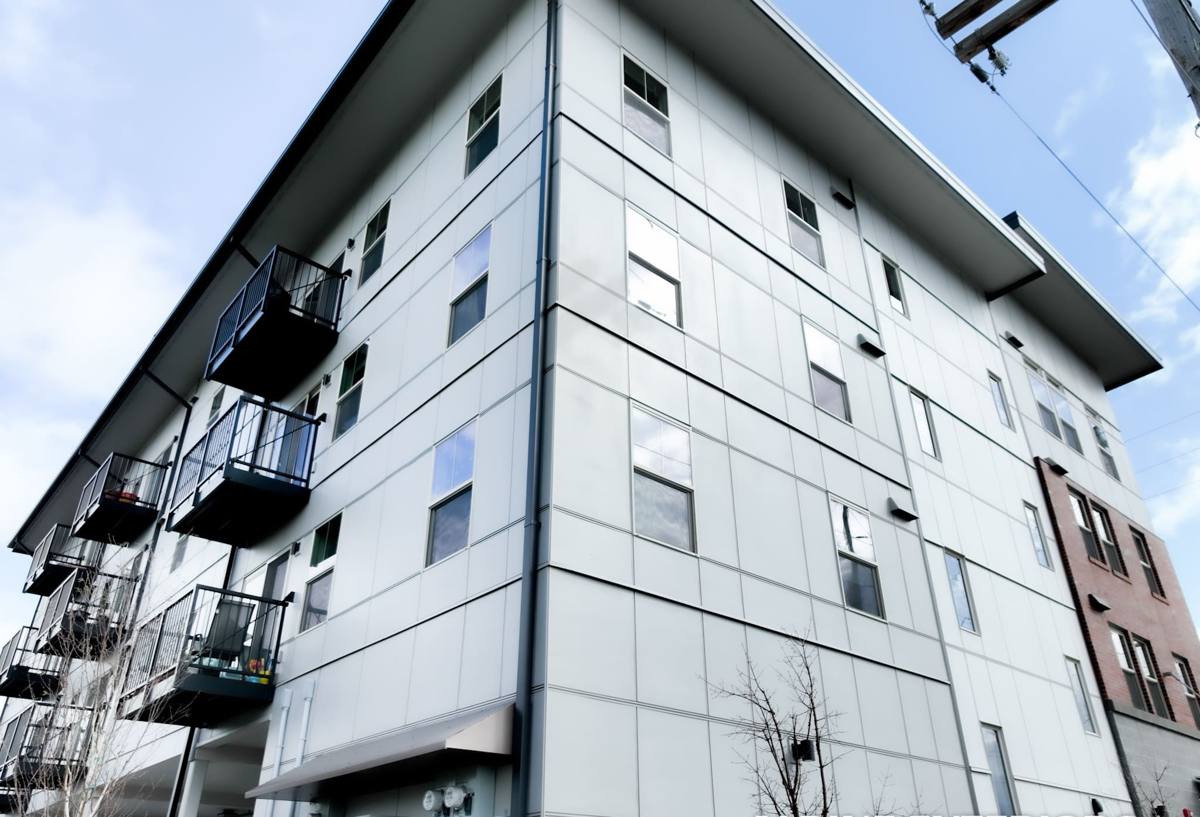
What "Correct" Siding Replacement Actually Involves
Siding replacement is not just stripping old material and nailing up new panels. The siding itself is the last layer of a system, and if the layers underneath it aren't right, new siding will fail the same way the old siding did — just faster, because moisture problems tend to compound once they start.
Full Tear-Off and Substrate Inspection
A proper replacement starts with removing the existing siding down to the sheathing, not covering over it. This is the only way to actually see what's happening behind the old material — soft or delaminated sheathing, rot around window and door openings, rusted fasteners, or trapped moisture that's been sitting against the wall for years. In a marine climate like Point Whitehorn's, hidden moisture damage is common enough that skipping this step is a real risk, not a formality.
Water-Resistive Barrier and Flashing
Behind the siding, a continuous water-resistive barrier (house wrap) needs to be installed and properly lapped, with flashing integrated at every window, door, and penetration so water is directed out and down, never trapped behind the cladding. With driving rain a regular feature of the local weather, this layer does more real work than the siding itself in terms of keeping a wall assembly dry.
Fastening and Fastener Choice
Salt air accelerates corrosion on standard fasteners. Coastal-rated, corrosion-resistant fasteners, installed at the correct spacing and depth for the specific siding product, matter more here than in an inland install. Overdriven or underdriven nails are one of the most common causes of early siding failure, and it's a detail that's easy to rush on a job priced too low to do it right.
Joints, Caulking, and Factory Finish
Butt joints, corners, and trim transitions are where water intrusion typically starts. Correct installation means tight, properly backed joints and the right sealant used sparingly and in the right places — not as a substitute for good flashing and lap technique.
Why We Install Only James Hardie Fiber Cement
We standardized on James Hardie fiber cement siding and don't install vinyl, LP SmartSide, or other fiber cement alternatives. That's a deliberate choice based on how these products perform over time in this climate, not a sales position.
Fiber cement is non-combustible and dimensionally stable in a way that matters in a climate with sustained damp exposure — it doesn't swell, warp, or become a food source for the fungal growth that drives moss and algae staining on siding near the water. James Hardie's ColorPlus factory finish is baked on under controlled conditions, which gives it more consistent adhesion and fade resistance than field-applied paint, and it comes backed by a real transferable warranty. Hardie also builds climate-specific HZ product lines engineered for different moisture and temperature exposures, which is directly relevant for a coastal Whatcom County property.
We're not going to tell you competing products are worthless — vinyl is inexpensive and low-maintenance in mild climates, and engineered wood has real fans. But for a home taking on salt air, driving rain, and months of damp shade every year, we've seen which material holds a factory finish, resists moisture-driven damage, and doesn't need repainting every several years. That's what we put on Point Whitehorn homes.
Our Process, Start to Finish
- On-site assessment: We walk the exterior, check current siding condition, look for moisture staining, soft spots, and problem areas around windows, decks, and grade-level transitions.
- Written estimate: A clear scope covering tear-off, substrate repair allowances, water-resistive barrier, flashing details, siding product and color, and trim.
- Substrate repair: Any rotted or damaged sheathing and framing is repaired or replaced before new siding goes on — this is never skipped to save time.
- Weather barrier and flashing installation: Continuous house wrap, properly lapped, with flashing at every penetration.
- Siding installation to manufacturer spec: Correct fastener type, spacing, clearances from grade and roof lines, and joint treatment.
- Final walkthrough: We review the completed work with you before calling the job done.
Signs a Point Whitehorn Home Needs Siding Replacement Now
Some warning signs are obvious from the ground; others take a closer look. If you're seeing more than one or two of these, it's worth having the siding assessed before small problems become structural ones.
- Persistent moss, algae, or black streaking that returns within weeks of cleaning
- Boards that feel soft, spongy, or crumble at the edges when pressed
- Visible warping, bowing, or gaps opening up between boards or panels
- Paint that's peeling, bubbling, or failing faster than a normal repaint cycle
- Rust streaks running down from fastener heads
- Rising energy bills with no other explanation, which can point to a compromised weather barrier
- Visible rot or soft trim around windows, doors, or where siding meets the foundation
Cost Factors in Siding Replacement
Every home is different, but the same handful of factors drive most of the price difference between jobs in this area. This table is meant to help you understand where your money goes, not to substitute for an actual estimate.
| Factor | Why It Matters Here |
|---|---|
| Extent of substrate damage | Marine humidity means hidden sheathing or framing rot is more common than in drier climates, and repairs add cost only once tear-off reveals the actual condition |
| Home size and wall complexity | More corners, gables, and trim details mean more cutting, flashing, and labor time |
| Siding profile and accessories | Lap width, trim style, and corner details all affect material cost and install time |
| Access and site conditions | Tree cover, slope, and tight lot access common on wooded coastal properties can add setup and staging time |
| Current layers to remove | Full tear-off of old siding and any prior overlay adds labor versus a bare-wall install |
Why Local Experience in Point Whitehorn Matters
A crew that regularly works this stretch of the Whatcom County coastline already knows what to expect before the tear-off starts. They know that moss and algae growth here isn't cosmetic neglect, it's a function of shade, humidity, and salt air, and they plan drainage details and fastener choices accordingly. They know driving rain off the water tends to hit certain wall orientations harder than others, and they pay extra attention to flashing and lap direction on those exposures. That kind of judgment doesn't come from a spec sheet — it comes from having done this work, in this weather, on homes like yours, more than once.
It also matters for accountability. A contractor who works Point Whitehorn regularly has a reputation to protect in a small community, and a reason to make sure the job is still holding up years after the invoice is paid.
After Installation: Keeping It Looking Right
James Hardie's factory finish is low-maintenance, but "low-maintenance" isn't "no-maintenance" in a climate this damp. A periodic gentle rinse to keep moss and organic buildup from taking hold, keeping gutters and downspouts clear so water isn't running down the wall, and trimming back vegetation that keeps siding in constant shade will all extend the life of the finish. None of this is heavy work — it's the difference between siding that still looks new at year ten and siding that needed attention it never got.
If you're weighing siding replacement for a home in Point Whitehorn, we're glad to walk the property, look at what's actually going on behind the current siding, and give you a straightforward, no-pressure estimate. Use the form below to get started.