 Birch Bay Siding
 Roof Repair for Sumas Homes, Done by People Who Know This Weather
A roof in Sumas works harder than most homeowners realize. Whatcom County sits under a steady parade of Pacific weather systems, and by the time storms reach the eastern county they've usually dumped rain for days, left behind saturated ground, and coated every north-facing slope in shade that never quite dries out. Add salt-laden air that drifts inland on stronger weather systems, a moss season that can run eight months or longer, and the freeze-thaw swings of a valley floor, and you get a roof that ages differently here than it would in a drier climate. We repair roofs across Birch Bay and the surrounding communities, including Sumas, and we've learned that a repair done without accounting for this climate tends to fail again within a season or two.
This page is about roof repair specifically — not full replacement, not a general overview of roofing services. If your roof has a leak, damaged shingles, moss buildup, or flashing that's letting water in, this is what a correct repair actually involves and how we approach it in Sumas.
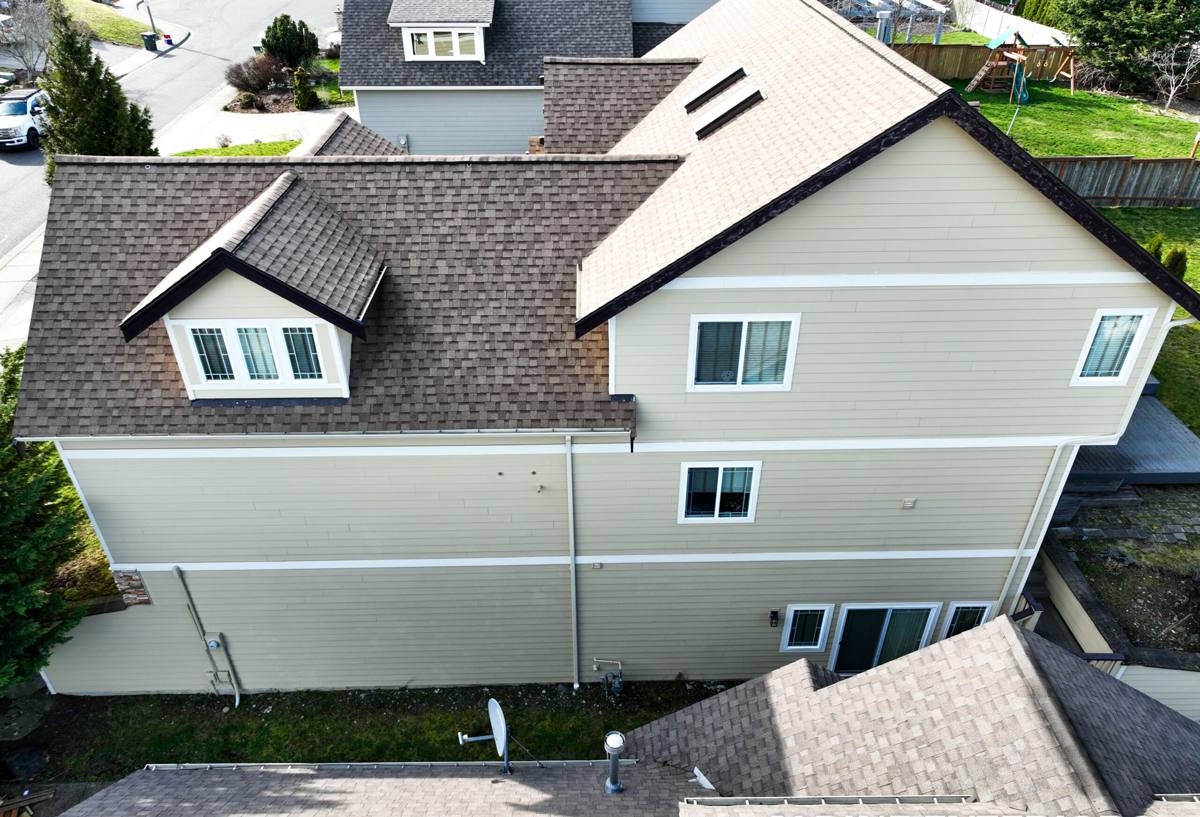
What Whatcom County Weather Does to a Roof
Roof damage rarely comes from one dramatic event. It's usually the slow accumulation of everyday exposure that homeowners don't see until it shows up as a stain on a ceiling.
Driving Rain and Wind-Driven Water
Storms moving through this part of Whatcom County often bring rain at an angle, not straight down. That matters because wind-driven rain finds its way under shingle tabs, around poorly sealed flashing, and into any gap that a calm-weather rain would never reach. Roofs that look fine in a light drizzle can still be leaking during a real system.
Moss and Sustained Moisture
Moss needs shade, moisture, and time — and this region gives it all three for most of the year. Moss doesn't just sit on top of shingles; it works its rhizoids under the shingle edge, lifts granules, and holds water against the roof deck long after the rest of the neighborhood has dried out. A roof with heavy moss on the north slope is often 5-10 years older, functionally, than the same roof on the south-facing side.
Freeze-Thaw and Temperature Swings
Sumas sits in a valley that sees colder overnight temperatures and more frost than the immediate coastline. Water that's worked its way under a shingle or into a crack expands when it freezes, widening the damage. A small issue in October can become a real leak by February if it goes through a few freeze-thaw cycles untreated.
Salt Air and Material Fatigue
Even away from the immediate shoreline, coastal-influenced weather systems carry airborne salt further inland than most people expect. Over years, that accelerates corrosion on exposed metal flashing, fasteners, and gutter hardware — which is part of why we pay close attention to metal condition, not just shingle condition, on every repair.
Common Roof Repair Issues We See on Sumas Homes
- Lifted or missing shingles after wind events, especially on ridgelines and roof edges
- Moss and lichen colonies on shaded slopes that have started lifting shingle edges
- Failed or corroded flashing around chimneys, skylights, and roof-to-wall transitions
- Clogged or damaged gutters causing water to back up under the roof edge
- Valley leaks where two roof planes meet and water volume concentrates
- Deteriorated pipe boots and vent seals that have hardened or cracked with age and UV exposure
- Soft or stained roof decking visible from the attic, indicating a slow leak that's been active for a while
What a Correct Roof Repair Actually Involves
Diagnosis Before Anything Else
The most common mistake in roof repair isn't bad workmanship — it's fixing the wrong spot. Water travels. A stain on a bedroom ceiling might trace back to a flashing failure three feet away, or it might be a valley leak that's been running down a rafter for months. We inspect the roof surface, the flashing details, and the attic side (when accessible) before we quote or start any repair, so the fix addresses the actual entry point, not just the visible symptom.
Matching Materials, Not Guessing
A patch that doesn't match the existing shingle profile, exposure, or granule color will shed water differently than the surrounding roof and often becomes the next failure point. When exact matches aren't available — which happens on older roofs — we explain the trade-off honestly rather than installing something that looks wrong or performs differently under our rain patterns.
Flashing and Underlayment Get Real Attention
Most leaks we trace back to flashing, not shingles. Any competent repair in this climate has to include inspecting and, where needed, replacing step flashing, counter-flashing, and underlayment around penetrations — not just laying a new shingle over the top and calling it done.
Moss Treatment Is Part of the Repair, Not an Afterthought
If moss contributed to the damage, removing the moss without addressing why it's growing there (shade, poor airflow, debris buildup) just resets the clock. We remove moss carefully to avoid stripping granules, and we'll tell you honestly if zinc or copper strips or better gutter maintenance would help slow regrowth.
Our Roof Repair Process
- Inspection and diagnosis — we identify the actual source of the leak or damage, not just where water is showing up inside
- Written estimate — a clear scope of work and price range before anything is touched, with options explained if there are trade-offs
- Repair — matching materials where possible, correcting flashing and underlayment issues, not just patching the surface
- Cleanup and debris removal — moss, old shingle material, and fasteners cleared from gutters and the ground
- Final walkthrough — we show you what was done and what to keep an eye on going forward
Repair vs. Replacement: How We Help You Decide
Not every roof issue needs a full replacement, and not every repair is a good long-term investment. We'll give you a straight answer based on the roof's actual condition, not a default push toward the bigger job.
| Factor | Repair Usually Makes Sense | Replacement Worth Considering |
|---|---|---|
| Age of roof | Under roughly 15-20 years, depending on material | Nearing or past manufacturer's expected lifespan |
| Extent of damage | Localized — one slope, one valley, one flashing detail | Widespread across multiple slopes or repeated leak points |
| Decking condition | Solid, dry decking beneath the damaged area | Soft, stained, or spongy decking in multiple areas |
| Shingle condition overall | Rest of the roof still has good granule coverage | Widespread granule loss, curling, or brittleness |
| History | First significant repair in several years | Recurring repairs to the same or nearby areas |
Cost Factors for Roof Repair in Sumas
Roof repair pricing varies enough that we won't quote a number without seeing the roof, but these are the factors that actually move the price:
| Factor | Why It Matters |
|---|---|
| Roof pitch and access | Steeper roofs and limited access take longer and require more safety setup |
| Extent of decking damage | If the decking underneath needs to be replaced, that adds material and labor |
| Number of penetrations | Chimneys, skylights, and vents each add flashing work |
| Material match availability | Discontinued or older shingle profiles can be harder to source |
| Moss and debris load | Heavy moss removal adds time before the repair itself can start |
Most straightforward repairs — a section of shingles, a flashing fix, a vent boot replacement — fall in a modest range. Repairs involving decking replacement or extensive flashing work cost more. We'll walk you through exactly what's driving the number on your estimate.
Why a Crew That Already Works in Sumas Matters
Roofing crews that only occasionally work this far east in Whatcom County sometimes underestimate how differently a valley roof ages compared to one closer to the water — less salt exposure but more frost, different shade patterns, different moss timing. A crew that regularly works Sumas roofs recognizes these patterns quickly, which means less time spent diagnosing and more time spent fixing the actual problem. It also means we're not guessing at what materials and techniques hold up under this specific mix of rain, cold, and prolonged damp.
Roof Repair Checklist for Sumas Homeowners
- Check the attic (if accessible) for staining, dampness, or daylight after heavy rain
- Look at gutters for granule buildup, which signals shingle wear
- Note any shaded slopes with visible moss or dark streaking
- Check around chimneys, skylights, and vent pipes for cracked or lifted flashing
- Watch for shingles that look curled, cracked, or missing after wind events
- Address small leaks promptly — freeze-thaw cycles make minor damage worse over winter
- Get a professional inspection before assuming a leak means full replacement
If you're dealing with a leak, missing shingles, or a moss problem on your Sumas home, we're happy to take a look and give you a straightforward assessment. Fill out the form below for a free, no-pressure estimate — no obligation, no upsell, just an honest read on what your roof actually needs.