 Birch Bay Siding
 Roofing Built for California Creek's Weather
California Creek sits close enough to Semiahmoo Bay and the Strait of Georgia that homes here deal with a version of coastal weather that inland Whatcom County roofs never see. Salt-laden air moves through on a regular basis, driving rain comes in sideways off the water during winter storms, and the tree cover along the creek corridor keeps roofs shaded and damp for long stretches of the year. That combination is hard on roofing materials in ways that aren't always obvious until a roof is 12 or 15 years in and starting to fail early.
A roof replacement out here isn't just "put new shingles on." It's a chance to correct whatever let the last roof age faster than it should have — usually ventilation, flashing, or moss buildup — and put something on that's actually matched to this specific stretch of coastline. That's the lens we bring to every California Creek project.
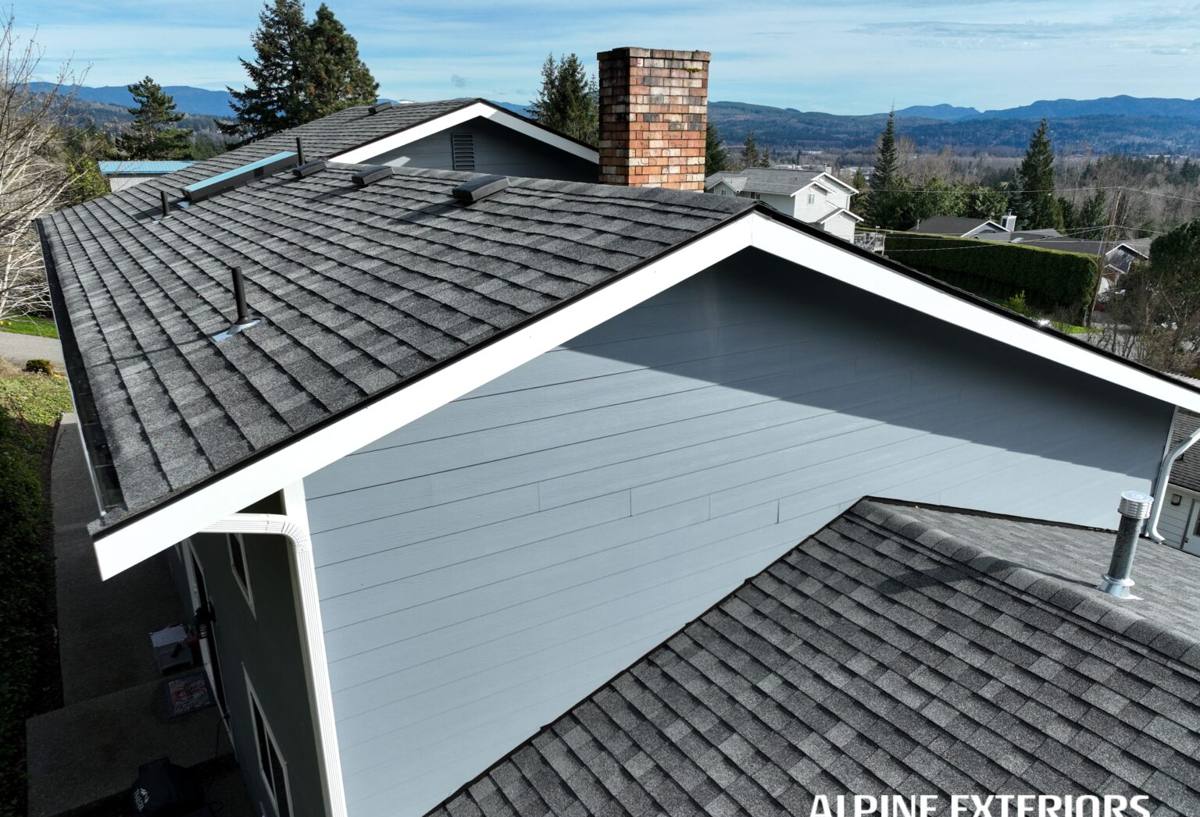
Why Roofs Age Faster Near the Water
Salt Air
Airborne salt doesn't just affect metal fasteners and flashing — it accelerates the breakdown of granule adhesive on asphalt shingles and speeds corrosion on anything galvanized rather than properly coated. Roofs a mile or two inland can go a few extra years before showing the same wear.
Driving Rain
Wind-driven rain off the water pushes water sideways and upward under normal circumstances a roof wouldn't have to handle. That means laps, flashing overlaps, and underlayment details matter more here than on a roof in a calmer part of the county — a marginal install might shed rain fine for a few years and then start leaking the first time a real storm rolls through.
Moss Season
Between the tree cover and the moisture, California Creek has a long moss season — often close to eight months when conditions stay damp enough for growth. Moss holds water against the roof surface, works its way under shingle tabs, and lifts materials over time. Left unmanaged, it shortens the life of almost any roofing material.
Signs a California Creek Roof Needs Replacing, Not Just Repair
Not every roof problem calls for a full tear-off. But there's a point where patching stops making sense and a full replacement is the honest recommendation. Watch for:
- Granule loss heavy enough that you can see bare, shiny patches on asphalt shingles
- Moss growth that keeps coming back within a season or two of cleaning
- Curling, cupping, or cracked shingles across multiple roof planes, not just one spot
- Daylight visible through the roof deck from the attic, or damp insulation
- Repeated leaks around the same valley, chimney, or vent boot despite prior repairs
- A roof already past 20-25 years old, regardless of how it looks from the ground
If your roof shows one or two of these, a targeted repair may still be the right call. If several apply at once, replacement usually costs less over time than another round of patching.
What a Correct Roof Replacement Actually Involves
Full Tear-Off, Not an Overlay
We don't install new shingles over old ones. A tear-off lets us inspect the deck for rot, soft spots, or old moisture damage that an overlay would just bury. On a roof that's spent years absorbing rain near the water, deck inspection isn't optional — it's the step that determines whether the new roof actually lasts.
Deck Repair Where Needed
Any soft, delaminated, or water-stained sheathing gets replaced before anything new goes down. Installing a new roof surface over a compromised deck is one of the most common reasons a "new" roof underperforms.
Underlayment Matched to Exposure
Given the driving rain this area sees, we use synthetic underlayment with ice-and-water shield style membrane at the eaves, valleys, and any low-slope transitions — the spots where wind-driven water is most likely to find a way in.
Flashing Done Properly
Flashing around chimneys, skylights, sidewalls, and roof-to-wall transitions is where most leaks actually originate, not the shingle field itself. We replace flashing as part of a reroof rather than reusing old pieces, and we use corrosion-resistant materials given the salt exposure here.
Ventilation Correction
Poor attic ventilation traps moisture, which feeds moss growth on the roof surface and can rot decking from underneath. We check and correct intake and exhaust ventilation as part of the job, not as an upsell.
Material Options for This Stretch of Coastline
There's no single "best" roofing material for every home — it depends on your roof's pitch, your budget, and how much upkeep you want to take on. Here's how the common options actually compare for a property near California Creek:
| Material | Salt Air Durability | Moss Resistance | Typical Lifespan Here | Maintenance |
|---|---|---|---|---|
| Architectural Asphalt Shingle | Good with proper fasteners/flashing | Moderate — benefits from zinc/copper strips | 20-25 years | Periodic moss treatment recommended |
| Standing Seam Metal | Very good with coated/coastal-rated panels | Strong — moss struggles to hold on smooth metal | 40-50+ years | Low; occasional debris clearing |
| Cedar Shake | Fair — needs regular treatment near salt air | Weak without diligent upkeep | 20-30 years with maintenance | High; requires ongoing care |
| Composite/Synthetic Shake | Good | Moderate to good depending on surface texture | 30-40 years | Low to moderate |
We install and stand behind asphalt and metal roofing systems most often on California Creek homes because they hold up to the salt exposure and moss pressure with the least ongoing intervention. Cedar can look great and plenty of homeowners love it, but we're upfront that it asks for more maintenance discipline in this particular microclimate — that's a maintenance-burden trade-off, not a knock on the material itself.
Our Roof Replacement Process
- On-site inspection — we walk the roof and attic, check the deck, flashing, and ventilation, and take photos of anything that affects the estimate.
- Written estimate — material options, scope of work, and a clear price, with no vague allowances hiding in the fine print.
- Scheduling around weather — we plan tear-off days around the local forecast so your home isn't sitting open to the elements when a system rolls in off the water.
- Tear-off and deck inspection — old material removed, deck inspected and repaired as needed.
- Underlayment and flashing installation — matched to the exposure level of each roof plane.
- New roofing material installed — per manufacturer specification, including proper nailing pattern and ventilation components.
- Cleanup and final walkthrough — magnetic sweep for debris, gutters checked, and a walkthrough so you know exactly what was done.
Ventilation and Moisture Control for Moss Season
Because California Creek stays damp for so much of the year, ventilation is one of the highest-leverage things we control during a replacement. Balanced intake at the eaves and exhaust at the ridge keeps the attic closer to outdoor temperature and humidity, which reduces the condensation that feeds both deck rot and surface moss. We also talk through moss-resistant strategies at install time — zinc or copper strips near the ridge, for example, release trace metal ions with rain that slow moss regrowth over the years without any ongoing chemical treatment.
None of this eliminates moss entirely — nothing does in a spot this shaded and damp — but it stretches out how long a roof goes between cleanings and slows the rate of wear underneath the growth.
What Affects the Cost of a Roof Replacement
Every roof is different, so we don't quote a number without seeing the property, but the main cost drivers on a California Creek reroof are generally:
- Roof size and number of planes, valleys, and penetrations (vents, skylights, chimneys)
- Current deck condition and how much sheathing needs replacing
- Material choice — asphalt, metal, and cedar carry different material and labor costs
- Roof pitch and accessibility for equipment and material staging
- Existing ventilation setup and whether it needs correction
- Tear-off complexity if there are multiple existing layers
We'd rather walk your roof and give you real numbers than throw out a broad range that doesn't mean much for your specific home.
Why Local Experience in California Creek Matters
A crew that mainly works drier, inland jobs can still install a technically correct roof — but they may not default to the coastal-grade flashing, moss-resistant details, or ventilation corrections that this particular stretch of Whatcom County calls for unless they're asked. Working California Creek and the surrounding Birch Bay area regularly means we already know which details matter here and build them in as standard practice, not as an add-on.
If you're ready to talk through your roof, we're happy to come take a look. The estimate is free, there's no pressure, and you'll walk away with a clear, honest picture of what your roof actually needs.