 Birch Bay Siding
 Roof Replacement on Lummi Island: A Different Job Than the Mainland
Lummi Island sits out in Whatcom County's marine air, reachable only by ferry, and that changes more about a roof replacement than most homeowners expect. The roof itself has to stand up to salt-laden wind, driving rain off the water, and long stretches of shade that keep moss going most of the year. The job of getting a crew, materials, and a dumpster on and off the island on schedule is its own layer of planning that a lot of general contractors simply haven't worked out. Both pieces matter. A roof can be installed correctly and still underperform if the wrong materials were chosen for this exposure, and a job can use the right materials and still run over budget if the logistics weren't planned around the ferry schedule from day one.
This page is about roof replacement specifically for Lummi Island homes — what the climate does to roofs out here, what a correct installation actually involves, and why the logistics of island work are worth asking about before you hire anyone.
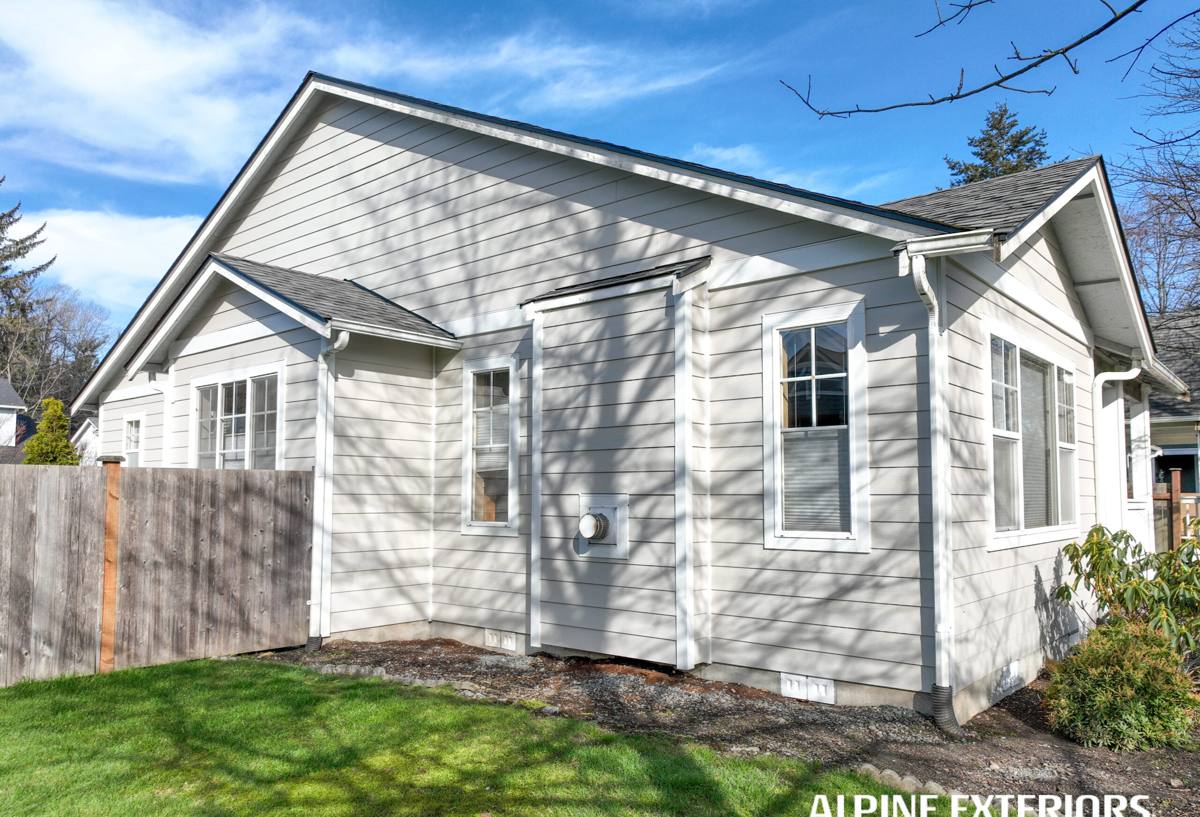
What the Marine Climate Does to a Lummi Island Roof
Salt Air and Corrosion
Homes on and around the island sit close enough to saltwater that airborne salt settles on every exposed surface, including the roof. Over years, that salt film accelerates corrosion on anything metal — nail heads, flashing, drip edge, valley metal, and the fasteners holding shingles down. A roof built with standard-grade fasteners and flashing in this environment tends to show rust streaks and early flashing failure well before the shingles themselves are worn out. That's a maintenance and leak risk that's specific to coastal exposure, not something you'd plan for on an inland roof.
Driving Rain and Wind-Driven Water
Storms coming off the water don't just drop rain straight down — wind pushes it sideways and up under laps, edges, and any place where flashing or underlayment isn't detailed correctly. A roof that would shed water fine in a calm rain can still leak in a wind-driven storm if the underlayment, ice-and-water membrane at vulnerable points, and flashing laps weren't installed with that wind direction in mind.
Moss and Shade
Whatcom County's tree cover and damp climate already make this prime moss territory, and shaded, north-facing roof slopes on the island are often worse. Moss holds moisture against the roof surface, works its way under shingle tabs, and shortens the life of whatever's underneath it. A roof replacement is the right time to address the conditions that grow moss in the first place, not just install new shingles into the same shade and moisture pattern.
The Ferry Factor: Planning a Job Around Island Access
Material Staging and Delivery
Every bundle of shingles, roll of underlayment, box of fasteners, and piece of flashing has to make it across on the ferry before work can start. That means ordering and staging materials with enough buffer that a missed load or a weather delay on the water doesn't stall the crew mid-tear-off. A crew that hasn't planned for this can end up with a roof partially torn off and no way to finish it that day — exactly the situation you don't want during driving rain.
Tear-Off and Haul-Away Logistics
Old roofing material, torn-off underlayment, and any damaged decking have to come back off the island the same way they came on, which usually means coordinating dumpster or trailer hauling around ferry capacity and schedule rather than just calling a hauler for same-day pickup. Crews unfamiliar with this often underbid the disposal side of the job, and that gap tends to become a change order or a corner cut.
Crew Scheduling Around the Ferry
A roof tear-off is not a job you want to leave half-finished overnight, especially with rain in the forecast. Getting a full crew and all their equipment on the first ferry and off on the last one takes real scheduling discipline, and it directly affects how many productive hours the crew actually has on the roof each day.
What a Correct Roof Replacement Involves
Tear-Off and Deck Inspection
A proper replacement starts with a full tear-off down to the deck, not an overlay. That's the only way to actually see the plywood or plank decking underneath, check it for rot or soft spots (common wherever moss or leaks have been sitting for a while), and replace only what's damaged rather than guessing at what's hidden.
Underlayment and Flashing Detail
Given the wind-driven rain this area sees, underlayment choice and flashing detail matter more here than in a drier inland climate. That includes ice-and-water shield at eaves, valleys, and roof penetrations, and step flashing and counter-flashing installed in the correct lap direction at every wall and chimney intersection — the places roofs actually leak.
Ventilation
Balanced intake and exhaust ventilation keeps moisture from condensing inside the attic, which matters in a damp coastal climate where trapped humidity accelerates both rot in the deck and moss growth on the surface above it. A new roof is the right time to correct ventilation that's undersized or unbalanced, not just re-cover the same setup.
Material Selection for Coastal Exposure
Not every roofing product handles salt air, constant damp, and shade equally well. We factor corrosion resistance, algae/moss resistance, and how forgiving a product is to install correctly in wet weather into what we recommend for island homes.
| Factor | Standard Asphalt Shingle | Algae-Resistant Shingle | Metal Roofing |
|---|---|---|---|
| Moss/algae resistance | Lower — needs regular cleaning in shaded areas | Higher — built-in copper/zinc granules resist growth | High — smooth surface sheds moisture and gives moss less to hold onto |
| Salt air / corrosion | Depends on fastener and flashing grade used | Same as standard, plus algae resistance | Needs a coastal-rated coating and fastener package |
| Upfront cost | Lowest | Slightly higher than standard | Highest |
| Typical lifespan in this climate | Shorter if shaded and untreated | Longer in shaded, damp areas | Longest, with proper coastal detailing |
| Install sensitivity to wind-driven rain | Moderate — relies on correct lap and underlayment | Moderate — same install requirements | Lower once properly sealed and fastened |
There's no single right answer for every home — roof pitch, shade, budget, and how long you plan to stay in the house all factor in. We walk through these trade-offs honestly rather than pushing whatever has the best margin.
Our Process for a Lummi Island Roof Replacement
- On-site inspection of the current roof, decking condition, ventilation, and any moss or moisture patterns specific to the home's shade and exposure
- A written estimate that separates material, labor, and island logistics (ferry, hauling, staging) so there are no surprise costs later
- Material ordering and staging timed to arrive and cross the ferry with a buffer before the crew starts
- Full tear-off to the deck, with any rotted or damaged decking replaced and documented before re-covering it
- Correct underlayment, ice-and-water membrane at vulnerable points, and flashing installed to shed wind-driven rain
- Ventilation checked and corrected to balance intake and exhaust for the home's attic
- Full haul-away of old material and job-site debris, coordinated with ferry schedules rather than left for a later trip
- Final walkthrough with the homeowner before the crew leaves the island
Permits and Local Considerations
Roof replacements on Lummi Island fall under Whatcom County permitting and building code, the same as the rest of the county, and coastal wind exposure is a real factor in how a roof should be fastened and detailed — not just a formality. We handle the permit process as part of the job rather than leaving it to the homeowner to sort out, and we build the fastening and flashing approach around the home's actual exposure to wind and water rather than a generic inland spec.
Why a Crew That Already Works Lummi Island Matters
Any roofing crew can, in theory, load a truck onto a ferry once. The difference shows up in whether the job runs on schedule and on budget. A crew that already works this island has the ferry timing, material staging, and disposal logistics worked out ahead of time, instead of learning it — and passing the cost of that learning curve — on your job. It also means we've already seen how salt air, shade, and driving rain behave on roofs out here, so material and detailing decisions are based on what actually holds up on Lummi Island, not a generic recommendation carried over from a mainland job.
If you're planning a roof replacement on Lummi Island, we're glad to come take a look and put together a straightforward, no-pressure estimate — just fill out the form below and we'll get in touch.