 Birch Bay Siding
 Sandy Point's Exposure Is Different From the Rest of Birch Bay
Sandy Point sits right on the water along the Salish Sea, which means homes here take a harder hit from the elements than houses set back a few blocks inland. Wind-driven salt spray, near-constant marine moisture, and rain that comes in sideways off the water are simply part of daily life at this end of Whatcom County. That exposure changes what a home actually needs from its siding. Salt-laden air accelerates corrosion on fasteners and trim, keeps damp materials from drying out between storms, and breaks down paint and coatings faster than they'd fail a few miles inland. Add in Birch Bay's long, wet stretch of fall-through-spring weather, and Sandy Point siding is under near-constant moisture load for most of the year. Materials and installations that would be perfectly fine in a drier, more sheltered spot don't always hold up the same way here.
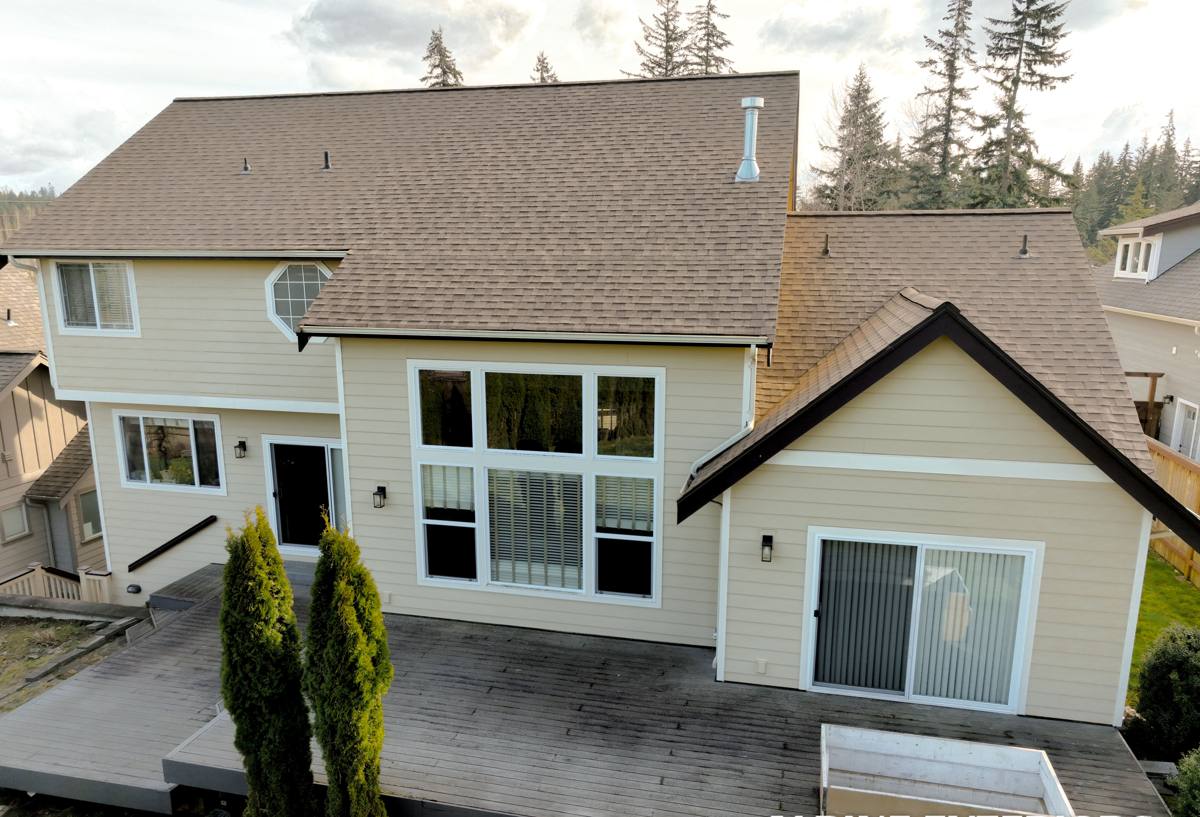
What Salt Air, Driving Rain, and a Long Moss Season Do to the Wrong Siding
The damage rarely shows up all at once. It builds slowly, and by the time it's visible from the street, it's usually been developing behind the surface for a while.
- Salt spray corrodes exposed fasteners and metal trim over time, leaving rust streaks and, eventually, loosened panels where the fastener has weakened.
- Driving rain finds any gap in the installation — an under-flashed window, a caulk joint that was never sealed properly, missing kick-out flashing above a roofline — and pushes water behind the siding, where it can't dry and does damage no one sees until it's serious.
- Moss and algae thrive on shaded, damp, water-facing walls. On wood-based products, that moisture holds against the surface long enough to feed rot underneath the growth, not just on top of it.
Freeze-thaw cycling isn't the main threat on this stretch of coast — Whatcom County winters near the water are relatively mild. Sustained dampness is the real enemy. Siding that can't shed water quickly and dry out between rain events fails slowly and quietly, which is exactly why it tends to go unnoticed until repairs get expensive.
Why This Matters More at Sandy Point Specifically
Waterfront lots don't get the buffering that inland Birch Bay properties often have from tree cover, adjacent structures, and distance from open water. A wall facing the Salish Sea directly is taking on more wind, more salt, and more direct rain than a comparable wall a half-mile inland. That's not a reason to over-build or overspend — it's a reason to be precise about material choice and installation detail, because there's less margin for a mediocre job to hide behind.
Why James Hardie Fiber Cement Is Built for This Environment
We install James Hardie fiber cement exclusively, and on a property like Sandy Point, the reasoning is straightforward. Fiber cement doesn't rot, and unlike wood-based sidings, it doesn't give moss and algae a food source to break down from within — surface growth can still occur on any exterior material and needs occasional washing, but it isn't consuming the substrate the way it can with wood or wood composites. Hardie panels also hold their shape through repeated wet-dry cycling instead of swelling, cupping, or delaminating.
The ColorPlus factory finish matters even more on a waterfront lot. It's a baked-on, multi-coat finish backed by its own warranty against fading, chipping, and peeling — and it holds up to UV and salt exposure far longer than paint applied on site after installation. That means fewer repaint cycles over the life of the siding, which is a real advantage on a property that's getting more sun and salt exposure than most.
James Hardie also engineers its products by climate zone, and the HZ5 line used in the Pacific Northwest is formulated for exactly this kind of wet, marine-influenced weather. That's a large part of why we standardized on Hardie rather than LP SmartSide, vinyl, Cemplank, Allura, or bare cedar — the moisture-management characteristics, the factory finish, and the transferable warranty all line up better with what a Whatcom County waterfront home actually needs than what those alternatives offer.
What a Correct Fiber Cement Installation Involves Here
Fiber cement is only as good as the installation behind it. On a salt-air property, a few details matter more than they would elsewhere.
Fasteners and Hardware
Standard fasteners corrode faster in salt air. We use corrosion-resistant fasteners rated for coastal exposure, and we follow Hardie's fastening pattern and spacing specs exactly — under-fastened siding is one of the more common causes of early panel failure in windy, wet locations.
Flashing and Water Management
Every window, door, and roof-to-wall transition needs proper flashing so water is directed out and away from the wall assembly, not behind it. Where conditions call for it, we build in a drainage gap behind the siding so any moisture that does get past the surface has a clear path to drain and dry instead of sitting against the sheathing.
Caulking and Sealed Penetrations
Every penetration — hose bibs, vents, light fixtures, electrical mounts — is a potential entry point for driving rain. We seal these correctly the first time rather than relying on caulk alone to cover for a gap that shouldn't be there.
Clearances
Hardie specifies minimum clearance from grade, roof lines, and decks for a reason — siding installed too close to the ground or a horizontal surface stays wet longer and is more prone to wicking moisture. We hold to those clearances even when it would be easier not to.
Our Process for Sandy Point Siding Projects
- Assessment: We inspect the existing wall assembly, sheathing, and any current siding for hidden moisture damage before quoting the job — not after we've already started.
- Prep and repair: Any compromised sheathing or framing gets addressed before new siding goes on. Covering up existing damage is not something we do.
- Installation: Panels, fasteners, flashing, and trim are installed to James Hardie's specifications, with the coastal-specific details above applied throughout.
- Trim and detail work: Corners, window and door surrounds, and transitions are finished cleanly, since these are the spots most likely to leak if rushed.
- Final walkthrough: We review the completed work with you before calling the job done.
- Warranty registration: Your project is registered so the manufacturer's warranty coverage is properly in place.
Comparing Siding Materials for a Sandy Point Property
| Material | Salt Air / Moisture Resistance | Maintenance Burden | Finish Durability |
|---|---|---|---|
| Vinyl | Can warp or become brittle with UV and temperature swings | Low, but limited repair options if damaged | Color is through the material but can fade and chalk over time |
| Cedar / primed wood | Vulnerable to rot and moss intrusion in sustained damp conditions | High — regular painting, sealing, and inspection | Field-applied finish breaks down faster in salt air |
| Engineered wood (LP-type) | Wood-based; moisture intrusion at unsealed cuts and edges is a known risk | Moderate to high — edge sealing and inspection matter | Field or factory finish, variable durability |
| James Hardie fiber cement | Non-combustible, dimensionally stable through wet-dry cycling | Low — periodic washing, no rot risk | ColorPlus factory finish, warrantied against fading and chipping |
Signs Your Sandy Point Home May Already Need New Siding
- Visible cracking, warping, or bowing in the siding panels
- Moss or algae that keeps returning within weeks of cleaning
- Paint or finish that's peeling, chalking, or fading noticeably faster than expected
- Soft or spongy spots when the siding is pressed near the base of the wall
- Gaps opening up at trim, corners, or window and door surrounds
- Rust streaking below fasteners or metal trim pieces
- Siding that stays visibly damp or discolored long after a rain event has passed
- A noticeable rise in heating costs, which can point to a wall assembly that's no longer performing
Why Hiring a Crew That Already Works Sandy Point Matters
Not every siding job responds well to a one-size-fits-all approach. A crew that regularly works this part of Birch Bay knows which walls take the brunt of the weather off the water, understands the permitting process with Whatcom County, and is used to working within the architectural expectations that many waterfront and community-association neighborhoods maintain. That local familiarity shows up in the details — the flashing choices, the fastener spec, the attention paid to the water-facing wall versus the sheltered side of the house — rather than in a generic approach applied the same way everywhere.
If your Sandy Point home is due for new siding, or you're not sure whether what you have is holding up the way it should, we're happy to take a look. Reach out for a free, no-pressure estimate using the form below.