 Birch Bay Siding
 Building New in Sandy Point Means Building for the Water
Sandy Point sits right up against the marine environment that defines this stretch of Whatcom County, and that changes what "correctly installed" means for new-construction windows. A window opening that would be perfectly fine a few miles inland needs extra attention here: salt-laden air corrodes hardware and fasteners faster, wind-driven rain gets pushed sideways into wall assemblies instead of just falling on them, and the shade and humidity that come with waterfront lots keep surfaces damp long enough for moss and algae to take hold. None of this means new construction near the water is a bad idea — it just means the window package and the installation sequence have to be chosen with the site in mind, not picked off a generic spec sheet.
We install new-construction windows throughout the Birch Bay area, including Sandy Point, and we frame every job around the same question: what does this specific wall assembly need to do for the next twenty or thirty years of coastal weather? That question drives material choice, flashing detail, and even which fasteners we use.
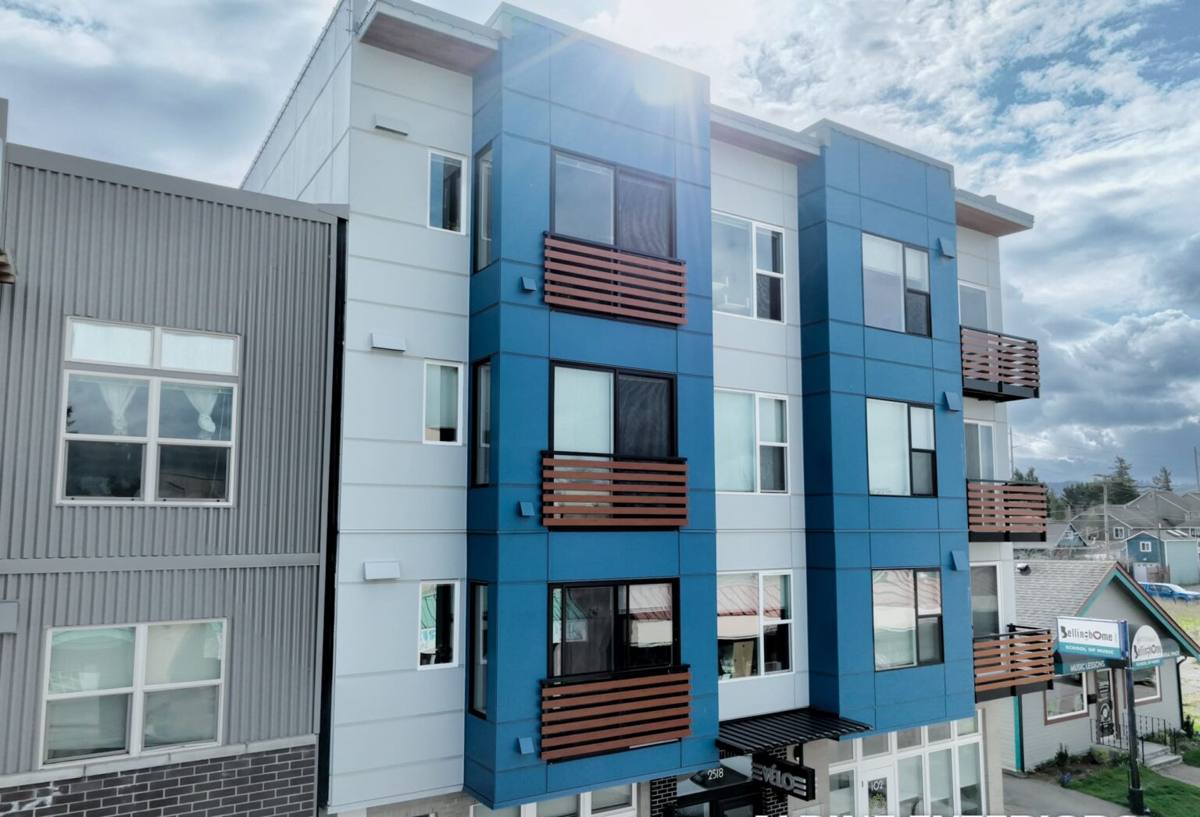
What "New-Construction" Windows Actually Means
New-construction windows are different from replacement windows, and the distinction matters more on a waterfront lot than almost anywhere else. A new-construction window has a nailing fin (sometimes called a flange) around its perimeter that gets integrated directly into the wall's weather-resistive barrier and flashing system before siding goes on. A replacement window, by contrast, gets set into an existing opening and relies on the old frame and trim for weatherproofing.
Why the Nailing Fin Matters Here
The nailing fin is what lets us build a fully lapped, shingle-style flashing system — sill pan first, then side flashing, then the fin taped or sealed at the top so water always sheds outward and downward, never backward into the wall. On a Sandy Point build exposed to driving rain off the water, that sequencing is not optional. A window installed out of sequence, even with a good product, will eventually let water track behind the siding.
Rough Openings Have to Match the Real Wall, Not the Plan Set
Framing tolerances vary, and we always field-check rough openings before windows arrive rather than trusting the plan dimensions alone. On coastal lots we also pay close attention to sill height and slope, since a flat or reverse-sloped sill is one of the most common reasons water sits against a frame instead of draining away.
Choosing a Window Package for a Salt-Air, High-Rain Site
There is no single "best" window material for every home, but some choices hold up better than others in a shoreline environment. We walk homeowners and builders through the real trade-offs rather than pushing one product line.
| Material | Salt Air & Moisture Behavior | Maintenance Load | Where It Fits Best |
|---|---|---|---|
| Vinyl | Won't corrode or rot; seams and hardware are the weak point over time | Low — occasional cleaning | Budget-conscious builds, secondary structures, rental properties |
| Fiberglass | Very stable dimensionally; resists moisture and salt exposure well | Low to moderate | Primary residences, larger openings, higher-exposure walls |
| Wood-clad | Interior wood needs the cladding and seals to stay intact to avoid moisture wicking | Higher — cladding seams need periodic inspection | Homeowners prioritizing interior wood appearance who accept the upkeep |
| Aluminum | Prone to pitting and corrosion in direct salt exposure over the long term | Moderate | We generally steer clients away from bare aluminum on direct-exposure walls at Sandy Point |
For most Sandy Point builds we lean toward vinyl or fiberglass units with corrosion-resistant (often stainless or coated) hardware, simply because they tolerate salt exposure with the least ongoing maintenance. Wood-clad windows can still be the right call for a specific design goal — we just make sure the client understands the maintenance commitment before we install them, rather than after.
Glass and Weatherstripping Details Worth Getting Right
Beyond frame material, the glass package and seal quality do a lot of the actual work against wind-driven rain:
- Dual-pane, low-E glass with argon fill for thermal performance in our marine climate
- Multi-point locking hardware, which also compresses weatherstripping more evenly than single-point latches
- Corrosion-resistant screws and cladding fasteners — regular steel hardware is a false economy this close to the water
- A continuous, compressible weatherstrip rather than a foam gasket that flattens out after a few seasons
How We Sequence the Installation
The order of operations is where most of the long-term performance of a new-construction window actually gets decided — more than the brand on the label.
Before the Window Ever Arrives
We confirm rough opening dimensions and square, check that the weather-resistive barrier is lapped correctly above the opening, and install a sloped sill pan so any water that does get past the exterior seal has somewhere to go besides the framing.
Setting and Flashing
Windows are set plumb, level, and square, shimmed at the manufacturer's specified points (not just wherever is convenient), and fastened through the nailing fin per the manufacturer's schedule. Flashing tape or self-adhered flashing goes on in strict shingle-lap order — sill, jambs, then head — so every layer sheds water onto the layer below it.
Sealing and Finish
Sealant is a backup to good flashing, not a substitute for it. We use exterior-grade sealants rated for the surfaces involved and leave the manufacturer-recommended weep paths clear so any incidental moisture can still drain.
Where New-Construction Windows Go Wrong Near the Water
Most of the window failures we're called out to inspect in coastal Whatcom County neighborhoods trace back to a handful of preventable issues:
- Sealant used as the primary weather barrier instead of proper flashing lap sequence
- Flat or improperly sloped sills that let water pool against the frame
- Standard steel fasteners or hardware that corrode and streak or seize within a few years
- Missing or blocked weep holes, which trap moisture inside the frame
- Rough openings that were never field-verified against actual framed dimensions
Every one of these is avoidable with the right sequence and the right hardware — which is exactly why we treat the installation process as the real product, not just the window unit itself.
What Drives Cost on a Sandy Point Window Package
Homeowners and builders both want a straight answer on pricing, and while every project is different, the same handful of factors move the number up or down. We'd rather explain those factors than throw out a number that doesn't hold up once we see the actual openings.
| Factor | Why It Matters | Typical Effect |
|---|---|---|
| Frame material | Vinyl, fiberglass, and wood-clad carry different unit costs and hardware options | Moderate to significant |
| Window count and size | Larger openings and picture/specialty shapes cost more per unit | Significant |
| Glass package | Impact-rated or upgraded low-E/argon glass adds cost per unit | Moderate |
| Wall height and access | Second-story or hard-to-access openings take more labor and equipment | Moderate |
| Flashing and sill detail complexity | Custom sill pans and extra flashing steps for high-exposure walls take more time | Small to moderate |
| Timing in the build schedule | Installing windows in proper sequence with other trades avoids rework | Can prevent added cost |
We're glad to walk through a real quote once we've seen the plans or the framed openings — broad estimates without that step tend to be wrong in one direction or the other.
What to Have Ready Before We Start
A little preparation on the builder or homeowner side keeps a new-construction window install on schedule and avoids costly delays:
- Final window schedule confirmed against the actual plan set (sizes, swing direction, grille pattern)
- Rough openings framed to the manufacturer's specified tolerances
- Weather-resistive barrier installed and lapped correctly before window delivery
- A dry weather window scheduled for the actual install, when possible, given how quickly conditions can turn on the water
- Clear site access for window delivery and staging, especially for larger units
Why It Helps to Hire a Crew That Already Works This Area
Sandy Point and the surrounding Birch Bay shoreline present a specific set of conditions — salt exposure, wind-driven rain, and the shaded, damp microclimates that feed a long moss season — that don't show up the same way a few miles inland. A crew that already installs windows in this environment has already worked out which hardware corrodes too fast, which sill details actually shed water in a sideways rain, and how tight the good-weather install windows really are this close to the water. That experience shows up in fewer callbacks, not in a different-looking finished window.
We also understand the practical side of building on shoreline lots in Whatcom County — coordinating with other trades on a tight schedule, protecting a partially framed structure from weather between phases, and sequencing window installation so it doesn't get undone by the next trade in line.
Get a Straight Answer for Your Project
If you're framing a new build in Sandy Point or planning one, we're happy to look at your plans or your framed openings and put together a clear, no-pressure estimate — including honest input on which window materials make sense for your specific exposure. Use the form below to get in touch and we'll set up a time to talk through your project.