 Birch Bay Siding
 Sandy Point Roofs Face a Different Kind of Wear
Sandy Point sits close enough to the water that its homes take a beating most inland Whatcom County roofs never see. Salt-laden air off the Strait of Georgia works on fasteners, flashing, and shingle granules year-round. Winter storms bring driving rain that hits roof planes sideways, not just straight down, which means water gets tested at every seam, vent boot, and valley. And the long, wet moss season here — often eight or nine months of the year — gives algae and moss a head start on any roof that isn't shedding water and drying out quickly.
None of that means a roof in Sandy Point needs exotic materials or a completely different approach. It means the details that get skipped on an easier job — proper flashing, the right fastener, real ventilation — matter more here, and matter sooner. A roof replacement done correctly for this location should hold up noticeably longer than one installed the same way you'd install it 20 miles inland.
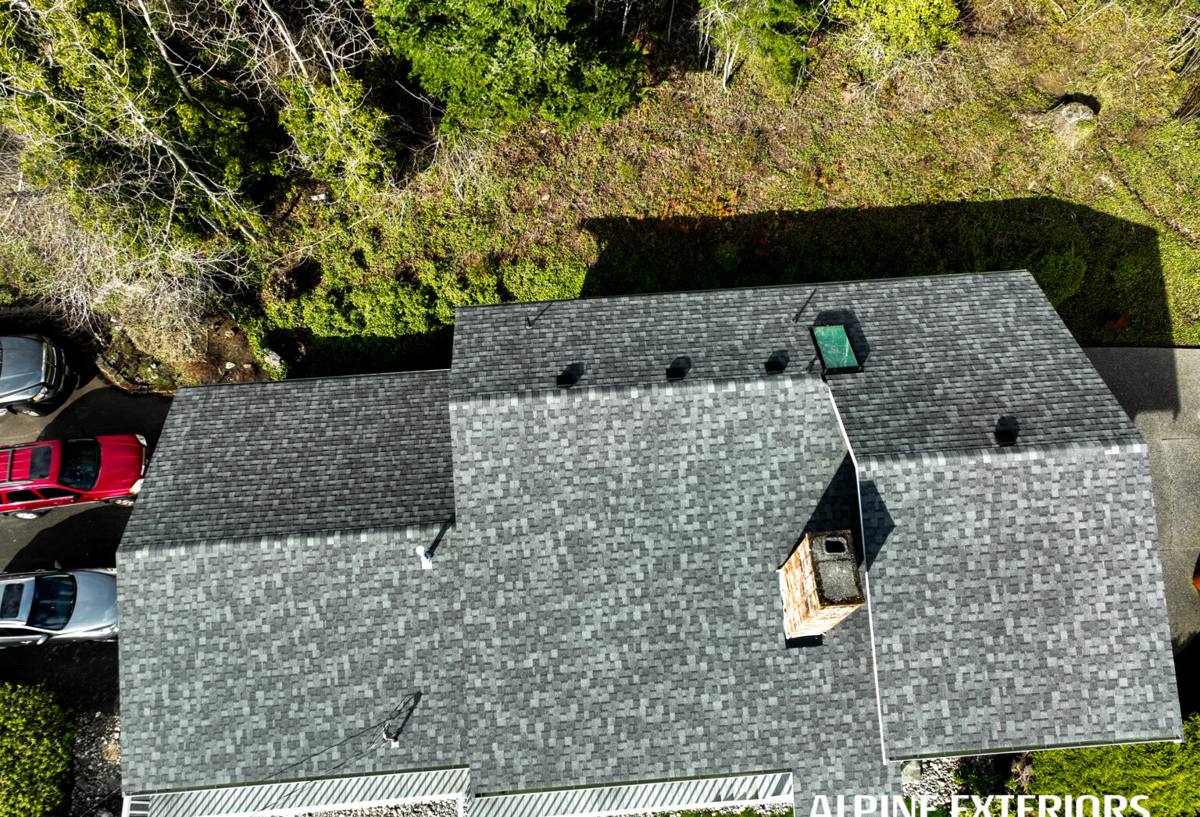
Signs a Sandy Point Roof Needs Replacement, Not Just Repair
Repair makes sense when the problem is isolated — a cracked pipe boot, a handful of lifted shingles after a windstorm, a small flashing leak. Replacement becomes the honest answer when the roof's underlying materials are worn out across the board, even if it isn't actively leaking yet. Common signs we see on Sandy Point homes:
- Granule loss heavy enough that you can see bare, shiny patches on multiple slopes, not just one spot
- Shingles that are cupping, curling, or cracking, especially on the roof faces that catch the most wind and salt spray
- Moss or algae staining that comes back within a season or two of cleaning, even after treatment
- Soft spots in the decking when walked, which usually means water has been getting past the shingles for a while
- A roof that's 20+ years old on standard asphalt shingles, or showing rust and fastener failure on an older metal roof
- Daylight visible through the attic or consistently damp attic insulation near the eaves
If you're only seeing one or two of these, a repair or a maintenance visit may buy you real time. If several show up together, patching individual spots usually just delays a bigger repair bill without fixing the underlying exposure.
What a Correct Roof Replacement Involves Here
Tear-off and deck inspection
We remove the old roofing down to the deck rather than layering over it. That's the only way to actually see what salt air and moisture have done to the sheathing underneath — soft or delaminated plywood gets replaced before anything new goes down, not covered up.
Underlayment built for wind-driven rain
Standard felt underlayment is not enough for a site that regularly gets rain pushed sideways by wind off the water. We use synthetic underlayment with self-adhered ice-and-water membrane at the eaves, valleys, and any roof-to-wall transitions, since those are the spots where wind-driven rain finds its way under shingles that would otherwise be fine.
Flashing done right, not fast
Chimneys, skylights, plumbing vents, and dormers are where most roof leaks actually start — not in the open field of shingles. Proper step flashing, counterflashing, and sealed penetrations matter more in a salt-air environment because corrosion accelerates any weak point that was cut corners on originally.
Ventilation that lets the roof dry out
A roof that can't breathe holds moisture longer, and moisture is what feeds moss and rot. Balanced intake and exhaust ventilation keeps the attic space and roof deck drying between storms instead of staying damp through the whole wet season.
Material Choices for Salt Air and Moss Exposure
There's no single "right" roofing material for every Sandy Point home — it depends on the roof's pitch, the home's style, and the budget. What matters is understanding the trade-offs honestly instead of picking on price alone.
| Material | How it handles salt air | How it handles moss | Typical lifespan here |
|---|---|---|---|
| Architectural asphalt shingle | Good with quality granules and corrosion-resistant fasteners; standard-grade fasteners corrode faster near the water | Needs periodic cleaning; algae-resistant granules help slow regrowth | 20–30 years with proper install and upkeep |
| Standing seam metal | Excellent when specified with a coastal-rated finish and stainless or coated fasteners | Sheds moss well due to smooth, steep-shedding surface | 40–50+ years |
| Cedar shake | Traditional look, but higher maintenance burden in a wet, salty climate | Most susceptible to moss and rot without diligent, ongoing maintenance | Highly maintenance-dependent |
| Synthetic/composite shingle | Resistant to corrosion since there's no metal component in the shingle itself | Performs similarly to quality asphalt; check manufacturer moss warranty terms | 30–50 years depending on product |
We don't push cedar shake for waterfront and near-waterfront properties like Sandy Point. It can look great, but the maintenance schedule needed to keep it ahead of moss and moisture in this climate is demanding, and falling behind on it shortens the roof's life fast. That's a maintenance-burden and moisture-behavior trade-off worth knowing before you commit, not a knock on the material itself.
Our Roof Replacement Process
- On-site inspection and estimate — we walk the roof (or use a drone where pitch or access makes that safer), check the attic, and give you a written scope and price.
- Material selection — we go over the options above in terms of your budget, home style, and how long you plan to stay in the house.
- Permitting — Whatcom County requires a permit for full roof replacements; we handle the application and inspections so you don't have to track it down.
- Tear-off and deck repair — old roofing comes off, the deck gets inspected, and any damaged sheathing is replaced before new materials go down.
- Underlayment, flashing, and installation — installed to the standards above, not just to code minimums.
- Cleanup and final walkthrough — magnetic sweep for nails, hauling of debris, and a walkthrough so you can see the finished work before we call it done.
Access and Site Considerations Specific to Sandy Point
Sandy Point is a private beach community, and roofing crews working there need to plan around narrow access roads, limited staging space, and community guidelines for contractor traffic. A crew that hasn't worked the area before often loses a day or more just figuring out logistics — where the dumpster and material delivery can actually go, how to protect landscaping on a tight lot, and how to coordinate around the community's rules. We plan that in ahead of time rather than working it out on the fly, which keeps the job on schedule and keeps the disruption to your street to a minimum.
What Affects the Cost of a Roof Replacement
We won't quote a number without seeing your roof, but the main factors that move the price up or down are consistent from job to job:
| Factor | Why it matters |
|---|---|
| Roof size and number of planes | More square footage and more valleys/hips mean more material and labor |
| Pitch and access | Steep roofs or homes with tight, limited staging area require more safety setup and time |
| Deck condition | Rotted or delaminated sheathing found during tear-off adds material and labor to fix properly |
| Material choice | Asphalt, metal, and composite products span a wide cost range |
| Layers to remove | Multiple existing layers take longer to tear off and dispose of than a single layer |
| Ventilation and flashing upgrades | Bringing an older roof's ventilation and flashing up to current standards adds scope but reduces future problems |
What to Ask Before Hiring a Roofer for a Sandy Point Home
- Are you licensed, bonded, and insured in Washington State, and can you provide proof?
- Do you pull the permit yourselves, or is that left to the homeowner?
- What underlayment and flashing details do you use at eaves, valleys, and penetrations?
- How do you handle deck repair if rot is found during tear-off — is it included or billed separately as it's found?
- What's the manufacturer's warranty on materials, and what's your own workmanship warranty?
- Have you worked in Sandy Point or similar waterfront communities before, and do you understand the access and site rules?
Why It Matters to Hire a Crew That Already Works This Area
A roof replacement is only as good as the details nobody sees once it's finished — the flashing behind the chimney, the underlayment at the valleys, the fastener grade holding the shingles down against salt air. A crew that's worked Sandy Point and the rest of the Birch Bay area regularly already knows which details matter most for this specific stretch of coastline, and they've already worked out the access and staging questions that slow down a first-timer. That translates into a roof that's installed right the first time and a job that doesn't eat up extra days figuring out logistics on your dime.
If your roof is showing its age or you just want an honest read on where it stands, we'll come out, take a look, and give you a straightforward estimate — no pressure, no hard sell. The form below is the easiest way to get that scheduled.