 Birch Bay Siding
 Siding Installation in Sandy Point: Built for a Waterfront Whatcom County Climate
Sandy Point sits right on the water in the Birch Bay area of Whatcom County, and that shoreline location changes what a siding job actually needs to hold up here. Homes get a steady dose of salt-laden marine air, long stretches of wind-driven rain moving in off the water, and a moss season that runs longer than it does even a short distance inland. We install James Hardie fiber cement siding for homes in Sandy Point and the surrounding Birch Bay area, and every part of how we prep, fasten, and flash a job is built around what this specific exposure does to a wall assembly over time.
This page focuses on one service — siding installation — for one place. If you're comparing options for a Sandy Point home, the details below are what actually matter for getting an installation right in this climate, not a generic rundown that could apply anywhere in the county.
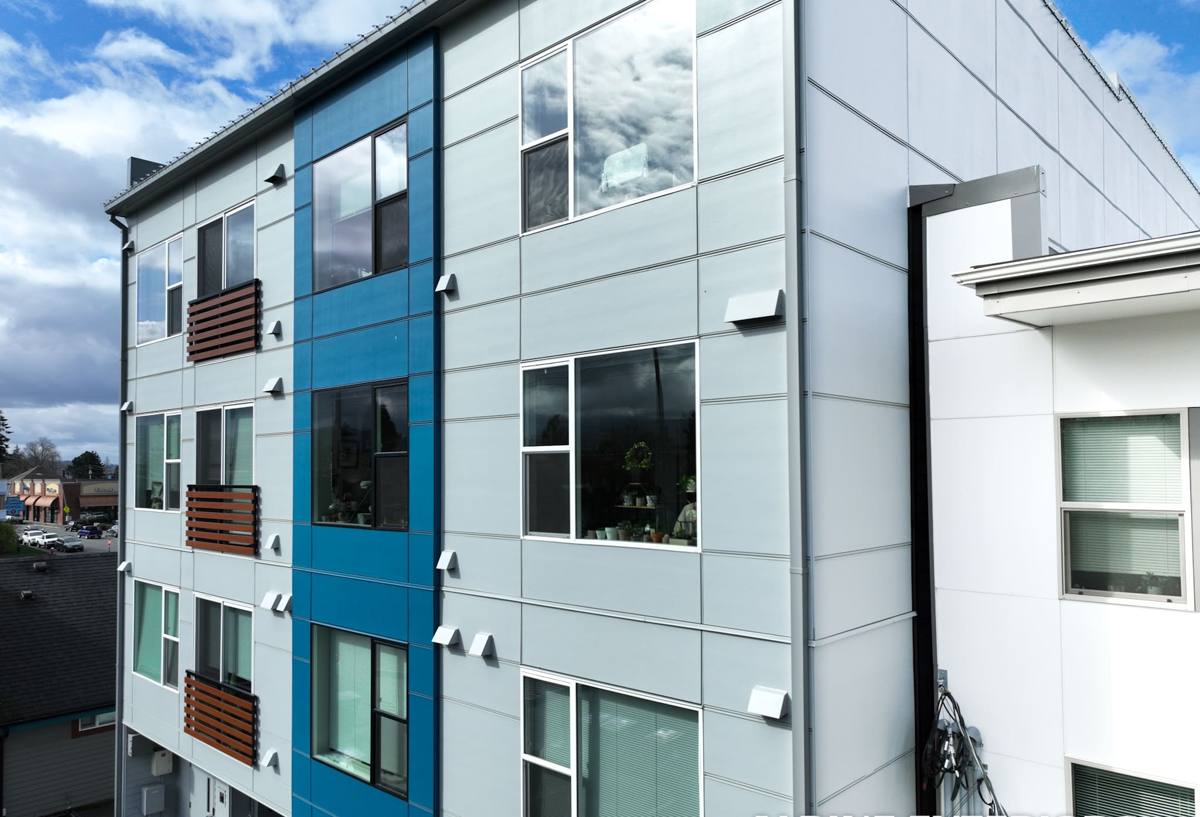
What Sandy Point's Climate Demands From Siding
Salt Air and Corrosion
Being this close to open water means Sandy Point homes take on more salt exposure than properties set back even a half-mile inland. Salt accelerates corrosion in fasteners, flashing, and any exposed metal trim, and it can break down a weak finish faster than a drier, more sheltered climate would. Every material and every piece of hardware that goes into a siding installation here needs to be chosen with that corrosion risk in mind — not just picked because it looks good going up.
Driving Rain and Wind-Driven Moisture
Open water exposure also means more sustained wind, and wind-driven rain doesn't fall straight down — it gets pushed sideways into wall assemblies, seams, and any transition point where two materials meet. That's a heavier moisture load than a simple rainfall total suggests. Siding that performs fine on a calm, tree-sheltered lot can still fail on a Sandy Point property specifically because water is finding its way in sideways, at seams and corners, rather than from above.
A Long Moss and Mildew Season
Mild temperatures, persistent moisture, and shaded or north-facing walls add up to a moss and mildew season that stretches across most of the year in this part of Whatcom County. Any siding material that's even slightly porous, or that holds moisture against the substrate instead of shedding it, becomes a growth surface over time. On a lot of Sandy Point homes, walls facing away from direct sun need noticeably more attention than the sun-exposed sides.
Why James Hardie Fiber Cement Is What We Install
We install James Hardie fiber cement siding exclusively — not LP SmartSide, not vinyl, not Cemplank, not Allura, not primed spruce, and not cedar. That's not a supplier relationship or a marketing position; it's a professional standard we settled on after years of installing, inspecting, and repairing siding in exactly this kind of salt-air, high-moisture coastal climate.
- Non-combustible core: fiber cement doesn't feed a fire the way wood-based siding can, which matters for both safety and, in many cases, insurance.
- Factory-applied ColorPlus finish: color is baked on under controlled factory conditions rather than brushed on in the field, so it resists fading, chalking, and moisture intrusion far longer than site-applied paint.
- Climate-engineered HZ product lines: Hardie's HZ5 formulation is built for regions with sustained moisture exposure and freeze-thaw cycling, which describes a waterfront Whatcom County property well.
- Dimensional stability: fiber cement doesn't swell, cup, or warp the way engineered wood products can after repeated wet-season moisture cycles.
- Strong transferable warranty: Hardie backs its products with a solid warranty structure, provided the installation follows spec — real protection, not just a marketing claim.
Every one of the products we don't install has a legitimate place in the broader market, and plenty of homeowners elsewhere are satisfied with them. On an exposed, waterfront lot like Sandy Point, though, we've made the call that installing one system we fully stand behind is worth more to a homeowner than offering a cheaper option that quietly shifts maintenance risk onto them a few years down the road.
What a Correct Siding Installation Actually Involves
Substrate and Moisture Barrier
Before any siding goes up, the wall sheathing gets inspected for existing moisture damage, and a proper weather-resistive barrier goes on correctly lapped, shingle-style, so water sheds down and out rather than working its way behind the barrier at a seam. On a waterfront property, skipping or rushing this step is one of the fastest ways to trap moisture behind brand-new siding.
Fastening and Clearance
Fastener type, length, and spacing all need to match Hardie's published specifications, and that matters more here than in a sheltered inland location because of the added wind load off the water. Siding also needs proper clearance from grade, decks, and roof lines so it isn't sitting close enough to wick up ground moisture or hold standing water against a bottom edge.
Joints, Flashing, and Drainage Detailing
Every joint, corner, and penetration is a potential entry point for wind-driven rain. That means factory-mitered or properly caulked joints, correctly lapped flashing at windows, doors, and roof-to-wall transitions, and drainage detailing behind the panels where the assembly calls for it. A Hardie product installed loosely, with shortcuts taken on any of these details, will still develop moisture problems in a climate like Sandy Point's — the material is only as good as the installation behind it.
Matching the Right Hardie Product to a Sandy Point Home
| Product | Best Use | Why It Fits This Location |
|---|---|---|
| HardiePlank lap siding | Most standard single-family homes | Traditional lap profile sheds wind-driven rain well when installed with correct overlap |
| HardiePanel vertical siding | Accent walls, gables, modern designs | Clean lines with fewer horizontal seams for water to find |
| HardieShingle siding | Craftsman and cottage-style homes | Textured look without the moisture absorption of real wood shingle |
| HardieTrim boards | Corners, window and door casing, fascia | Factory-finished trim resists the same salt and moisture exposure as the field siding |
Profile and color come down to the individual home, but the underlying approach stays the same: we spec the product and detailing to the property's actual exposure, not to whatever's fastest to install.
Our Installation Process
- An on-site assessment of the existing siding and wall condition, including a look for any moisture or rot damage already present
- A written scope and product recommendation specific to the home's exposure and orientation
- Removal of old siding and inspection of sheathing before anything new goes on
- Correct installation of weather-resistive barrier, flashing, and drainage detailing
- James Hardie siding installed to manufacturer spec, with fastening and clearance suited to a waterfront property
- A final walk-through so you understand exactly what was done and why
Cost Factors for Siding Installation in Sandy Point
| Factor | What It Affects | Why It Matters Here |
|---|---|---|
| Substrate condition | Repair cost before new siding goes on | Long-term moisture exposure can rot sheathing that isn't visible until old siding comes off |
| Wind and fastening spec | Material and labor requirements | Open-water exposure can call for tighter fastening patterns than a sheltered inland lot |
| Home size and complexity | Labor time, trim detail, waste factor | More corners, dormers, and roof-to-wall transitions mean more flashing detail work |
| Product line and profile | Material cost | Plank, panel, and shingle profiles carry different material and labor costs |
| Site access | Staging and equipment needs | Waterfront lots can have tighter access than a standard in-town lot |
Exact pricing depends on the specific home, which is why we walk the property in person before giving a real number instead of quoting off a generic price sheet.
Signs a Sandy Point Home Needs New Siding
- Soft spots, bubbling, or visible warping anywhere on the siding
- Persistent moss, mildew, or dark staining on shaded or north-facing walls that keeps returning after cleaning
- Cracking or gapping at seams, corners, or trim joints
- Peeling or chalking paint on older, non-factory-finished siding
- Rising energy bills that suggest the wall assembly is no longer sealing properly
- Visible rust streaking from fasteners or trim hardware
Why Hiring a Crew That Already Works Sandy Point Matters
A crew that installs siding on this stretch of Whatcom County shoreline regularly already knows how salt air, wind exposure, and sustained moisture behave differently here than they do a few miles inland. That familiarity shows up in the details that actually determine whether a siding job lasts three decades or starts showing problems in five — how flashing gets lapped, which fastener grade gets used, and where extra drainage detailing earns its keep. A crew unfamiliar with waterfront exposure can install a good product and still get those details wrong.
A Few Questions Worth Asking Before You Hire
- What siding material do you install, and why — and will you put a written warranty behind it?
- Do you carry current Washington contractor licensing and active insurance?
- How do you detail flashing at windows, doors, and roof-to-wall transitions for wind-driven rain specifically?
- What fastener and hardware grade do you use for corrosion resistance in a salt-air setting?
- Can I get a clear, written scope of work before signing anything?
If you're weighing options for new siding on a Sandy Point home, we're glad to walk the exterior with you and give an honest read on what it needs. Reach out below for a free, no-pressure estimate.