 Birch Bay Siding
 Sandy Point's Siding Takes a Different Kind of Beating
Sandy Point sits close to the water along Birch Bay, and that proximity shapes everything about how siding ages here. Homes just a few blocks inland from the shoreline in Whatcom County deal with a slower, gentler version of the same exposure — but Sandy Point gets it full strength. Salt-laden air drifts in off the water almost constantly, wind-driven rain hits walls at an angle instead of falling straight down, and the tree cover and marine humidity that make this area beautiful also keep north- and west-facing walls damp for long stretches of the year.
None of that means siding here is doomed. It means siding here needs to be installed and repaired with those specific stresses in mind, not treated like a generic exterior job. A patch that would hold up fine in a drier inland neighborhood can fail within a season or two on a Sandy Point wall that faces the bay.
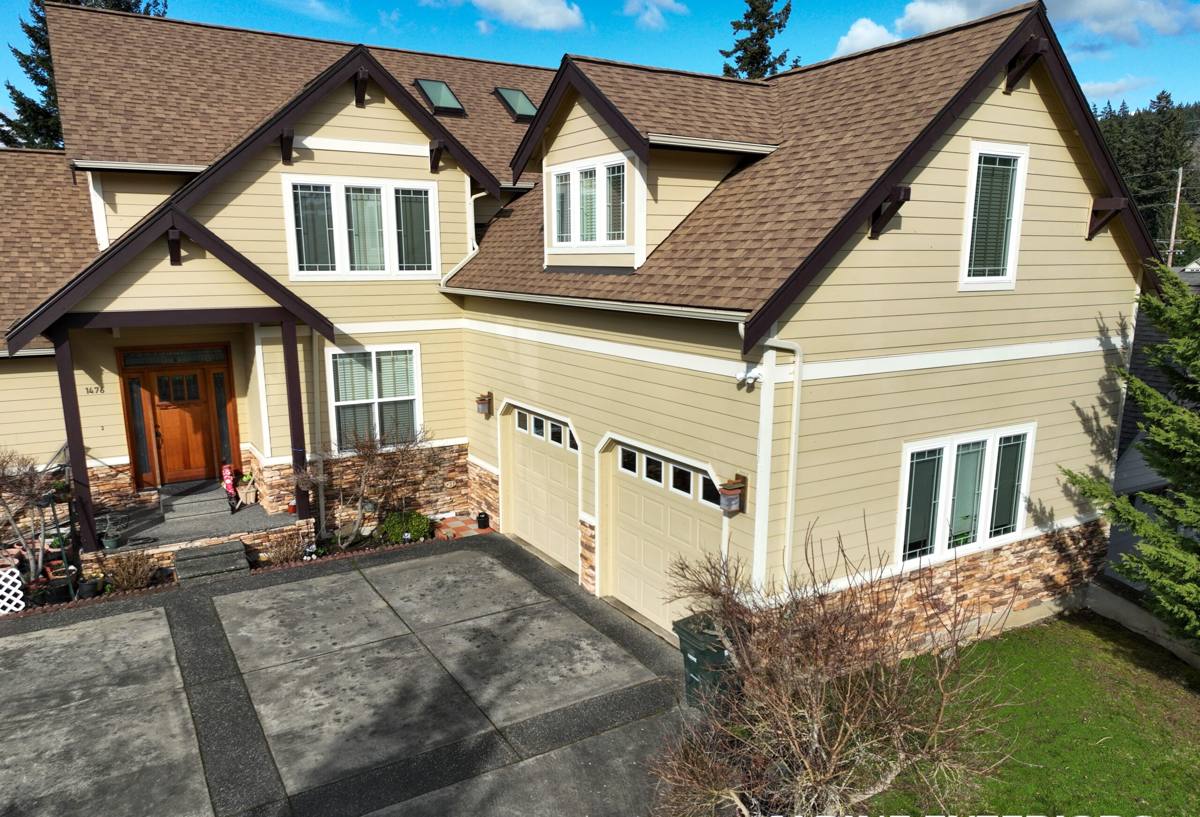
What Makes This Climate Hard on Siding
Salt Air and Fastener Corrosion
Airborne salt accelerates corrosion on anything metal — nail heads, flashing, trim fasteners, even hose bibs and light fixtures mounted near siding. Once a fastener starts rusting, it can streak the siding face, lose its grip, or create a small gap where water starts working its way behind the panel. This is one of the most common early failure points we see close to the water, and it's often invisible until the staining or a loose panel gives it away.
Wind-Driven Rain
Birch Bay's storms don't just drop rain straight down — wind pushes it sideways and up under laps, trim edges, and butt joints that were never designed to shed water from that direction. Over time, wind-driven rain finds every shortcut in a siding installation: a lap with too little overlap, a joint that wasn't caulked correctly, a corner where flashing was skipped to save time.
Moss, Algae, and Prolonged Dampness
Shaded and north-facing walls in Sandy Point can stay damp for days after a storm, especially under tree canopy. That moisture supports moss and algae growth on the siding surface itself, and more importantly, it keeps the wall assembly wet longer, which is what actually causes rot and paint failure underneath. A long moss season isn't just a cosmetic issue — it's a sign the wall isn't drying out between rain events.
Signs Your Sandy Point Home Needs Siding Repair
Most siding problems near the water don't start dramatically. They show up as small details that are easy to write off until they aren't.
- Soft or spongy spots when you press on the siding near the bottom edge or around window trim
- Rust streaks running down from nail heads or metal flashing
- Persistent moss or dark staining that comes back within weeks of cleaning
- Cracked or separated caulking at joints, corners, and window trim
- Panels that have started to bow, cup, or pull away from the wall slightly
- Peeling or bubbling paint, especially on north- or west-facing elevations
- A musty smell or visible staining on interior walls that back up to exterior siding
Catching these early is the difference between a repair that costs a few hundred dollars and one that turns into sheathing replacement because water got behind the wall for months before anyone noticed.
What a Correct Repair Actually Involves
A siding repair that's done right isn't just about making a section look good again — it's about restoring the wall's ability to shed water and dry out. That means the work has to go a layer deeper than the visible siding.
Find the Real Source, Not Just the Symptom
Staining or rot at one spot on a wall is frequently caused by a failure somewhere else — a flashing detail above it, a caulk joint that opened up, or a downspout dumping water against the wall. Repairing the visible damage without fixing what let water in just buys a year or two before the same problem returns, often worse.
Check the Weather-Resistive Barrier
Behind every properly installed siding system is a weather-resistive barrier (house wrap or building paper) that's supposed to catch and redirect any moisture that gets past the siding. If that barrier was torn, improperly lapped, or damaged by the original problem, patching the siding over it without addressing the barrier leaves the wall exposed to the next storm.
Match Materials and Reinstall Correctly
Replacement pieces need to match the existing siding's profile, exposure, and finish closely enough that the repair doesn't stand out — and they need to be installed with correct fastener placement, lap overlap, and flashing at every joint and penetration. Rushed repairs that skip these details tend to fail again at the same spot within a couple of years, which is a common story we hear from homeowners near the water.
Repair vs. Replacement: How to Tell Which You Need
| Situation | Repair Usually Makes Sense | Replacement Is Often Smarter |
|---|---|---|
| Damage extent | Isolated to one or two wall sections | Spread across multiple elevations |
| Underlying material | Siding and sheathing still sound | Sheathing or framing shows rot |
| Age of siding | Siding is mid-life, still performing well elsewhere | Siding is near or past its expected service life |
| Cause | A specific, fixable detail failure (flashing, caulk, one bad panel) | Systemic issue — wrong product for this exposure, or original install errors throughout |
| Material type | Product is still available or closely matchable | Original product is discontinued or was never well suited to coastal exposure |
We'll always tell you honestly which side of this table your home falls on. A lot of Sandy Point repair calls really are repairs. But if we find rot working its way into the sheathing, or if we see the same failure pattern repeating across the whole house, patching it piece by piece isn't doing you any favors — it just delays a bigger job and adds cost along the way.
Why We Repair and Rebuild With James Hardie Fiber Cement
We install and repair with James Hardie fiber cement siding exclusively — we don't work with vinyl, LP SmartSide, primed wood, or other fiber cement brands. That's a deliberate standard, not a limitation, and it matters most in exposure like Sandy Point's.
Fiber cement doesn't rot, and it isn't a food source for the moss and algae that thrive in this area's long damp season the way some wood-based products can be. It's also non-combustible, which matters given the wildfire concerns that have become more relevant across Washington in recent years. Hardie's HZ5 product line is specifically engineered for wet, harsh climates like the Pacific Northwest coast, and their ColorPlus factory finish is baked on under controlled conditions, which holds up better against salt air and UV than field-applied paint typically does.
When we repair a section of siding, matching into an existing Hardie installation is usually straightforward because the product line, profiles, and colors are well documented and consistently available. If your home currently has a different siding product and it's failing repeatedly in this climate, that's a conversation worth having honestly — sometimes the right long-term fix is transitioning the affected area, or the home, to a product built for what Sandy Point actually throws at it.
Our Repair Process
- On-site assessment. We inspect not just the damaged area but adjacent sections, flashing details, and drainage paths to understand the actual cause.
- Honest scope discussion. We tell you plainly whether you're looking at a targeted repair, a larger repair, or whether replacement is the more cost-effective path.
- Barrier and structure check. Before any new siding goes up, we confirm the weather-resistive barrier and sheathing underneath are sound — or repair them if they're not.
- Correct reinstallation. Matching material, proper fastener type and spacing, correct lap and flashing details at every joint.
- Finish and cleanup. Caulking, touch-up, and a final check that the repaired section sheds water the way the rest of the wall does.
Why Local Experience in Birch Bay and Sandy Point Matters
A siding crew that mostly works drier, inland areas can do fine work and still get surprised by what Sandy Point exposure does to a wall over a few years. Knowing which elevations in this area tend to hold moisture longest, how aggressively salt air corrodes fasteners here, and which installation shortcuts show up as failures fastest near the water isn't something you learn from a manual — it's something you learn from doing repair work on homes in this specific area, season after season.
That local pattern recognition is what lets us diagnose the real cause of a problem quickly instead of guessing, and it's part of why we're comfortable telling you when a repair will genuinely hold versus when it's a temporary fix.
After the Repair: Keeping Moss and Moisture From Coming Back
A good repair buys you time, but a few habits extend it further, especially in a moss-prone, salt-air environment like this one:
- Rinse siding periodically to clear salt residue and slow moss regrowth, especially on shaded walls
- Keep gutters clear so water isn't overflowing directly onto siding below
- Trim back vegetation and tree limbs that keep walls shaded and slow to dry
- Have caulking and trim joints checked every couple of years — they're usually the first thing to open up
- Address small stains or soft spots right away rather than waiting for them to spread
If you're seeing signs of trouble on your Sandy Point home, or you just want an honest opinion on whether a section needs repair or replacement, we're happy to take a look. Reach out for a free, no-pressure estimate using the form below.