 Birch Bay Siding
 Semiahmoo's Waterfront Exposure Is Harder on Siding Than Most Neighborhoods
Homes on and around the Semiahmoo peninsula sit closer to open water than almost anywhere else in Whatcom County. That waterfront position is exactly what makes the area desirable, and it's also exactly what shortens the life of the wrong siding material. Wind off Semiahmoo Bay and Drayton Harbor carries salt spray onto exterior walls, driving rain hits at angles that flat, low-exposure siding wasn't built to handle, and the surrounding tree cover keeps north- and shade-facing walls damp for weeks at a stretch. Add in a marine layer that lingers most mornings and you have a climate that tests every seam, fastener, and finish on a house.
We install exclusively James Hardie fiber cement siding, and this page is about one thing specifically: what it takes to do a Hardie fiber cement job correctly on a Semiahmoo home, why the climate here demands that level of care, and why hiring a crew that already understands this stretch of coastline matters more than it would somewhere inland.
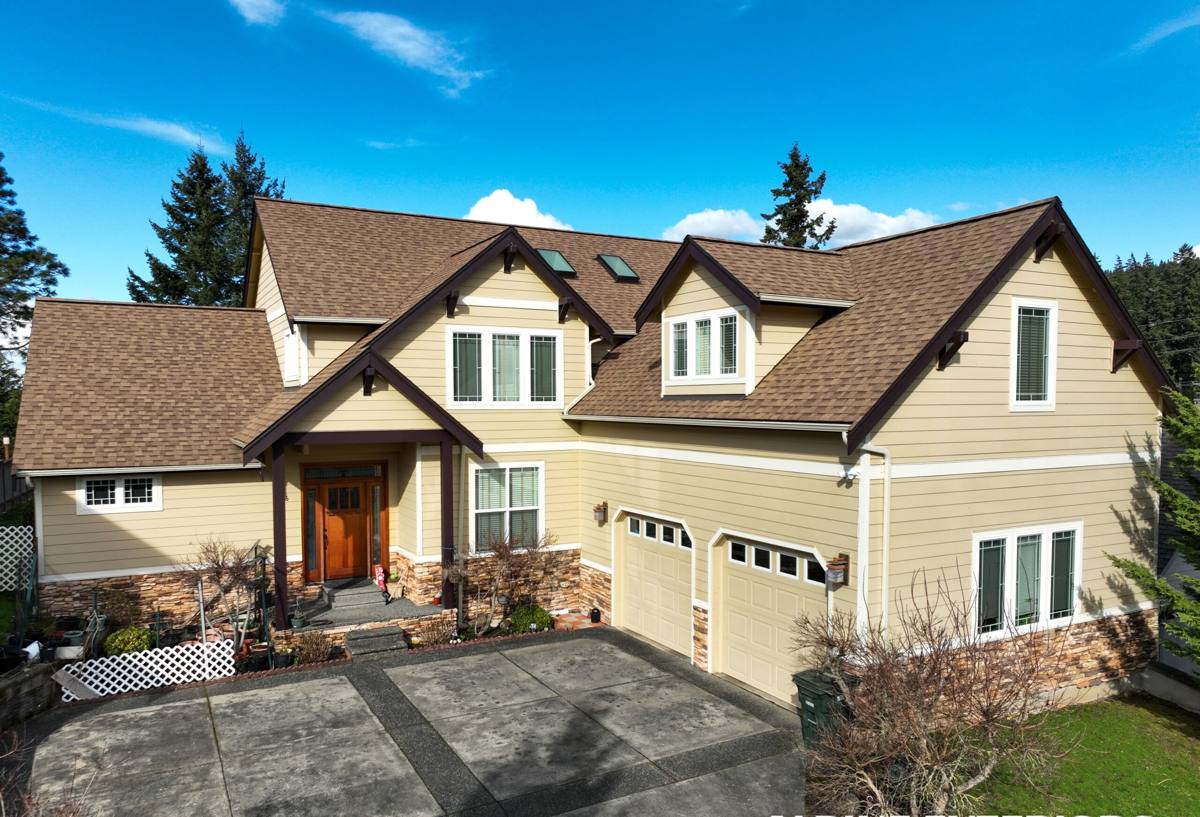
What Salt Air, Driving Rain, and Moss Actually Do to a Wall System
Salt Air
Airborne salt is corrosive to exposed metal fasteners, flashing, and trim, and it accelerates the breakdown of finishes that aren't engineered to resist it. On a waterfront lot, salt-laden moisture doesn't just sit on the surface — it works into every gap where caulking has failed or flashing was installed short.
Driving Rain
Wind-driven rain off the water doesn't fall straight down. It gets pushed sideways and upward under laps, around window trim, and into any joint that wasn't sealed with the right product. A siding system with poor drainage behind it will trap that moisture against the sheathing instead of shedding it.
Moss Season
Whatcom County's long wet season, combined with shade from mature trees on many Semiahmoo lots, gives moss and algae a wide window to establish themselves on siding, trim, and roof lines. Moss doesn't just look bad — it holds moisture against the surface it's growing on, which is a problem for any siding material that isn't dimensionally stable when wet.
Why Fiber Cement Is the Right Material for This Exposure
Fiber cement doesn't warp, swell, or rot the way wood-based products can when they take on repeated moisture. It doesn't attract insects, and it holds a factory finish far longer than field-applied paint on wood or engineered wood siding. That combination matters more on a peninsula than it does three miles inland, because the moisture exposure is constant rather than occasional.
We specifically install James Hardie products in the HZ5 climate-engineered line, which is formulated for the wet, temperate Pacific Northwest rather than a generic national spec. That distinction — engineering the product for the actual regional climate instead of a one-size-fits-all formula — is a meaningful part of why we standardized on this manufacturer rather than a generic fiber cement alternative.
What a Correctly Installed Job Involves (and Where Jobs Go Wrong)
Fiber cement siding is only as good as the assembly behind it. Most siding failures we're called out to inspect aren't a material problem — they're an installation shortcut. On a Semiahmoo home, the margin for error is smaller because the wall system takes on more water over its lifetime.
- A continuous weather-resistive barrier installed and lapped correctly, with no gaps at seams or penetrations
- A rain screen gap or drainage plane behind the siding so incidental moisture can drain and the wall can dry
- Flashing at every window, door, and horizontal transition, installed to shed water outward rather than behind the cladding
- Manufacturer-specified fastener type, spacing, and penetration depth — not shortened to save time
- Factory-cut edges and field cuts sealed per the manufacturer's finish requirements, since an unsealed cut edge is a common entry point for moisture
- Proper clearance between the siding's bottom edge and grade, decks, or roof lines to avoid standing water and splash-back
Skipping any one of these doesn't show up immediately. It shows up in three to five years as staining, soft spots, or paint failure at the seams — right around when a homeowner assumes the material itself was the problem.
Fiber Cement vs. the Alternatives for a Waterfront Semiahmoo Home
We get asked fairly often why we don't offer vinyl, LP SmartSide, or cedar as options. Each of those products has legitimate uses elsewhere, but none of them holds up as well in sustained salt air, driving rain, and moss exposure as correctly installed fiber cement.
| Material | Salt air / moisture behavior | Moss & algae resistance | Ongoing maintenance |
|---|---|---|---|
| James Hardie fiber cement | Non-combustible, dimensionally stable when wet; factory ColorPlus finish resists fading and doesn't rely on field paint for protection | Firm, non-porous surface holds up well to periodic washing without breaking down | Occasional rinse; repaint cycle far longer than wood-based products |
| Vinyl | Won't rot, but can warp or crack under UV cycling and impact; seams can allow wind-driven rain intrusion over time | Can still host surface growth in shaded, damp areas | Low, but color fades and can't be repainted easily |
| LP SmartSide / engineered wood | Wood-strand core is more sensitive to sustained moisture exposure; edge and cut protection is critical | Moisture retention at failure points can accelerate growth | Moderate to higher; finish maintenance matters more in wet climates |
| Cedar / primed spruce | Natural wood movement and moisture absorption; needs consistent sealing to perform near water | Higher susceptibility without regular treatment | Highest; regular refinishing expected |
This isn't a claim that the other materials are defective — plenty of homes wear them fine in drier, more sheltered locations. It's that for the specific combination of salt air, wind-driven rain, and a long moss season that Semiahmoo homes face, we've standardized on the product system that holds up with the least ongoing maintenance burden and the strongest factory-backed finish.
Our Process for a Semiahmoo Fiber Cement Project
Assessment
We start by walking the exterior and checking the condition of the existing siding, trim, and any visible moisture damage, paying particular attention to walls facing the water and walls that stay shaded and damp longest.
Tear-Off and Sheathing Check
Once the old siding comes off, we check the sheathing underneath for soft spots or hidden moisture damage before anything new goes up. This is the point where problems that were invisible from outside get caught and addressed rather than covered over.
Weather Barrier and Drainage Plane
We install the weather-resistive barrier and drainage plane to manufacturer spec, since this layer is what protects the wall assembly long after the siding itself is up.
Installation
Siding, trim, and flashing go up following James Hardie's published installation requirements for fastening, clearances, and joint treatment — not a generalized approach adapted from other materials.
Final Inspection
We walk the finished job checking caulking, flashing details, and clearances before calling it complete.
Keeping Fiber Cement Siding Looking Right in a Moss-Prone, Salty Climate
Correct installation does most of the work, but a small amount of homeowner upkeep keeps a Semiahmoo home looking its best year-round.
- Rinse siding periodically with a garden hose, focusing on shaded and north-facing walls where moss and algae establish first
- Keep gutters clear so overflow doesn't run down the face of the siding and feed moss growth
- Trim back tree limbs and shrubs that keep sections of wall shaded and damp longer than the rest of the house
- Check caulking at trim joints and penetrations every year or two, and have any cracked or missing caulk redone promptly
- Avoid pressure washing directly at seams and joints, which can force water behind the siding rather than clean it
Why Hiring a Crew That Already Works Semiahmoo Matters
A siding crew that mostly works inland doesn't get regular reps on waterfront wind patterns, salt exposure, or the moss cycle that a Semiahmoo home deals with every year. That experience shows up in small decisions — where extra flashing attention is warranted, which walls need a closer look at the drainage plane, how clearances should be set given typical grade and landscaping in the area. It also means fewer surprises during the project itself, since we already know what these homes tend to need before we start.
If you're weighing a siding replacement or repair on a Semiahmoo property, we're glad to take a look and walk you through what we'd recommend and why. Reach out for a free, no-pressure estimate using the form below.