 Birch Bay Siding
 Siding Installation Built for Marietta's Coastal Conditions
Marietta homes sit in one of the harder-working climates in Whatcom County. Between the salt air drifting off the water, the driving rain that comes sideways off winter storms, and a moss season that can stretch nine months out of the year, exterior walls here take a beating that inland homes never see. Siding installation in this neighborhood isn't a cosmetic upgrade — it's the single biggest factor in whether a home's walls stay dry, sound, and free of rot for the next several decades.
We install siding across Whatcom County, and Marietta shows up on our schedule regularly enough that we've built our process around exactly these conditions. This page walks through what local homes actually need, what a correct installation involves, and how our process works from first estimate to final walkthrough.
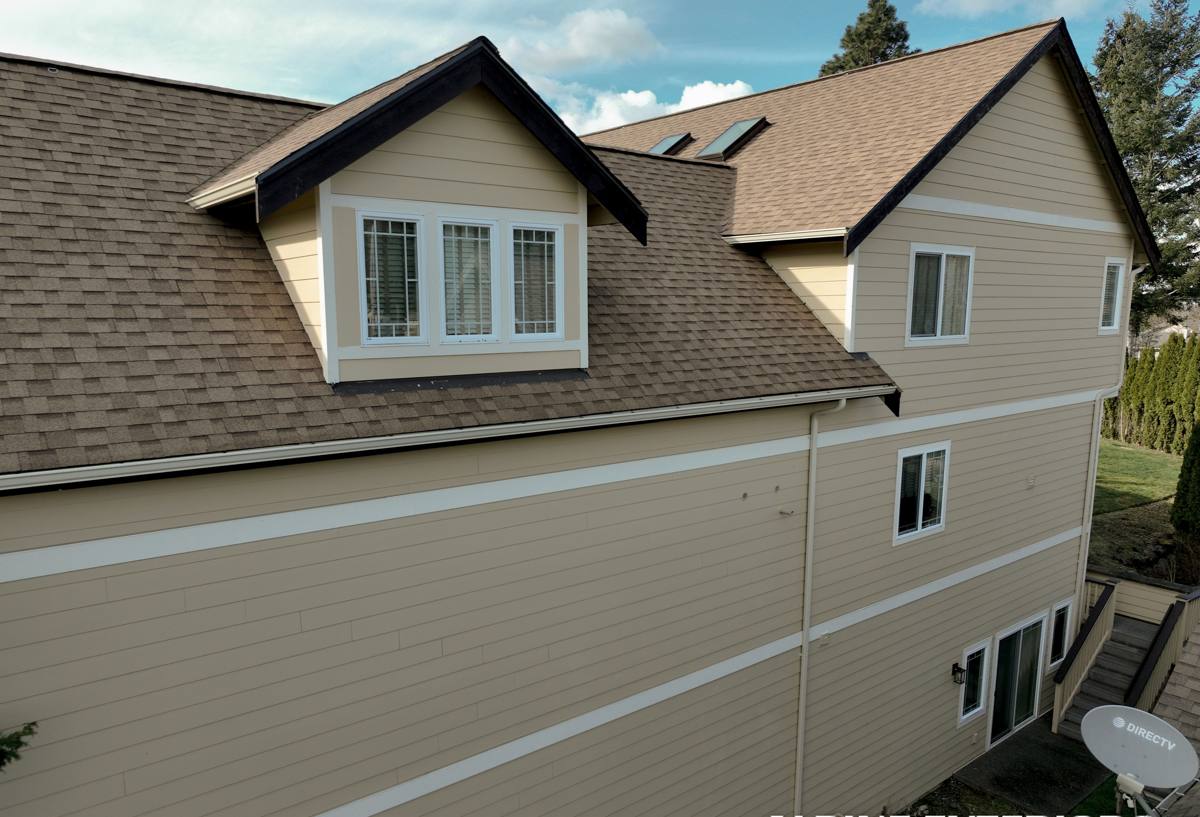
What Marietta's Climate Does to Siding Over Time
Salt Air and Moisture
Proximity to saltwater means airborne salt settles on exterior surfaces year-round. Salt is hygroscopic — it pulls moisture out of the air and holds it against whatever surface it lands on. For siding materials that aren't engineered to resist that cycle, this means faster paint failure, swelling at seams, and corrosion of exposed fasteners. It's a slow process, but it's constant, and it never really stops during the wet months.
Driving Rain
Wind-driven rain doesn't just wet the surface of a wall — it pushes water sideways into laps, seams, and any gap around trim, windows, or penetrations. A siding system that relies on caulk or paint alone to keep water out will eventually fail here, because caulk shrinks and paint wears long before the underlying materials are due for replacement. What actually keeps water out over time is correct lap coverage, flashing, and a drainage plane behind the siding that gives water somewhere to go if it gets past the surface.
Moss and Prolonged Dampness
Whatcom County's long wet season keeps north-facing walls, shaded siding, and anything under tree cover damp for extended stretches. Moss and algae take hold wherever moisture lingers, and once established they hold even more water against the surface underneath. Siding that can't tolerate sustained dampness — or that absorbs water into its core — starts to break down from the inside even when the surface still looks fine.
Why We Only Install James Hardie Fiber Cement
We made a deliberate decision to install one siding product, and only one: James Hardie fiber cement. We don't install vinyl, LP SmartSide, Cemplank, Allura, primed spruce, or cedar. That's not a marketing position — it's a standard we hold because of what we've seen these conditions do to lesser-suited materials over time.
Vinyl siding expands and contracts with temperature swings and can warp or crack in sustained cold snaps; it also isn't fire-resistant. Wood products like cedar or primed spruce require ongoing maintenance to stay ahead of moisture and rot, and that maintenance burden only gets worse in a climate this wet. Engineered wood products like LP SmartSide perform reasonably well when installation is flawless, but they're less forgiving of the small installation errors that are common in the field, and moisture intrusion at a seam can compromise the wood substrate. Fiber cement alternatives to Hardie exist, but Hardie's ColorPlus factory finish, engineered HZ climate product lines, and transferable warranty are the combination we've found holds up best against salt air, driving rain, and moss without demanding constant homeowner upkeep. Fiber cement is also non-combustible, which matters more every year given regional wildfire risk.
Standardizing on one product means our crews install it the same correct way on every job, every time — no guessing at manufacturer specs across five different systems.
What a Correct Siding Installation Actually Involves
Siding is a system, not just a surface. The visible plank or panel is the last piece installed and the first thing anyone notices, but everything behind it determines whether the wall stays dry for the next 30-50 years.
The Layers That Matter
A correct installation includes a weather-resistant barrier installed over the sheathing, properly lapped and taped seams, flashing at every window, door, and penetration, and rainscreen or furring where conditions call for it to let the wall breathe and drain. Fasteners need to be the right type and driven at the right depth — over-driven nails crack fiber cement and under-driven ones let planks work loose over time. Clearances at the ground, roofline, and any hardscaping need to be correct so the bottom edge of the siding never sits in standing water or trapped moisture.
Where Installations Go Wrong
Most siding failures we're called out to inspect aren't material failures — they're installation errors. Missing or reversed flashing, caulk used in place of proper lap coverage, fasteners driven through the wrong zone of the plank, and skipped weather barrier at penetrations are the most common culprits. None of these are visible on the day the job wraps up. They show up two, five, or ten years later as soft spots, staining, or bubbled paint — exactly the kind of damage this climate accelerates.
| Cost Factor | Why It Matters | Typical Impact |
|---|---|---|
| Existing siding removal | Tear-off, disposal, and sheathing inspection add labor before new siding goes up | Moderate to significant |
| Sheathing and framing repair | Hidden rot found during tear-off must be repaired before re-siding | Variable — depends on condition |
| Home size and stories | More wall area and elevation change labor, scaffolding, and material needs | Significant |
| Trim and water-management detail | Windows, corners, and roof-wall intersections need correct flashing, not shortcuts | Moderate |
| Siding profile and finish | Lap width, panel style, and ColorPlus finish choice affect material cost | Moderate |
Our Installation Process, Start to Finish
- On-site estimate: we walk the exterior, check existing siding and trim condition, and talk through what you actually need — no pressure, no upsell.
- Detailed scope and product selection: we help you choose the right Hardie plank profile, panel style, and ColorPlus finish for your home and budget.
- Tear-off and inspection: existing siding comes off and we inspect the sheathing underneath for hidden rot or moisture damage before anything new goes up.
- Weather barrier and flashing: the drainage plane and all flashing details go in first, since this is the layer that actually keeps water out long-term.
- Hardie installation to manufacturer spec: correct fastening, lap coverage, and clearances, installed by crews trained specifically on this product.
- Trim, caulking, and final finish: detail work gets the same attention as the field siding — this is where sloppy jobs usually cut corners.
- Final walkthrough: we go over the finished job with you before calling it done.
Choosing the Right Hardie Product Line and Finish
James Hardie makes several product lines, and the right one depends on your home's style and exposure. Lap siding is the most common choice for traditional home profiles, while panel and shingle products suit different architectural styles or accent areas. Hardie's HZ10 and HZ5 engineered climate zones account for regional temperature and moisture differences, and Whatcom County's marine climate factors into which specification is correct for a given home.
ColorPlus factory-applied finish is worth understanding on its own: because the color is baked on in a controlled factory process rather than field-painted, it resists fading and chipping far better than a job-site paint job, and it comes backed by its own finish warranty separate from the substrate warranty. For a home exposed to salt air and constant damp weather, that factory finish is doing real work every day, not just looking good on installation day.
Signs a Marietta Home Needs New Siding
Some warning signs are easy to spot from the ground; others take a closer look. Before scheduling any work, it's worth checking your home for:
- Soft or spongy spots when pressing on siding near the bottom edge or below windows
- Persistent moss or algae growth that returns shortly after cleaning
- Peeling, bubbling, or chalking paint, especially on north-facing or shaded walls
- Visible gaps, warping, or buckled panels at seams and corners
- Staining or streaking below window sills or trim joints
- A musty smell or visible moisture on interior walls that share an exterior wall
- Rust streaks around fastener heads on existing siding
Any one of these on its own might be minor. Several together, or anything soft to the touch, usually means moisture has already reached the sheathing and it's worth getting a professional look before it spreads further.
Why a Crew That Already Works in Marietta Matters
Siding installation isn't just about following a manufacturer's manual — it's about applying that manual correctly to the specific exposure a given home faces. A crew that regularly works this stretch of Whatcom County coastline already knows which walls take the worst of the wind-driven rain, how much clearance moss-prone shaded areas actually need, and where salt air tends to concentrate corrosion on fasteners and flashing. That local pattern recognition doesn't replace following the spec — it's what makes sure the spec gets applied to the details that matter most for a Marietta home specifically, not a generic installation checklist written for a drier climate.
It also means a shorter, more predictable timeline. We're not learning the local weather windows on your job — we already know when tear-off and installation can safely happen between storm systems, which matters for a project where the wall is briefly open to the weather.
Get a Free, No-Pressure Estimate
If you're weighing a siding replacement in Marietta, or just want an honest read on whether your current siding has years left in it, we're glad to take a look. The estimate is free, there's no pressure, and you'll get a straight answer about what your home actually needs. Use the form below to get started.