 Birch Bay Siding
 Siding Repair Built for Cherry Point's Marine Climate
Cherry Point sits right on the Strait of Georgia, and that waterfront exposure shapes everything about how siding ages here. Homes in this part of Whatcom County take a steady diet of salt-laden marine air, wind-driven rain off the water, and a moss season that can stretch from fall through spring. None of that is unusual for the Birch Bay area, but it means siding repair here isn't the same job as siding repair twenty miles inland. The failure patterns are different, the materials that hold up are different, and a repair that ignores the local climate tends to fail again within a few years.
We work on homes in and around Cherry Point regularly, which matters more than it might sound. A contractor who understands how this specific stretch of coastline treats a house — where wind-driven rain tends to find gaps, which elevations get hit hardest by prevailing weather, how long moss has to establish itself in the shade of tree cover — makes better repair decisions than one seeing the property for the first time.
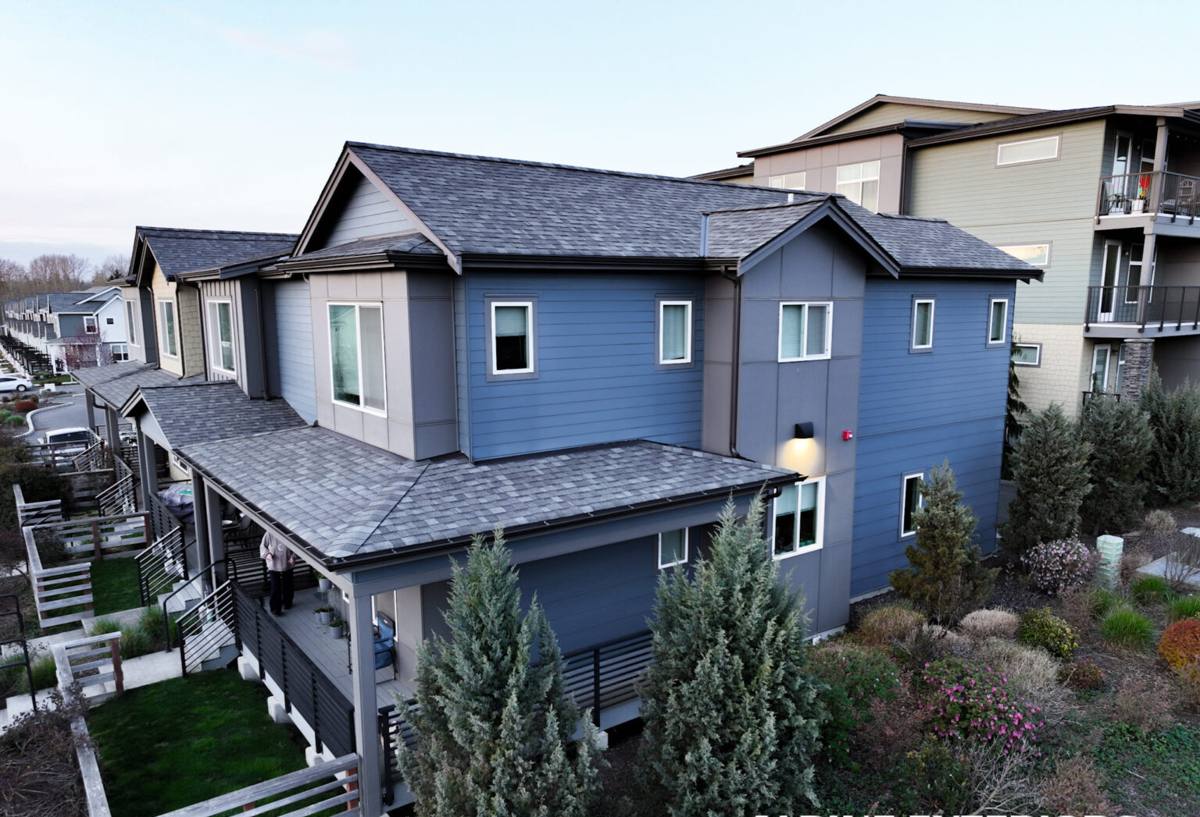
Why Siding Fails Faster on Cherry Point Homes
Salt Air and Corrosion
Airborne salt from the Strait doesn't just affect metal fasteners and flashing — it accelerates the breakdown of caulk, paint films, and lower-grade siding materials. Over years, salt exposure works into seams, joints, and any spot where the protective finish has thinned. This is one of the reasons we standardized on James Hardie fiber cement: it's a non-combustible, engineered material that doesn't rot, and its factory-applied ColorPlus finish is built to resist the fading and breakdown that salt air causes to field-applied paint.
Driving Rain and Water Intrusion
Wind-driven rain off open water doesn't just fall on siding — it gets pushed sideways and upward into laps, seams, and penetrations that would stay dry in a calmer inland setting. Once water gets behind siding, the damage is rarely visible from the outside until it's advanced. Soft trim, staining at butt joints, and bubbling paint are usually signs that moisture has already been working behind the surface for a while.
Moss and Sustained Moisture
A long moss season means more than green streaks on a north-facing wall. Moss holds moisture directly against the siding surface for extended periods, which is hard on any material and can accelerate rot in wood-based products. Shaded elevations near trees or under eaves are usually the first place we check on a Cherry Point inspection, because that's where moss gets the longest run at the wall.
What a Correct Siding Repair Actually Involves
A repair that only addresses the visible symptom — replacing a cracked or stained board and calling it done — tends to fail again because it skips the part that actually matters: finding out why that section failed in the first place. A correct repair on a home exposed to this climate includes:
- Removing enough surrounding material to expose the sheathing and check for hidden moisture damage, not just patching the visible board
- Inspecting flashing at windows, doors, and trim intersections — a huge share of repeat failures trace back to flashing, not the siding itself
- Confirming proper drainage behind the cladding so water that does get in has somewhere to go
- Matching new material correctly so the repair doesn't stand out as an obvious patch job
- Re-sealing and re-fastening to manufacturer spec, not just "close enough"
Skipping any of these steps is how a homeowner ends up paying for the same repair twice within a few years — the visible damage gets fixed, but the underlying cause never does.
Repair or Replace? A Practical Way to Think About It
Not every siding problem on a Cherry Point home needs a full re-side. But not every problem is a simple patch, either. The table below covers the factors that usually drive the decision.
| Factor | Leans Toward Repair | Leans Toward Replacement |
|---|---|---|
| Extent of damage | Isolated to one or two elevations or sections | Spread across multiple walls or the whole house |
| Underlying material condition | Sheathing and framing test dry and sound | Rot or moisture found in sheathing/framing during inspection |
| Siding material | Original material still available or easily matched | Original material discontinued, degraded, or never suited to this climate |
| Age of existing siding | Still well within expected service life | Nearing or past the end of its realistic lifespan |
| Recurring failures | First occurrence in that spot | Same area has failed and been patched before |
When we find repeat failures or moisture damage that points to a systemic problem — not just one bad board — we'll tell you honestly, even if that means recommending replacement instead of billing for another patch.
Our Repair Process
- On-site inspection. We look at the damaged area and everything around it, including flashing, trim, and any adjacent sections showing early signs of trouble.
- Moisture check. Where damage suggests water intrusion, we open up the area enough to check the sheathing and framing behind it before deciding on scope.
- Honest scope and estimate. You get a clear explanation of what's actually wrong, what it will take to fix it correctly, and a written estimate — no pressure to upsell into a bigger project than the house needs.
- Repair to spec. Material removal, structural drying if needed, correct flashing and drainage details, and installation matched to manufacturer requirements.
- Finish and cleanup. Caulking, paint or color matching, and a final walkthrough so the repair holds up visually as well as structurally.
Why We Only Install James Hardie
When a repair calls for new siding material — whether it's a small patch or replacing a full elevation — we use James Hardie fiber cement, and only James Hardie. We don't install vinyl, LP SmartSide, or cedar, and that's a deliberate standard, not a limitation of what we're capable of installing. In a marine environment like Cherry Point, the trade-offs of those other materials show up faster: vinyl can warp and fade under sustained UV and temperature swings, wood-based and engineered wood products are more vulnerable to sustained moisture exposure, and cedar demands a maintenance schedule most homeowners don't keep up with once the novelty wears off.
James Hardie's fiber cement is non-combustible and doesn't provide the moisture pathway that wood-based products do. Its ColorPlus factory finish is engineered to hold color and resist the kind of weathering that salt air and constant rain cause to field-painted surfaces. The company also builds climate-specific HZ product lines, which matters in a region that deals with sustained damp weather rather than dry heat. For a repair that has to blend into existing Hardie siding, or for a homeowner deciding what to replace failing siding with, that consistency is a real advantage — both in performance and in how confidently we can stand behind the work with Hardie's transferable warranty.
Why Hiring a Crew That Already Works Cherry Point Matters
Siding repair is detail work, and the details that matter most are the ones specific to this location. A crew that regularly works Birch Bay and Cherry Point already knows:
- Which elevations typically take the worst of the wind-driven rain in this stretch of the coastline
- How aggressively moss establishes in shaded areas near tree cover, and where to check for it first
- Which flashing and fastener details hold up against sustained salt air exposure and which don't
- How to match materials and finishes so a repair doesn't stick out against existing siding
That local familiarity shortens the diagnostic phase and reduces the odds of missing a hidden problem — which is where repeat repairs and wasted money usually come from.
Signs You Should Have Your Siding Inspected
You don't need visible cracking to justify a call. Watch for these earlier warning signs, especially on walls facing the water or shaded by trees:
- Persistent moss or algae growth that keeps coming back after cleaning
- Paint that's bubbling, peeling, or failing faster than the rest of the house
- Soft spots when you press gently on siding or trim near the base of the wall
- Staining or discoloration around seams, corners, or butt joints
- Gaps in caulking around windows, doors, or trim that weren't there before
- A musty smell near an exterior wall on the inside of the house
Catching these early is almost always cheaper than waiting for visible damage, because it usually means the repair stays limited to a small section rather than spreading to the sheathing underneath.
Get an Honest Look at Your Siding
If you're seeing early warning signs, dealing with a section that's failed before, or just want a straight answer on whether a repair or a bigger fix makes sense for your Cherry Point home, we're glad to take a look. The estimate is free, there's no pressure, and you'll get an honest read on what your siding actually needs — use the form below to get started.