 Birch Bay Siding
 Siding Repair in Terrell Creek: Built for This Corner of Whatcom County
Terrell Creek sits in that stretch of Whatcom County where the land eases down toward Birch Bay and Puget Sound salt air blows straight through the trees. It's a mix of wooded lots, low wetland ground near the creek corridor, and homes that face a steady combination of wind-driven rain, salt-laden air, and shade that never quite dries out. That combination is hard on exterior siding, no matter what it's made of, and it shows up in specific, predictable ways on homes in this area. If you've noticed staining, soft spots, cracked caulk lines, or a green film creeping up your siding, you're not imagining a problem — you're seeing what this climate does to an exterior over time.
We repair siding for homeowners throughout Birch Bay and the surrounding Whatcom County communities, including Terrell Creek, and we've learned that a repair here needs to account for more than the visible damage. It needs to account for why the damage happened in the first place.
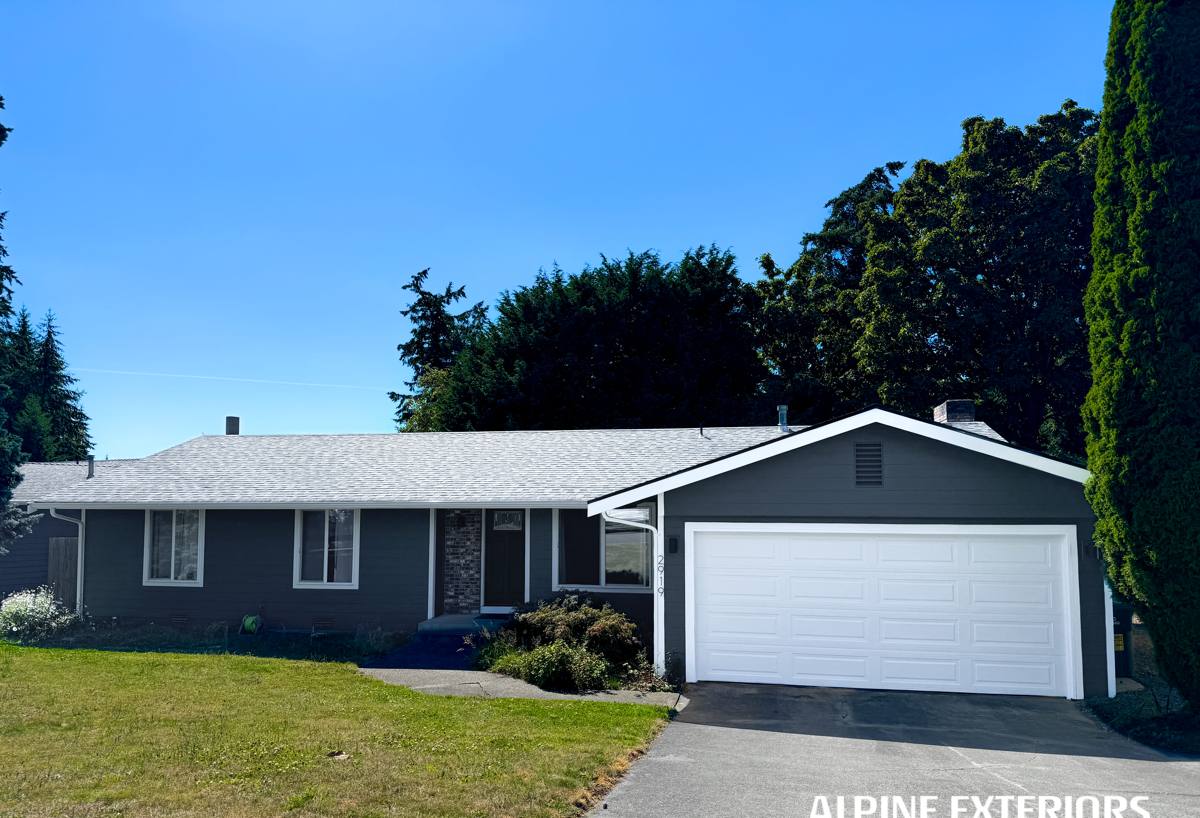
Why Terrell Creek Siding Ages Differently
Salt Air and Slow Corrosion
Even set back from the water, homes in this part of Birch Bay pick up salt-laden air carried in off the Strait of Georgia and Puget Sound. Salt doesn't just sit on the surface — it works into fasteners, trim joints, and any place paint or factory finish has worn thin. Over years, that means corroding nail heads that bleed rust streaks down the face of the siding, and faster breakdown of caulk and sealant at the joints. A repair that ignores this will look fine for a season and fail again quickly.
Driving Rain, Not Just Rain
Whatcom County gets a lot of rain, but the kind that damages siding is the kind that comes in sideways during a winter blow. Wind-driven rain forces water up and under laps, around window trim, and into any gap in the caulking — places that stay bone dry in a light shower. Homes on more exposed lots near Terrell Creek take this directly; homes tucked into tree cover get a slower, steadier version of the same problem because they never fully dry between storms.
A Long Moss and Mildew Season
The tree cover and creek-adjacent ground that make this area attractive also keep humidity and shade high on north- and east-facing walls for much of the year. Moss, algae, and mildew get a long runway to establish themselves, and once moss roots into a seam or a soft spot in the substrate, it holds moisture against the wall around the clock. That's a very different failure mode than a home in a dry, open location, and it changes what a correct repair looks like.
Signs Your Terrell Creek Home Needs a Siding Repair
Most siding problems announce themselves well before they become structural. Homeowners in this area should watch for:
- Dark staining or streaking below nail heads or seams
- Green or black film that keeps returning after cleaning, especially on shaded walls
- Soft, spongy, or bubbled areas when you press on the siding
- Cracked, shrunken, or missing caulk at trim, corners, and window edges
- Visible gaps or separation at lap joints
- Paint that's peeling or bubbling in a localized patch rather than evenly across a wall
- A musty smell near an exterior wall from inside the house
Any one of these on its own might be minor. Several appearing in the same section of wall usually means moisture has been getting behind the siding for a while, not just sitting on top of it.
What Happens If You Wait
A small area of moss or a hairline gap in the caulking rarely feels urgent, and in isolation it usually isn't. But in a climate that keeps wood and sheathing damp for long stretches of the year, small openings turn into bigger ones faster than they would in a drier region. Water that gets behind the siding doesn't evaporate quickly under a shaded, tree-covered wall — it sits, and it spreads along the sheathing until it finds framing to soften. What starts as a repair measured in a few siding boards can turn into a repair that involves cutting out rotted sheathing or even framing, which costs considerably more and takes longer. Catching the problem while it's still cosmetic is almost always the cheaper, simpler path.
What a Correct Repair Actually Involves
Diagnosing What's Underneath
Cutting out a damaged section and nailing up a patch is not a repair — it's a temporary cover. Before we touch the siding, we check what's behind it: the condition of the water-resistive barrier, the sheathing, and the framing in that section of wall. If moisture has already reached the sheathing, patching the surface without addressing that will trap the problem and guarantee it comes back, often worse.
Matching Material and Finish
A patch that doesn't match the surrounding siding's plank width, texture, and finish stands out immediately, and it's one of the most common complaints we hear about prior repairs done elsewhere. We work to match existing siding as closely as the product allows, and where an exact match isn't possible, we talk through the options honestly rather than installing a mismatched section and hoping it blends in.
Flashing, Caulking, and Water Management
Most siding failures in this climate trace back to a flashing or sealant detail, not the siding material itself. A correct repair re-establishes proper flashing at penetrations and trim, uses sealant rated for exterior exposure at the right joints, and makes sure water has a way to drain out rather than a way to get trapped behind the wall.
Repair or Replace? How We Help You Decide
Not every damaged section calls for a full re-side, and not every homeowner wants to hear "just patch it" when the underlying problem is more widespread. Here's generally how we think about it:
| Factor | Repair Usually Makes Sense | Replacement Usually Makes Sense |
|---|---|---|
| Extent of damage | Isolated to one or two wall sections | Recurring across multiple elevations |
| Moisture intrusion | Caught early, sheathing still sound | Rot found in sheathing or framing |
| Age of existing siding | Newer siding, other sections in good shape | Siding near or past its expected service life |
| Material match | Compatible replacement material available | Discontinued profile or color, no clean match |
| Root cause | Single fixable detail: flashing, caulk, one impact point | Systemic issue: poor original install, wrong product for the exposure |
We'll always give you a straight answer on which category your home falls into, including when a repair is genuinely the right, less expensive call.
Why We Repair Exclusively With James Hardie Fiber Cement
We install and repair James Hardie fiber cement siding — not vinyl, not LP SmartSide, not cedar or primed wood products. When a repair calls for new material, that standardization matters even more than it does on a new install: it means the patch is going into a wall with a product engineered for the Pacific Northwest's wet, moss-prone conditions, backed by a factory ColorPlus finish that holds color and resists the fading and chalking that make patches obvious over time. Fiber cement doesn't feed mold or absorb water the way wood-based siding can, and it doesn't corrode the way some metal trim and fasteners do near salt air. For a home already contending with Terrell Creek's climate, that durability is the difference between a repair that lasts and one you're revisiting in a couple of years.
Our Repair Process
- On-site assessment. We inspect the damaged area and the wall assembly behind it, not just the visible siding.
- Honest diagnosis. We tell you what caused the damage, whether it's isolated, and what we'd recommend if it were our own house.
- Written scope and pricing. No vague verbal estimate — you get a clear scope before any work starts.
- Repair with matched materials. We source Hardie products and colors that match your existing siding as closely as possible.
- Correct flashing and sealant details. We rebuild the water management at the repair, not just the cosmetic surface.
- Cleanup and final walkthrough. We review the finished work with you before we consider the job done.
Why Local Experience in Terrell Creek Matters
A siding repair crew that mostly works drier, more open areas will size up a Terrell Creek home differently than one that works this stretch of Whatcom County regularly. We know which elevations tend to hold moss the longest, which detailing shows up most on homes with heavy tree cover, and how much of a margin to build in for the salt air coming off the bay. That's not a substitute for a careful, individual inspection of your home — every property is different — but it does mean we're not guessing at the conditions your siding is up against.
What to Look For When Hiring a Local Repair Contractor
Whether you hire us or someone else, a few basics apply to any siding repair contractor working in this area:
- Washington contractor licensing and current liability insurance
- A written, itemized estimate before any work begins
- Experience specifically patching and matching fiber cement siding
- A clear explanation of what caused the damage, not just a quote to cover it
- A warranty on the repair work itself, in writing
Get a Free, No-Pressure Estimate
If you're seeing staining, soft spots, moss buildup, or open joints on your siding, it's worth having someone look at it before a small repair turns into a bigger one. We offer free, no-pressure estimates for siding repair in Terrell Creek and throughout the Birch Bay area — fill out the form below and we'll take a look.