 Birch Bay Siding
 Cherry Point Is a Different Kind of Exposure Than Most of Whatcom County
Cherry Point sits right up against the Strait of Georgia, north of the main Birch Bay shoreline, and that position changes what siding has to deal with day in and day out. It's a mix of open farmland, waterfront lots, and rural acreage with fewer windbreaks than you'd find in a denser neighborhood. That means wind coming off the water hits siding directly, carrying salt spray with it, and there's often less tree cover or adjacent structures to slow it down before it reaches a wall.
Homes here also deal with a lot of shaded, damp ground cover — tall grass, brush, mature trees on the larger lots — which keeps humidity sitting against lower wall sections longer after a storm passes. Combine that with Whatcom County's long, wet fall-through-spring stretch and you get a siding environment that's tougher on materials than most inland siding jobs in the region. We don't treat a Cherry Point replacement the same way we'd treat a job in a sheltered subdivision, and homeowners here shouldn't expect a generic install to hold up the same way either.
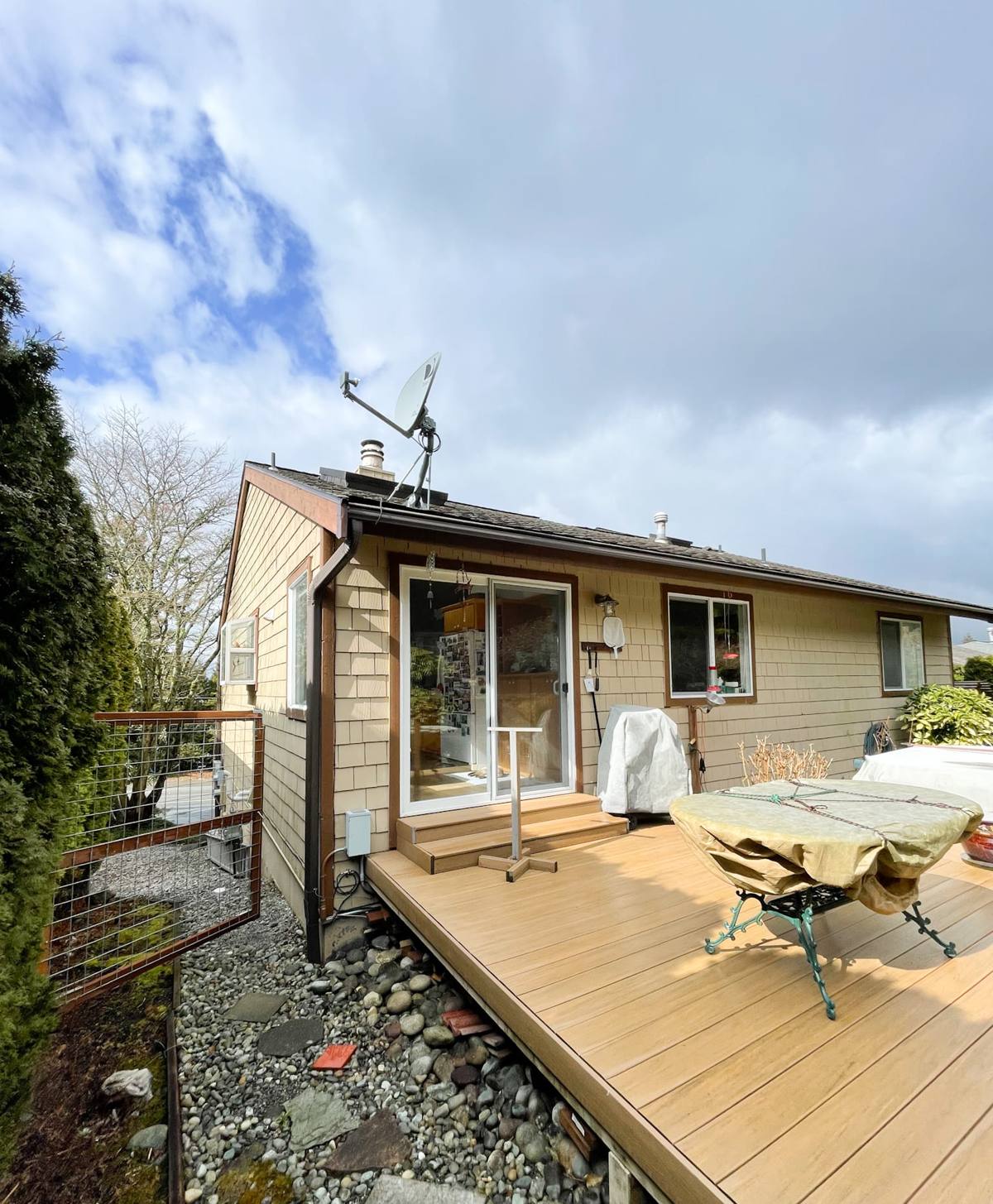
What Salt Air and Driving Rain Actually Do to Siding
Salt Air
Airborne salt is corrosive to exposed fasteners, trim flashing, and any metal components in a siding system. It also accelerates the breakdown of lower-grade paints and coatings, which is why siding facing the water often looks chalky or faded years before the same product would on a home a few miles inland. Salt doesn't just sit on the surface — over time it works into seams, joints, and any spot where the finish has thinned.
Driving Rain
Wind-driven rain off the Strait doesn't fall straight down — it gets pushed sideways into wall assemblies, seams, and butt joints. A siding system that's only built to shed water in calm conditions will let moisture find its way behind the cladding in a spot like Cherry Point. That's a water-management problem, not just a cosmetic one, and it's usually the underlying cause when a home starts showing rot at corners or under windows years before it should.
Moss and Algae
Whatcom County's moss season is long, and Cherry Point's mix of shaded lots and constant moisture gives moss and algae plenty of time to establish on north-facing walls and anywhere water lingers. On products that absorb moisture, moss growth isn't just unsightly — it holds water against the surface and speeds up deterioration underneath.
What a Correct Siding Replacement Involves Out Here
A siding replacement isn't just removing old panels and hanging new ones. In an exposure like Cherry Point's, the work that happens before and around the visible siding matters as much as the siding itself.
- Full tear-off to bare sheathing, not an over-clad, so we can actually see and address what's underneath
- Inspection of sheathing and framing for existing moisture damage before anything new goes up
- A correctly lapped weather-resistant barrier behind the siding, sealed at every penetration
- Proper flashing at windows, doors, and any horizontal trim so water is directed out, not trapped in
- Rainscreen or ventilation gap where conditions call for it, to let any incidental moisture dry out instead of sitting against the wall
- Fasteners and trim hardware rated for coastal/corrosive exposure, not standard-grade hardware
- Correct fastening pattern and reveal per manufacturer spec — not "close enough"
Skip any one of those steps and the new siding can look fine for a couple of years while the real problems build behind it. That's the trap with siding work: the mistakes are invisible until they aren't.
Why We Only Install James Hardie Fiber Cement Here
We don't install vinyl, LP SmartSide, primed spruce, cedar, or other fiber cement brands. That's a standard we hold across every job, but it matters even more in an exposure like Cherry Point's. Vinyl siding expands and contracts significantly with temperature swings and can become brittle over time; in a wind-exposed, salt-air setting that's not the trade-off we want on a client's home. Wood-based and engineered wood products depend heavily on maintaining an intact factory coating to resist moisture — any breach, and the substrate underneath is vulnerable to swelling and rot, which is a real risk given how much moisture this area sees.
James Hardie fiber cement is cement, sand, and cellulose fiber — it doesn't rot, it isn't attractive to pests, and it's non-combustible. Hardie's ColorPlus factory finish is baked on under controlled conditions rather than field-applied, which gives it better adhesion and UV/color stability than most site-applied paint jobs, and Hardie backs their products with a strong transferable warranty. We're not saying other products can't be installed correctly — we're saying that for the climate and exposure homes face out here, fiber cement's dimensional stability and moisture resistance make it the material we're willing to put our name behind.
Matching Cherry Point's Setting
Cherry Point homes range from working waterfront properties to larger rural lots, and there isn't one "right" look. Hardie's HZ5 product line is engineered for higher-moisture, higher-wind climates like this one, and it comes in lap siding, shingle-style panels, and vertical board profiles, so matching an existing farmhouse look, a more modern build, or a traditional Pacific Northwest exterior is straightforward. ColorPlus finishes come in a range of factory colors, which also means less color-matching guesswork if a section ever needs a repair panel down the road.
Our Process, Start to Finish
- On-site assessment — we look at existing siding, trim, flashing, and any visible moisture damage, and we're honest about what we find, including sections that might just need repair rather than full replacement.
- Written estimate — scope, product line, and price laid out clearly, no vague allowances.
- Tear-off and inspection — old siding comes off, sheathing gets inspected, and anything compromised gets addressed before new material goes up.
- Weather barrier and flashing — installed and detailed for this specific exposure, not a generic pass.
- Hardie installation — installed to manufacturer spec for fastening, clearances, and joint treatment.
- Final walkthrough — we go over the finished job with the homeowner before calling it done.
What Drives the Cost of a Cherry Point Siding Job
| Factor | Why It Matters Here |
|---|---|
| Extent of tear-off and hidden damage | Waterfront and wind-exposed walls are more likely to have moisture damage under old siding that needs repair before re-siding |
| Home size and wall complexity | More corners, gables, and trim details mean more flashing and cutting |
| Siding profile chosen | Lap, shingle-style, and vertical panel products vary in material and labor cost |
| Access and site conditions | Rural lots, long driveways, or dense brush can affect staging and disposal logistics |
| Trim and accessory scope | Corner boards, fascia, and window trim replaced at the same time affects overall scope |
We give firm written numbers after an on-site look — not a phone estimate — because hidden damage and access are the two factors that most often shift a project's real cost.
Signs a Cherry Point Home May Need Replacement Rather Than Repair
- Soft or spongy spots when you press on siding, especially near the bottom courses or under windows
- Paint or finish that's chalking, peeling, or has gone flat and dull despite regular upkeep
- Visible warping, buckling, or panels that have pulled away from the wall
- Persistent moss or dark staining that returns quickly after cleaning
- Interior signs like peeling paint, musty smell, or staining on walls that share an exterior with the siding in question
- Siding that's original to a home built before modern water-resistive barrier standards were common
Why Local Experience with This Specific Exposure Matters
A crew that mostly works sheltered inland neighborhoods and a crew that regularly works Cherry Point's wind and salt exposure will make different calls on the same house — fastener choice, flashing detail, whether a rainscreen gap is worth adding, how a wall should be sequenced during a stretch of unpredictable weather. None of that shows up on a glossy brochure, but it shows up in how the siding performs in year eight and year fifteen. We work this stretch of Whatcom County regularly enough to know which details actually matter here versus which ones are just extra steps for their own sake.
If your Cherry Point home needs new siding, or you're not sure yet whether it's a repair or a full replacement situation, we're glad to take a look and give you a straight answer. Reach out for a free, no-pressure estimate — there's a form below to get started.