 Birch Bay Siding
 Storm Damage Roof Repair for Bellingham Homes
Bellingham sits close enough to the water that its roofs take a different kind of beating than homes further inland. Winter windstorms off the Strait of Georgia and Bellingham Bay push rain sideways under shingles and flashing that would stay dry in a straight-down rain. Add in salt-laden air, long stretches of overcast damp weather, and a moss season that can run eight months out of the year, and you have a roof that ages faster than the calendar suggests. Storm damage here rarely shows up as a single dramatic event — more often it's wind that lifts a few shingles during a January blow, followed by months of slow water intrusion nobody notices until there's a stain on the ceiling.
We repair storm-damaged roofs for homeowners throughout Bellingham and the surrounding Whatcom County area, including Birch Bay. This page covers what storm damage actually looks like on a Pacific Northwest roof, what a correct repair involves, and how we approach the job so it holds up through the next round of weather instead of just getting you through the current one.
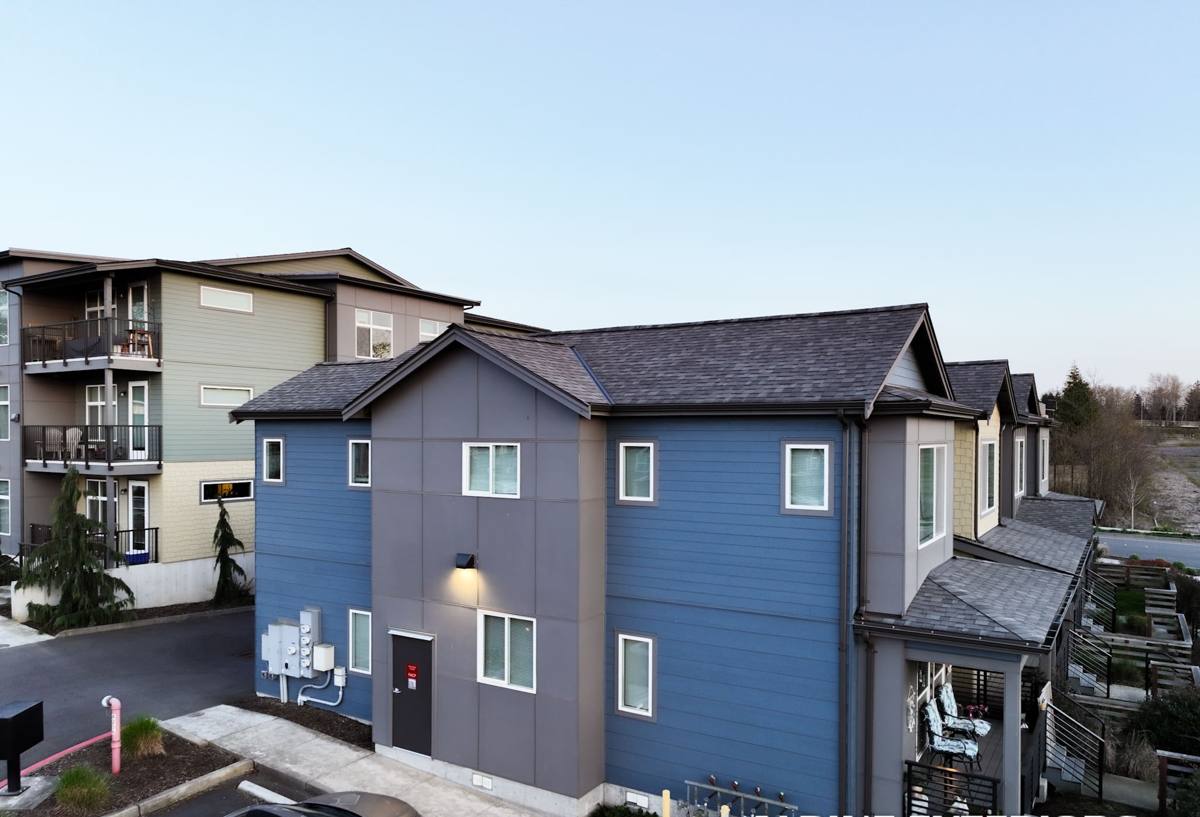
What Storm Damage Actually Looks Like Here
Homeowners often picture storm damage as missing shingles scattered across the lawn. That happens, but it's the least common version we see. More typical是:
- Wind-lifted shingle tabs that look fine from the ground but have broken their seal, letting wind-driven rain work underneath during the next storm
- Flashing pulled loose around chimneys, skylights, and roof-to-wall transitions, where nail heads back out as the structure flexes in high wind
- Granule loss from wind-blown grit and branches, which thins the shingle's UV and water protection without any visible hole
- Moss and organic buildup that traps moisture against the roof deck long after a storm has passed, which is less a single-storm event and more a slow accumulation that a wind event finally exposes
- Debris impact from fir and cedar branches, common on Bellingham's tree-lined lots, which can crack shingles or punch through underlayment without leaving an obvious gap
The tricky part is that most of this damage is only visible up close, and a lot of it doesn't leak immediately. A roof can carry storm damage for a full wet season before it shows up as an interior stain — by which point the plywood decking underneath may already be softening.
Why Whatcom County's Climate Makes This Worse Than It Looks
Three regional factors compound ordinary storm damage into bigger repair jobs if they're not caught early:
Salt Air and Corrosion
Homes closer to Bellingham Bay and the Birch Bay shoreline deal with airborne salt that accelerates corrosion on exposed fasteners, flashing, and metal roof edges. A nail that would hold its seal for years inland can start backing out or rusting through sooner here, which is exactly the kind of small failure that turns into a leak during the next windstorm.
Driving Rain
Storms coming off the water tend to arrive with sustained wind, not just gusts, which pushes rain horizontally into laps, seams, and flashing that were designed to shed water moving straight down. This is why storm leaks so often appear at valleys, chimney flashing, and wall intersections rather than out in the open field of the roof.
Moss Season
Whatcom County's damp, mild winters and shaded lots are close to ideal moss-growing conditions. Moss holds water against the shingle surface and roof deck, softens shingle mat over time, and lifts shingle edges as it grows — which gives wind something to grab onto during the next storm. A roof with heavy moss buildup is more vulnerable to storm damage than a clean one, and it's also harder to inspect for damage until the moss is dealt with.
Signs You Should Have a Storm-Damaged Roof Looked At
- Shingles that look curled, lifted at the edges, or "fluttering" loose after a windy night
- Granules collecting in gutters or at downspout outlets after a storm
- Visible daylight or gaps around chimney, vent, or skylight flashing
- A ceiling stain that appeared after a storm, even a small one
- Missing or cracked ridge cap shingles along the roof peak
- Moss buildup thick enough to hold visible moisture days after rain has stopped
- Debris marks, dents, or cracked shingles under trees or near roof edges
If you notice any of these after a storm, the right move is a roof inspection before the next rain event, not after the next leak.
Quick Patch vs. a Correct Storm Repair
Storm damage gets a fast, cheap patch a lot of the time, and it's usually the wrong call once you account for what's underneath the visible damage. Here's the honest difference:
| Quick Patch | Correct Storm Repair |
|---|---|
| Replaces only the shingles you can see are missing or torn | Inspects the surrounding field, flashing, and underlayment for related damage before closing up the roof |
| Reuses existing flashing even if fasteners are backed out or corroded | Re-seats or replaces flashing that's compromised, since flashing failure is the more common source of storm leaks |
| Doesn't check the decking for soft spots from prior water intrusion | Checks decking at the repair area and replaces any section that's delaminated or soft |
| New shingles may not match the existing roof's age, wear, or exact color run | Matches shingle type and color as closely as possible, and explains upfront when an exact match isn't available |
| No documentation, which can complicate an insurance claim later | Photos and a written scope of the damage and repair, useful if you're filing a claim |
A patch isn't always wrong — for a single lifted shingle with no underlying wear, a targeted repair is the right, proportionate fix. The problem is patching storm damage without checking whether it's isolated or a symptom of a roof that's due for more attention.
How We Handle a Storm Damage Repair
- Inspection. We walk the roof (weather permitting) and check the field, flashing, valleys, and any interior spots you've flagged. We're specifically looking for wind-lifted seals, backed-out fasteners, and moisture already trapped under the surface — not just what's obviously torn.
- Written scope. You get a clear explanation of what's damaged, what's causing it, and what it will take to fix — including whether the issue is isolated or points to a larger problem with the roof's age or ventilation.
- Repair. We replace damaged shingles, re-seat or replace compromised flashing, and address any soft decking we find, matching materials as closely as the existing roof allows.
- Moss and debris cleared. If moss or organic debris contributed to the damage or is sitting near the repair area, we clear it as part of the job rather than leaving it to undermine the new work.
- Walkthrough. We show you what was done and flag anything else worth keeping an eye on, so there are no surprises at the next storm.
What Affects the Cost of a Storm Damage Repair
| Factor | Why It Matters |
|---|---|
| Extent of the damage | A few lifted shingles is a small job; damage spread across multiple areas or into the decking costs more to do right |
| Roof pitch and access | Steeper roofs and hard-to-access areas take longer and require more safety setup |
| Underlying decking condition | Soft or delaminated plywood found under the damage adds material and labor to replace |
| Shingle matching | Older or discontinued shingle colors may require sourcing time or a broader color-blend approach |
| Flashing scope | Repairing or replacing chimney, valley, or wall flashing adds cost but prevents repeat leaks in the same spot |
Costs vary enough by roof and damage type that we don't quote a number without seeing it — but we'll always explain what's driving the price before any work starts.
Working With Insurance
Wind and storm damage is often covered under a homeowner's policy, but coverage depends on your specific policy, the roof's age and condition before the storm, and how the damage is documented. We're happy to provide photos and a written scope you can hand to your adjuster, but we're not insurance experts and won't promise coverage outcomes — that call belongs to your insurer. What we can do is make sure the damage is documented clearly and accurately, whether or not a claim ends up being filed.
Why a Crew That Already Works Bellingham and Birch Bay Matters
Storm repair isn't just about swinging a hammer — it's about knowing what kind of damage this specific climate produces and where it tends to hide. A crew that mostly works dry-climate roofs may not think to check flashing corrosion from salt air, or may treat moss as cosmetic rather than a contributing factor to the leak they're fixing. Working Whatcom County roofs regularly means we're used to diagnosing storm damage that's tangled up with moss buildup and driving rain, not just isolated wind events — and we know which materials and installation details actually hold up through a Pacific Northwest winter versus which ones look fine on installation day and fail in year three.
Being local also means faster response after a storm, when a tarped roof or an active leak is a time-sensitive problem, not a scheduling convenience.
Preventing the Next Round of Storm Damage
A storm repair is a good moment to address the conditions that made the damage worse than it needed to be:
- Clear moss and organic debris on a regular schedule, especially on shaded or north-facing slopes
- Trim back branches that overhang the roof, which reduces both debris impact and the shade that feeds moss growth
- Check attic ventilation — poor airflow keeps the roof deck damp longer after a storm and speeds up moss and rot
- Have flashing and seals inspected every couple of years, since these fail quietly long before shingles do
- Keep gutters clear so wind-driven rain has somewhere to go instead of backing up under the roof edge
None of this prevents every storm from causing damage, but it narrows the gap between what a storm does and what actually turns into a leak.
Get a Free Estimate
If a recent storm has you wondering about the state of your roof — or you've noticed a stain, a lifted shingle, or heavier moss than usual — we're glad to take a look. The estimate is free, there's no pressure, and you'll get a straight answer about what's actually going on. Use the form below to get started.