 Birch Bay Siding
 Semiahmoo Roofs Work Harder Than Most
Homes along Semiahmoo and the surrounding Birch Bay waterfront take a different kind of weather than roofs a few miles inland in Whatcom County. Being this close to the water means near-constant exposure to salt-laden air, wind that drives rain sideways instead of straight down, and long stretches of shade and dampness that keep moss growing for most of the year. None of that is dramatic on its own, but stacked together over years, it wears down roofing systems faster than most manufacturers' warranty language assumes.
Storm damage repair here isn't just about patching what a single windstorm tore loose. It's about recognizing that the storm usually exposed a weak point that salt air and moss had already been working on quietly for a season or two. A repair that only addresses the visible tear-out and ignores that underlying wear tends to fail again at the next blow.
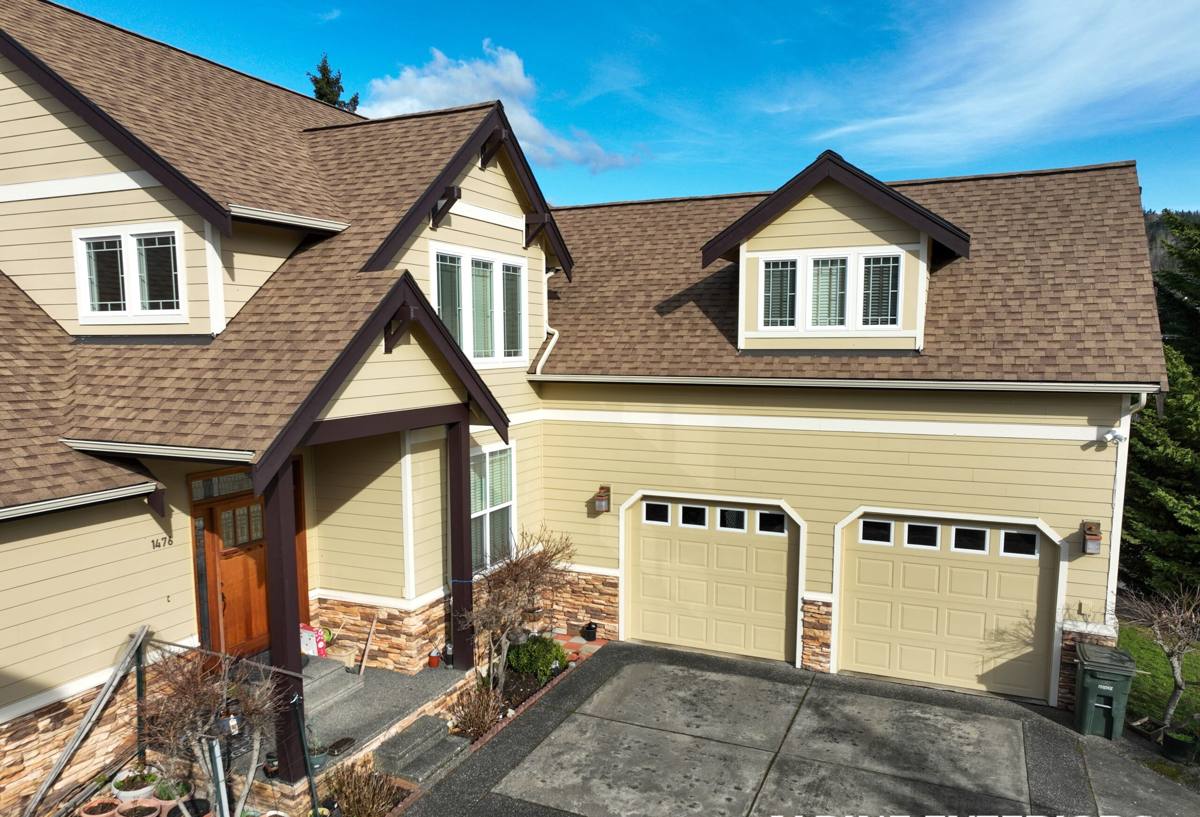
What Storm Damage Actually Looks Like on This Coast
Wind Damage
Sustained wind off the water doesn't just lift a shingle or two at the ridge — it works underneath entire courses, breaking the seal strip and loosening fasteners that were already starting to corrode. On composition shingle roofs, this shows up as creased or missing shingles, exposed nail heads, and lifted tabs that may look fine from the ground but no longer seal down flat.
Driving Rain Intrusion
Rain that comes in at an angle finds its way past flashing and underlayment details that would hold up fine in a straight downpour. Wind-driven rain gets pushed uphill under shingles, around chimney and vent flashing, and into valley areas that weren't detailed with enough lap or sealant for this kind of exposure.
Salt Air Corrosion
Salt air accelerates corrosion on any exposed metal — nail heads, flashing, gutter fasteners, and vent boots. A fastener that would last decades inland can start rusting and backing out years sooner this close to the water, which is often the real reason a shingle blew off in the first place.
Moss and Trapped Moisture
Whatcom County's long wet season and the shade common on many Birch Bay-area lots keep moss established on roof surfaces for much of the year. Moss holds moisture against the roofing material, lifts shingle edges as it grows, and channels water sideways instead of letting it shed — which turns a minor storm leak into a bigger one.
Storm Damage vs. Slow, Ongoing Wear
One of the most useful things we do on a Semiahmoo storm call is separate what the storm actually did from what was already failing. Insurance coverage, repair scope, and cost all depend on getting this distinction right.
| Sign | Likely Storm-Caused | Likely Pre-Existing Wear |
|---|---|---|
| Shingles torn or missing after a specific windstorm | Yes | Possible if fasteners were already corroded |
| Granule loss and thinning shingles across the whole roof | No | Yes — typically age and sun/salt exposure |
| Moss coverage and lifted shingle edges | No | Yes — seasonal, cumulative |
| New leak stains after a storm at a valley or flashing point | Yes | Sometimes — storm may have exposed an existing gap |
| Rusted, backed-out nail heads | No | Yes — salt air corrosion over time |
This matters because a repair that only replaces the storm-torn shingles, while leaving corroded fasteners and moss-damaged sections untouched nearby, is likely to have another failure point at the next windstorm.
What a Correct Repair Actually Involves
A proper storm damage repair on this stretch of coast is more than swapping out the shingles that are obviously gone. We look at:
- The decking underneath damaged areas, checking for soft spots or water staining that indicate moisture has been getting in longer than the storm alone would explain
- Flashing condition at valleys, chimneys, and roof-to-wall transitions, since these are the most common paths for wind-driven rain
- Fastener condition in the surrounding field, not just at the damaged section, given how quickly salt air corrodes exposed metal here
- Moss and organic buildup nearby, since untreated moss will undermine a fresh repair within a season or two
- Ventilation at the roof, because trapped moisture from poor airflow compounds every other issue on this list
Skipping any of these turns a repair into a temporary patch rather than a fix.
Our Process for Semiahmoo Storm Calls
1. Inspection and Documentation
We inspect the full roof, not just the area you noticed damage on, and document conditions with photos for your records and for any insurance claim.
2. Honest Scope, in Plain Language
We explain what's storm damage, what's pre-existing wear, and what we recommend — including when a small, targeted repair is genuinely the right call and a larger scope isn't needed.
3. Matching Materials Correctly
Where possible we match existing shingle color and profile so a repair doesn't stand out as a visible patch. When exact matches aren't available, we'll tell you honestly rather than guess.
4. Repair with Coastal-Grade Details
We use corrosion-resistant fasteners and properly lapped, sealed flashing at every repair point — not just the minimum needed to pass a quick visual check.
5. Cleanup and Follow-Up
We clear debris, check gutters and downspouts for storm debris that can back water up onto the new repair, and let you know what to watch for going forward.
Materials and Fastener Choices That Matter Here
Not every roofing material and fastener performs the same way this close to salt water. Part of doing this work correctly in Semiahmoo is choosing components rated for the exposure, even when it costs a bit more upfront.
| Component | Standard Choice | Coastal-Rated Choice | Why It Matters Here |
|---|---|---|---|
| Roofing nails | Electro-galvanized | Hot-dip galvanized or stainless | Resists salt air corrosion far longer |
| Flashing | Standard aluminum | Heavier-gauge aluminum or coated steel, properly sealed | Reduces pitting and pinhole leaks from salt exposure |
| Underlayment | Basic felt | Synthetic, high-temp/moisture-resistant underlayment | Better secondary barrier against wind-driven rain |
| Sealants | General-purpose caulk | Roofing-grade polyurethane or butyl sealant | Holds up to UV, salt air, and temperature swings |
We're not chasing the most expensive option on every job — we're matching the component to the actual exposure the roof faces, which is our professional standard for coastal work, not a sales upgrade.
Moss and the Long Wet Season
Storm damage repair and moss management go hand in hand here. A roof with established moss is more likely to suffer storm damage in the first place, because moss lifts shingle edges just enough for wind to catch and driving rain to work its way underneath. As part of a repair, we'll remove moss from the affected area and nearby sections, and can advise on zinc or copper strip options that reduce regrowth without requiring aggressive pressure washing, which can strip granules and shorten shingle life.
Insurance Claims: What to Know Before You Call
Most homeowner policies cover sudden storm damage — wind, impact, and the resulting water intrusion — but they typically exclude damage from long-term wear, moss, or lack of maintenance. That's exactly why an honest, itemized inspection matters before a claim is filed. We provide documentation that clearly separates storm-caused damage from pre-existing conditions, which helps the claims process go smoother and avoids disputes over what should and shouldn't be covered.
- Photograph visible damage yourself right after the storm, from the ground, before any repair work begins
- Get an inspection before filing if you're unsure whether the damage is storm-related or ongoing wear
- Ask for a written scope of repair, not just a verbal estimate, to submit with your claim
- Keep any receipts for temporary tarping or emergency measures — these are often reimbursable
Why Local Experience in Semiahmoo Matters
A crew that regularly works this stretch of Whatcom County coastline knows which fastener grades hold up, which flashing details actually stop wind-driven rain off the water, and how aggressive the moss season really gets here compared to more sheltered inland areas. That local pattern recognition is the difference between a repair that's built for this specific exposure and one that's built to a generic standard that happens to work fine somewhere drier and calmer.
Quick Checklist: Do You Need a Storm Damage Inspection?
- Missing, cracked, or curling shingles after a windstorm
- New water stains on ceilings or in the attic following heavy rain
- Granules collecting in gutters or at downspout outlets
- Visible moss coverage, especially on north-facing or shaded slopes
- Rust streaking near flashing, vents, or fasteners
- Sagging or soft-feeling sections of roof deck
- Debris or branches that struck the roof during a recent storm
If any of these sound familiar, it's worth having someone take a look before the next storm finds the weak spot for you.
If a recent storm has you wondering whether your Semiahmoo-area roof needs attention, we're happy to take a look. Fill out the form below for a free, no-pressure estimate — we'll give you a straight answer about what's storm damage, what's wear, and what actually needs to be done.