 Birch Bay Siding
 Siding That Actually Holds Up in Sumas
Sumas homeowners deal with a version of Whatcom County weather that doesn't let up for months at a time: driving rain that comes in sideways during winter storms, damp air that lingers long after the rain stops, and a moss season that can stretch from fall through spring. Add in the humid air that moves inland off the Sound and settles into low-lying areas, and you've got a climate that is genuinely hard on exterior siding. Some materials shrug this off for a decade or two. Others start showing problems in year three or four.
We install James Hardie fiber cement siding exclusively — not vinyl, not LP SmartSide, not cedar, not primed wood products. This page is about what that means specifically for a home in Sumas: what the climate demands, what a correct installation actually involves, and why the crew doing the work matters as much as the material itself.
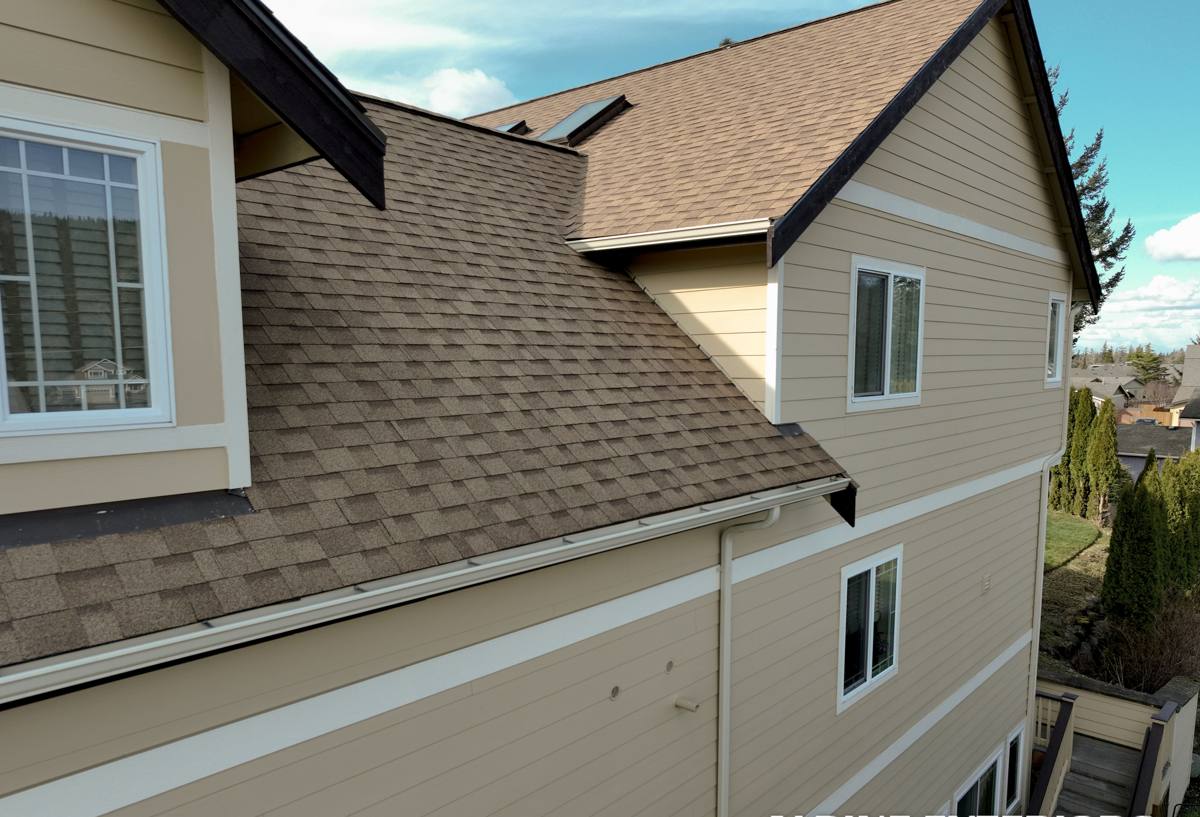
What Whatcom County Weather Does to the Wrong Siding
Every siding material has a weak point. In a marine-influenced, high-precipitation climate like ours, the weak points that matter most are moisture absorption, seam behavior, and how a material handles repeated wet-dry cycles over many years.
Moisture Absorption and Rot
Wood-based siding products — including primed spruce and engineered wood — are organic materials at their core. When they take on moisture repeatedly, especially at cut ends, seams, and fastener points that weren't sealed correctly, they swell, and eventually they rot. This isn't a defect so much as a physical reality of wood fiber in a wet climate. It's manageable with diligent maintenance, but Sumas doesn't give you long dry stretches to let a small problem dry out before it becomes a bigger one.
Moss and Sustained Dampness
Moss doesn't just grow on roofs. In shaded, north-facing, or tree-covered sections of a property — common throughout Sumas — moss and algae will colonize any siding surface that stays damp long enough, and organic siding materials give it more to hold onto. Moss holds moisture against the surface, which compounds whatever moisture problem the material already has.
Vinyl's Limits in a Wind-Driven Rain Climate
Vinyl siding is inexpensive and low-maintenance in a general sense, but it's not a moisture barrier — it's a lap-fit cladding that relies heavily on correct overlap and a functioning water-resistive barrier behind it to keep wind-driven rain out. It also becomes brittle in cold snaps and can warp or buckle when temperatures swing, which happens more than people expect in this part of the county. We don't install it because we don't think it's the right long-term answer for this climate.
Why James Hardie Fiber Cement Fits This Climate
James Hardie siding is fiber cement — a mix of cellulose fiber, sand, and Portland cement, cured into a dense, stable board. It doesn't rot, it isn't a food source for moss or insects, and it holds up to repeated wet-dry cycling far better than wood-based products because it isn't organic material to begin with. It's also non-combustible, which matters given the wildfire smoke and dry-season fire risk that has become part of summers here even in a generally wet region.
ColorPlus Factory Finish
Most of what we install uses Hardie's ColorPlus finish — a factory-applied, baked-on finish that's more consistent and more weather-resistant than field-applied paint. In a climate where the sun is scarce but the moisture is constant, finish failure (chalking, peeling, uneven fading) is one of the most common complaints we hear about older siding. A factory finish designed to handle UV and moisture cycling holds its color and integrity longer than a paint job applied on-site after installation.
HZ5 Engineering for Cold, Wet Climates
James Hardie makes climate-specific product lines, and the HZ5 line is engineered for regions with freeze-thaw cycles and sustained moisture exposure — which describes Whatcom County winters well. This isn't marketing language; it affects the formulation of the board itself so it performs correctly in cold, damp conditions rather than in the hot, dry climates some fiber cement was originally designed around.
| Factor | James Hardie Fiber Cement | Vinyl | Wood / Engineered Wood |
|---|---|---|---|
| Moisture resistance | Excellent — non-organic, engineered for wet climates | Good if installed correctly, poor at seams/damage | Weak point; requires ongoing maintenance |
| Moss/algae resistance | High — nothing organic to feed growth | Moderate — smooth surface but grows in shaded areas | Low — textured surfaces hold moisture and organics |
| Finish longevity | 15+ years typical with ColorPlus factory finish | Color molded in, but can fade/chalk over time | Repaint typically needed every 5-8 years |
| Fire resistance | Non-combustible | Melts/deforms under heat | Combustible |
| Cold-weather stability | Stable, HZ5 line engineered for freeze-thaw regions | Can become brittle and crack in cold snaps | Swells/contracts with moisture cycling |
What a Correct Installation Involves
Fiber cement siding is only as good as the installation behind it. A large share of the siding failures we get called out to inspect in Whatcom County aren't material failures at all — they're installation shortcuts that let moisture behind the cladding, where it does the real damage.
Water-Resistive Barrier First
Before a single piece of siding goes up, the home needs a properly lapped water-resistive barrier and correctly integrated flashing at every window, door, and penetration. In a climate with as much driving rain as Sumas gets, this layer is doing more work than the siding itself. Skipping or rushing this step is the single most common cause of hidden rot behind siding that otherwise looks fine.
Fastening and Clearances
James Hardie's installation specs call for specific fastener types, spacing, and penetration depth, plus minimum clearances from grade, roof lines, and decks. Get these wrong and you create the exact moisture traps that fiber cement is otherwise resistant to. We follow manufacturer installation guidelines exactly because that's also what keeps the warranty valid.
Caulking and Joint Treatment
Butt joints, corners, and trim intersections need correct sealant and gapping. Over-caulking or under-caulking both cause problems — trapped moisture in one case, water intrusion in the other. This is detail work that separates a siding job that looks good on day one from one that still looks good in year fifteen.
Our Process for a Sumas Job
- On-site assessment of existing siding, sheathing condition, and moisture history specific to the home
- Identification of trouble spots — shaded walls, low clearance areas, prior water staining
- Removal of old siding and inspection/repair of sheathing before anything new goes up
- Correct installation of water-resistive barrier and flashing at every penetration
- James Hardie installation to manufacturer spec — fastening, clearances, joint treatment
- Final walkthrough covering finish, seams, and caulking before we call the job done
Why Hiring a Crew That Already Works in Sumas Matters
Installation quality isn't uniform across contractors, and it isn't uniform across regions either. A crew that mostly installs in a dry climate can do a technically correct job by the book and still miss the details that matter specifically here — how much clearance to leave given our rainfall totals, where moss pressure is highest on a given lot, how flashing needs to be detailed around features common to homes in this area. Experience installing in Whatcom County conditions specifically, not just experience installing James Hardie in general, is what closes that gap.
We also stand behind the work with a manufacturer-backed warranty structure that only holds up if the installation was done to spec in the first place — another reason we don't cut corners on the water-resistive barrier or fastening details, even when they add time to the job.
Maintenance Expectations After Installation
James Hardie siding is genuinely low-maintenance, but "low-maintenance" doesn't mean "zero-maintenance," especially in a climate that grows moss on everything given the chance.
- Rinse siding periodically to clear pollen, dust, and early moss growth, especially on shaded or north-facing walls
- Keep gutters clear so overflow isn't running down the siding face during heavy storms
- Trim back vegetation and tree cover that keeps sections of the wall perpetually damp
- Inspect caulking at trim and joints every year or two and touch up as needed
- Address any impact damage promptly — small chips exposed to constant moisture can become bigger problems if ignored
None of this is heavy lifting. It's the kind of upkeep that, done consistently, lets Hardie siding reach and exceed its expected service life in a climate that isn't gentle on exterior materials.
What This Costs and What Affects It
Every home is different, and we won't quote a number without seeing the house, but a few things reliably move the price on a Sumas job: the amount of existing damage or rot discovered once old siding comes off, the home's overall square footage and number of corners/features to trim out, the siding profile chosen (lap, shingle, panel), and whether trim and fascia are being replaced at the same time. We give straight, itemized estimates so you know what you're paying for and why — not a vague lump-sum number.
If your Sumas home's siding is showing its age, or you're planning ahead before the next wet season sets in, we'd like to take a look. Reach out for a free, no-pressure estimate — we'll walk the property, tell you honestly what we see, and explain exactly what a correct James Hardie installation would involve for your home.