 Birch Bay Siding
 Metal Roofing Built for Sumas' Weather
Sumas sits in one of the wetter, more weather-exposed corners of Whatcom County, and the roof over a Sumas home works harder than most people realize. Between salt-laden air moving in off the Sound, driving rain that comes in sideways during winter storms, and a moss season that seems to stretch longer every year, asphalt shingles in this part of Washington rarely age gracefully. Metal roofing is one of the few systems that holds up to all three of those pressures at once, which is why we install more of it every year for homeowners in Sumas and the broader Birch Bay service area.
This page is specifically about metal roofing for Sumas properties — what the local climate demands from the system, what a correct installation actually looks like, and how we run the job from first estimate to final walkthrough. If you're comparing metal against asphalt or you already know metal is the right call and want a crew that understands this area, this is the information you need.
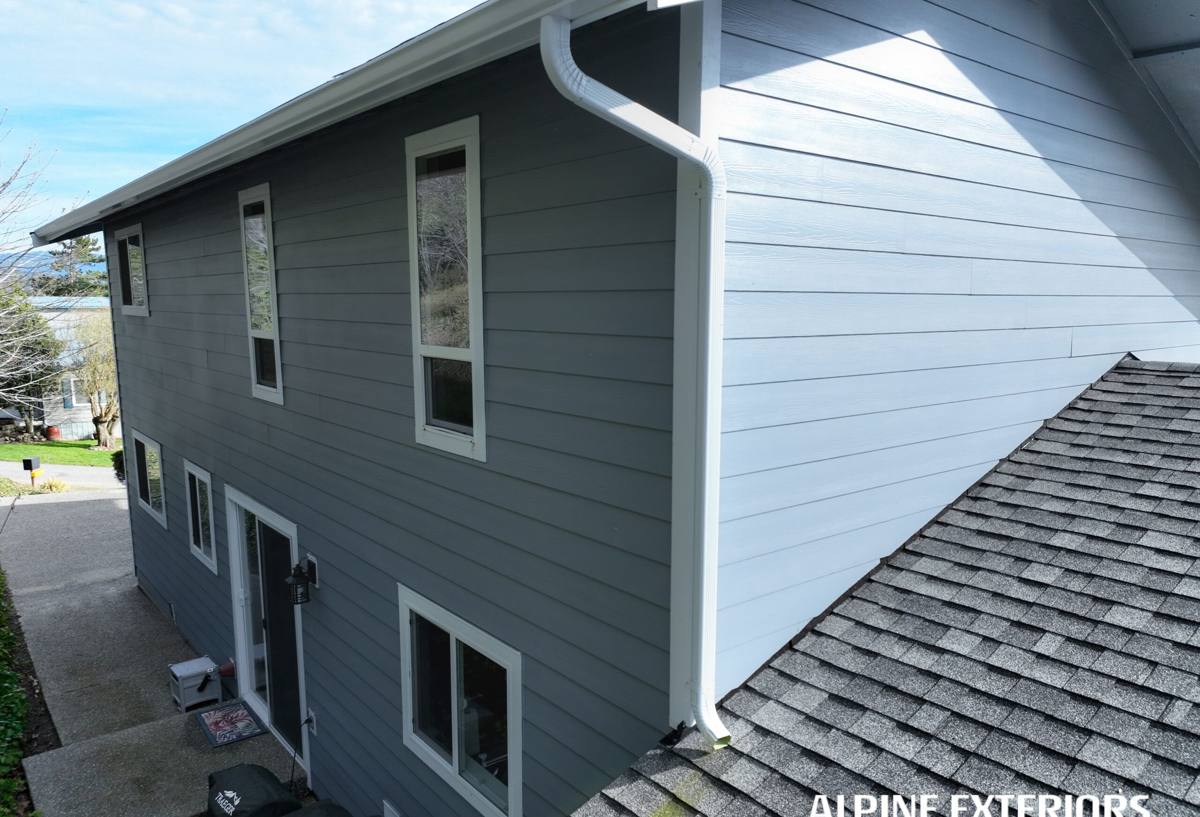
What Whatcom County Weather Does to a Roof Over Time
It helps to understand why the standard asphalt shingle roof struggles here before deciding what to replace it with.
Salt Air and Slow Corrosion
Homes closer to the water deal with airborne salt that settles on every exterior surface, including the roof. Salt doesn't damage asphalt shingles directly, but it accelerates corrosion on exposed metal components — flashing, fasteners, vents, and gutters — which are often the actual failure points on an aging roof long before the shingles themselves wear out. Any metal roofing system installed in this area needs to account for that, from the alloy and coating on the panels down to the screws holding them on.
Wind-Driven Rain and Roof Penetrations
Rain in Whatcom County doesn't always fall straight down. Winter storms push rain sideways and uphill under normal circumstances, which means the roof's real weak points are rarely the open field of the roof — they're the transitions: valleys, chimney flashing, skylight curbs, pipe boots, and the edges where the roof meets a wall. A roof that looks fine from the ground can still be taking on water at these details if they weren't built correctly the first time.
Moss, Shade, and Moisture
Between mature tree cover and the region's mild, damp winters, moss has a long growing season here. On asphalt shingles, moss holds moisture against the roof deck and works its way under shingle edges, shortening the roof's life well before its rated years are up. Metal roofing gives moss almost nothing to grip, and what does grow on the surface rinses off far more easily than it does on a textured shingle mat.
Metal Roofing Panel Options We Install
"Metal roofing" covers more than one product, and the right choice depends on the home's roofline, budget, and how long the owner plans to stay in it. We walk through these trade-offs honestly rather than pushing one system on every roof.
| Panel Type | Best For | Trade-Offs |
|---|---|---|
| Standing seam (concealed fastener) | Long-term ownership, clean modern look, maximum weather resistance | Higher upfront cost; requires a crew experienced with seaming equipment |
| Exposed fastener panel | Budget-conscious projects, outbuildings, simpler rooflines | Fasteners need periodic inspection and eventual replacement as gaskets age |
| Stone-coated steel | Homeowners who want the profile of shingle or shake with metal's durability | Heavier system; installation detailing matters more than with flat panel |
For most Sumas homes dealing with driving rain and salt exposure, we lean toward standing seam because the fasteners are hidden under the seam rather than punched through the panel face — fewer penetration points means fewer places for water or salt corrosion to start. That said, exposed fastener systems installed correctly, with the right fastener spacing and quality gaskets, are a legitimate option for garages, shops, and secondary structures where budget matters more than a 40-plus year service life.
What a Correct Metal Roof Installation Actually Involves
Metal roofing has a reputation for lasting decades, but that reputation only holds if the installation underneath the panels is done right. The panels themselves are almost never where a metal roof fails — the underlayment, flashing, and fastening details are what determine whether the system performs for 10 years or 40.
Underlayment and Ice/Water Protection
We install a synthetic underlayment rated for metal roofing, with self-adhering ice-and-water barrier at eaves, valleys, and any low-slope transitions where wind-driven rain is most likely to find a way in. This layer is the roof's backup plan, and on a Whatcom County roof, it earns its keep.
Fastening and Panel Layout
Panel spacing, fastener type, and expansion allowance all have to match the panel manufacturer's specifications. Metal expands and contracts with temperature swings, and a roof fastened without room to move will eventually show stress at the panel edges or around penetrations.
Flashing at Every Transition
Chimneys, skylights, sidewalls, valleys, and pipe penetrations all get custom-formed flashing rather than generic trim pieces stretched to fit. This is the single biggest difference between a metal roof that stays watertight for decades and one that develops leaks within a few years.
Ventilation
A metal roof still needs a properly vented attic underneath it. Trapped moisture and heat cause problems regardless of what's on top, so we check existing intake and exhaust ventilation as part of every metal roofing project and correct it when it's inadequate.
Our Process, From Estimate to Final Walkthrough
We keep the process straightforward because homeowners deserve to know what's happening on their own roof at every stage.
- On-site evaluation. We inspect the existing roof, deck condition, ventilation, and flashing details, and take measurements for an accurate material estimate.
- Written estimate and product selection. You get a clear, itemized quote and a real conversation about which panel system fits your roof, budget, and how long you plan to own the home.
- Deck inspection during tear-off. Once the old roofing is removed, we check the deck for rot or soft spots — common where moss has been sitting for years — and repair or replace any compromised sheathing before anything new goes down.
- Underlayment, flashing, and panel installation. Installed in the sequence and to the spec outlined above, not shortcuts to save a day of labor.
- Final walkthrough. We go over the completed roof with you, confirm every penetration and edge detail, and answer any questions before we consider the job done.
Maintenance: What to Expect Year to Year
One of metal roofing's real advantages is how little ongoing maintenance it needs compared to asphalt — but "little" isn't "none," especially in a climate that grows moss and carries salt air. Here's what actually matters over time:
- Clear debris and needle buildup from valleys once or twice a year so water has a clean path off the roof
- Rinse off surface moss or algae with a soft wash rather than pressure washing, which can damage coatings
- Keep gutters clear so water isn't backing up against roof edges or fascia during heavy rain
- Have flashing and fastener condition checked periodically, particularly on exposed fastener systems
- Trim back overhanging branches that keep sections of the roof shaded and slow-drying
- Watch for any scuffed or scratched coating after storms or falling debris, and have it touched up promptly to prevent corrosion from starting at bare metal
Cost Factors for a Sumas Metal Roof
Every roof is different, so we don't quote pricing sight unseen — but these are the main variables that move the number up or down on a metal roofing project in this area.
| Factor | How It Affects Cost |
|---|---|
| Panel type | Standing seam costs more upfront than exposed fastener; stone-coated steel falls in between |
| Roof complexity | Multiple valleys, dormers, and roof planes require more custom flashing and labor time |
| Deck condition | Rot or moisture damage found during tear-off adds repair costs, but skipping repairs isn't an option we'll offer |
| Tear-off vs. re-cover | Removing old roofing costs more than covering over it, but it's the only way to properly inspect and repair the deck |
| Access and pitch | Steep or hard-to-access rooflines take longer and require additional safety setup |
Metal roofing typically costs more per square foot than asphalt shingles at installation, but the calculation changes when you factor in service life. A well-installed standing seam roof can outlast two or three asphalt roof replacements over the same span of ownership, which matters a lot in a climate that's hard on shingle roofs to begin with.
Why Hiring a Crew That Already Works in Sumas Matters
Metal roofing is unforgiving of poor detail work in a way that shingle roofing sometimes isn't. A flashing mistake on an asphalt roof might weep slowly for years before it's obvious. On a metal roof, the same mistake tends to show up faster, and fixing it usually means removing panels rather than sliding in a replacement shingle. That's exactly why the installation details matter more here than the marketing around any particular metal panel brand.
Working regularly in Sumas and across the Birch Bay area means we already understand how local wind patterns hit different roof exposures, which rooflines tend to collect moss fastest, and how much ice-and-water protection a given eave or valley actually needs based on what we've seen fail on older roofs nearby. That local pattern recognition doesn't replace good workmanship, but it does mean fewer surprises and a roof detailed for the conditions it will actually face, not generic conditions from a manufacturer's installation guide written for a different climate.
We're also not going anywhere. If a fastener needs attention in year eight or a branch scuffs a panel in a windstorm, we're a local call, not a company that did one job in the area and moved on.
If you're weighing metal roofing for a home in Sumas or elsewhere in our Birch Bay service area, we're glad to take a look and walk you through what your roof specifically needs. Reach out for a free, no-pressure estimate using the form below.