 Birch Bay Siding
 Why Sumas Roofs Wear Differently
Roofs in Sumas don't fail the way roofs do in drier parts of the country. Whatcom County's climate is defined by long stretches of steady rain, heavy humidity, and a marine influence that reaches inland from the Puget Sound and Strait of Georgia shoreline communities like Birch Bay all the way to Sumas near the Canadian border. That combination of salt-tinged coastal air moving inland, driving rain, and a moss season that can run most of the year puts a specific kind of stress on roofing systems that a lot of national roofing guidance simply doesn't account for.
The biggest culprit isn't any single storm — it's duration. A roof here can stay damp for days between rain events, especially under tree canopy or on north-facing slopes that don't get much sun to dry out. That sustained moisture is what feeds moss and algae, softens shingle mats over time, and finds its way into any flashing detail that wasn't installed correctly the first time. A roof replacement done for this climate has to account for drying time, ventilation, and moisture-shedding details, not just shingle color and price.
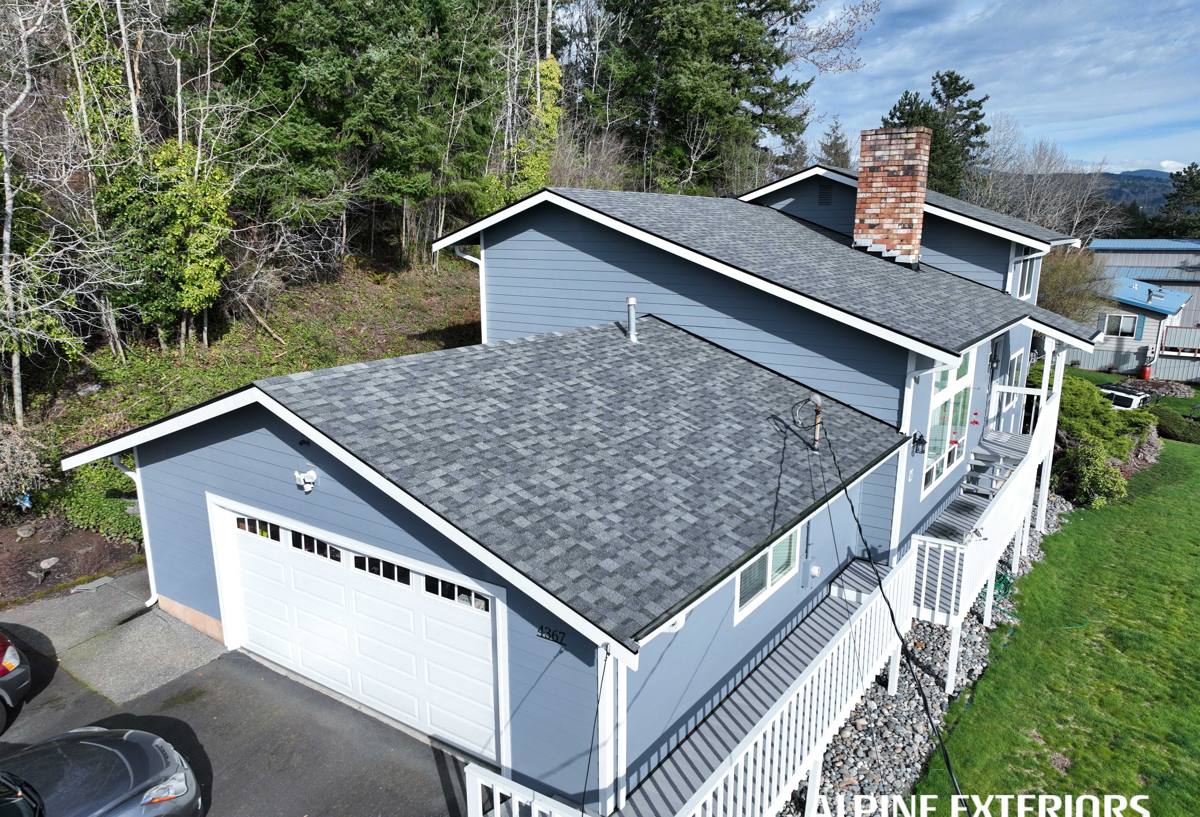
Signs a Sumas Roof Needs Full Replacement, Not Another Repair
Homeowners often ask us to patch a leak, and sometimes that's the right call. But there's a point where patching individual problems costs more over a few years than one correct replacement — and where patches simply can't fix what's wrong underneath. Here's what tells us a roof has crossed that line:
- Granule loss heavy enough that you can see bare, shiny patches on the shingle surface
- Shingles that are curling, cupping, or cracking across multiple slopes, not just one isolated spot
- Moss colonies that have worked their way under the shingle tabs rather than just sitting on the surface
- Soft or spongy spots when walked on, which usually means the decking underneath has started to rot
- Daylight visible through the roof deck from inside the attic
- Leaks that keep reappearing in different spots after repairs, which points to a failing underlayment system rather than one bad shingle
- A roof already carrying two layers of shingles, which limits repair options and is a fire and structural concern on its own
- A roof approaching or past the 20–25 year mark for standard asphalt shingles, especially with heavy moss history shortening that lifespan further
What a Correct Roof Replacement Actually Involves
A roof replacement is not just stripping old shingles and nailing down new ones. In a climate like ours, the parts you don't see are what determine whether the roof lasts 12 years or 30.
Full Tear-Off, Not an Overlay
We remove the roof down to the decking rather than layering new shingles over old ones. An overlay traps moisture that's already worked into the old roofing, hides decking problems, and voids most manufacturer warranties. It's a shortcut, not a repair.
Decking Inspection and Repair
Once the old roofing is off, we inspect every sheet of decking for soft spots, delamination, and rot — common in homes where moss or clogged gutters have let water sit for years. Any compromised sheathing gets replaced before anything new goes down. Skipping this step is one of the most common ways cheap roof jobs fail early.
Ice-and-Water Shield at Vulnerable Points
Eaves, valleys, and any area prone to wind-driven rain get a self-adhering waterproof membrane underneath the shingles, not just felt paper. This is the detail that stops water from being pushed backward under shingles during the kind of sideways rain Whatcom County sees regularly.
Flashing Done Right
Chimneys, skylights, sidewalls, and any roof penetration are where the vast majority of leaks originate — not the open field of shingles. Correct flashing means new metal, proper step-flashing at walls, and counter-flashing that's actually tied into the siding or masonry rather than caulked over.
Balanced Ventilation
Intake at the soffits and exhaust at the ridge, sized to work together. Ventilation affects moss growth, shingle life, and moisture buildup in the attic, and it's one of the most commonly overlooked parts of a replacement.
Choosing Roofing Materials for Whatcom County Weather
There's no single "best" roofing material — there's the right material for your roof's pitch, sun exposure, budget, and how much upkeep you want to do. Here's how the common options stack up for a climate with this much sustained moisture:
| Material | Moisture & Moss Behavior | Typical Lifespan Here | Trade-Offs |
|---|---|---|---|
| Architectural asphalt shingle | Good with proper ventilation and algae-resistant granules; needs periodic moss removal | 20–30 years | Best value; wide color range; most common choice locally |
| Standing seam metal | Sheds water and moss very well due to smooth surface and low water retention | 40–50+ years | Higher upfront cost; requires a crew experienced with metal detailing |
| Cedar shake | Attractive but holds moisture in the wood grain, which accelerates moss and rot in a wet climate | Varies widely with maintenance | Higher ongoing maintenance burden; we're upfront with clients about this before recommending it here |
| Synthetic/composite shingle | Resists moisture absorption well; consistent performance | 30–50 years depending on product | Mid-to-upper cost range; growing option locally |
For most homes in Sumas, a quality architectural asphalt shingle with algae-resistant granules is the practical choice — it balances cost, appearance, and performance in this climate. Metal makes sense on steeper, more exposed roofs or for homeowners planning to stay long-term and wanting to minimize future re-roofs. We'll walk through the honest trade-offs for your specific roof rather than pushing one product across every job.
Ventilation, Moss, and Ongoing Moisture Control
Moss isn't just a cosmetic problem — left alone, it holds water against the shingle surface and works its way under tabs, which shortens the roof's life significantly. A correct replacement reduces future moss pressure, but it doesn't eliminate the need for basic upkeep in a region with this much rain and shade cover.
A few things that make the biggest difference after the new roof is on:
- Keeping gutters clear so water doesn't back up under the eave edge
- Trimming back overhanging branches that keep sections of the roof shaded and damp
- Using zinc or copper control strips near the ridge, which release compounds that inhibit moss growth as rain washes over them
- Scheduling gentle moss removal every year or two rather than letting it establish and spread
We size and balance ventilation specifically for your roof's shape and attic conditions, since a poorly ventilated attic in a humid coastal-influenced climate can trap moisture from the inside just as easily as a bad roof lets it in from outside.
Our Roof Replacement Process in Sumas
- Inspection and estimate. We walk the roof, check the attic, and give you an honest assessment — repair versus replacement — along with a written estimate.
- Material selection. We go through the options for your roof's pitch, sun exposure, and budget, with straightforward trade-offs, not upsell pressure.
- Permitting. Roof replacement in Whatcom County typically requires a permit; we handle that process so you don't have to chase paperwork.
- Site protection. Landscaping, siding, and outdoor living areas get protected before tear-off begins, and we watch the weather window closely before starting.
- Tear-off and decking repair. Old roofing comes off completely, decking gets inspected, and any compromised sheathing is replaced.
- Underlayment, flashing, and shingle installation. Ice-and-water shield, synthetic underlayment, new flashing, and the new roofing system go on to manufacturer specifications.
- Final walkthrough and cleanup. We inspect the finished roof with you, clean the site thoroughly — including a magnetic sweep for stray nails — and go over your warranty documentation.
What Affects Roof Replacement Cost in Sumas
We don't quote roof replacement cost without seeing the roof, because too many variables affect the number. What we can do is explain what actually drives the price up or down, so you know what to expect walking in:
| Factor | Why It Matters |
|---|---|
| Roof size and number of planes | More square footage and more complex cuts around dormers or hips increase labor time |
| Pitch and steepness | Steep roofs require more safety setup and slow down installation |
| Number of existing layers | Removing two layers of old shingles takes longer than one and generates more disposal cost |
| Decking condition | Rotted sheathing discovered during tear-off adds material and labor to replace it correctly |
| Material choice | Standard architectural shingle, premium shingle, or metal each carry a different material cost per square |
| Access and staging | Rural lots, long driveways, or limited equipment access can affect setup time |
For most standard-sized homes in the area, asphalt shingle replacement tends to fall in a broad mid-four-figure to low-five-figure range, with metal roofing running higher. Your actual number depends entirely on the factors above, which is why we always inspect before quoting.
Why Hire a Crew That Already Works in Sumas
Roofing crews that only pass through occasionally don't have the same read on this area's conditions. A crew that regularly works Sumas and the surrounding Whatcom County communities knows how to time a tear-off around the region's rain patterns so your home isn't left exposed longer than necessary, understands the local permitting process instead of learning it on your project, and has working relationships with material suppliers that keep jobs moving instead of stalled waiting on backorders.
Local experience also matters when something goes wrong. If a storm damages a tarp or exposes decking mid-project, a crew based in the area can respond the same day rather than the same week. That responsiveness is hard to replicate with a company that's driving in from out of the region for a single job.
Get a Free, No-Pressure Estimate
If your roof is showing its age, holding onto moss it shouldn't, or you're just not sure whether it needs repair or full replacement, we're glad to take a look and give you a straight answer. Fill out the form below for a free estimate on your Sumas roof replacement — no pressure, no hard sell, just an honest assessment of what your roof actually needs.