 Birch Bay Siding
 Storm Damage Roof Repair for Sumas Homes
Sumas sits out at the far edge of Whatcom County, pressed right up against the Canadian border on the flat, low-lying farmland of the Sumas Prairie. It's a different setting than our coastal service areas closer to Birch Bay itself, and it doesn't see the same salt air off the water. But it shares the same underlying weather pattern that drives roof damage across this part of the Pacific Northwest, and it adds a few problems of its own: driving rain that comes in sideways more often than straight down, a long damp moss season that weakens roofing before a storm ever arrives, and cold outflow wind events funneling down the valley that can hit a roof harder than a calmer, more sheltered site ever would.
Birch Bay Siding Company repairs storm-damaged roofs in Sumas on a regular basis, and this page covers exactly that service for this specific area — what storm damage actually looks like here, what a correct repair involves, and how our process works from the first call to the final walkthrough.
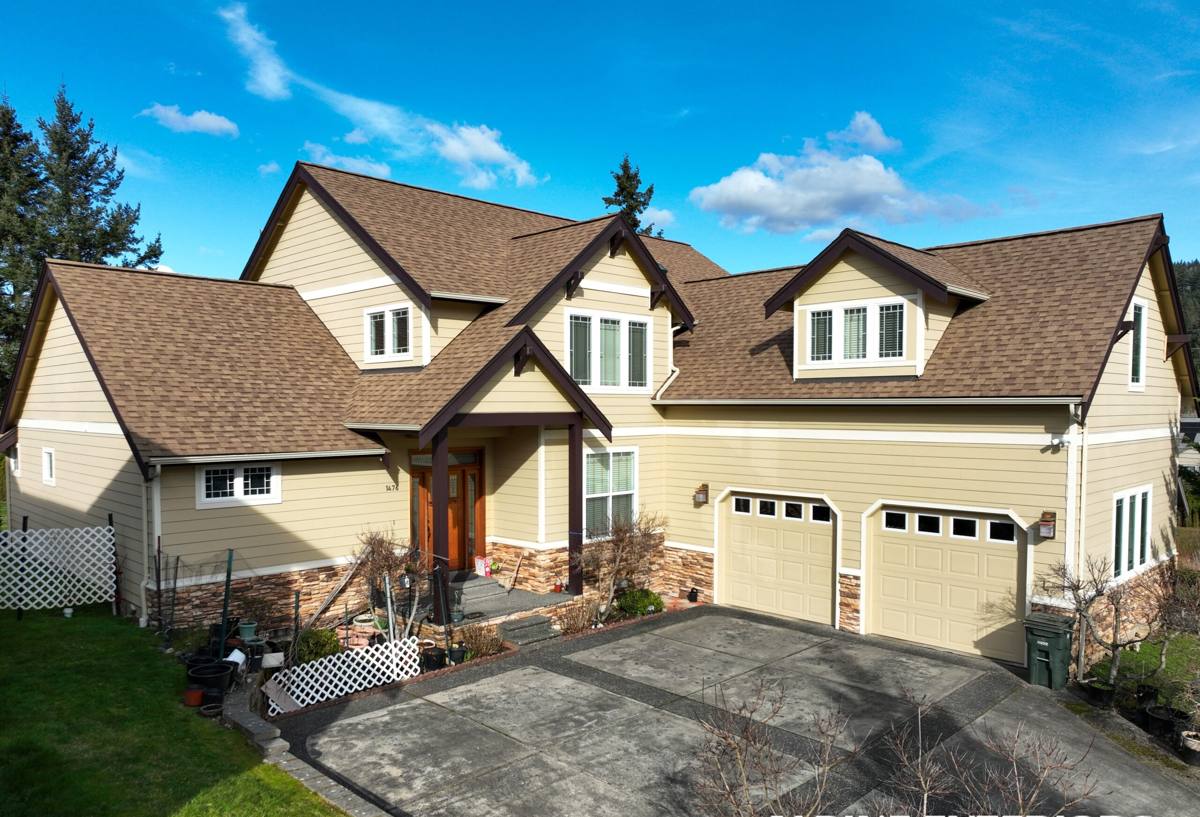
What Storm Damage Actually Looks Like on a Sumas Roof
"Storm damage" covers more ground than most homeowners expect, and on a Sumas roof it usually shows up in one of a few specific patterns.
Wind-Lifted and Missing Shingles
Outflow wind events push hard enough to lift shingle tabs, break the factory seal strip underneath them, or tear shingles off entirely, especially near ridges, edges, and any roof plane that catches the wind head-on. A shingle that's lifted but still attached can look fine from the ground while it's already letting wind-driven rain underneath it.
Flashing and Valley Failures
Valleys, chimney flashing, and vent pipe boots take the brunt of wind-driven rain because water gets pushed sideways and upward instead of running straight off. A flashing seam that's come loose or a valley where sealant has failed is one of the most common sources of a leak that shows up well after the storm itself has passed.
Tree and Debris Impact
Rural and agricultural properties around Sumas often sit near mature trees and open fields, and wind events can bring down branches or debris that punctures shingles, cracks underlayment, or dents flashing and gutters. Impact damage is sometimes obvious and sometimes just a small puncture that's easy to miss during a quick look from the ground.
Hidden Leaks That Show Up Later
Not every storm-damaged roof leaks the same day the wind hits. Water can track along the underside of the roof deck for weeks before it finds its way to a ceiling stain or a damp attic corner, which is exactly why a proper post-storm inspection covers the whole roof rather than just the spot where a homeowner noticed something wrong.
Why Sumas Takes Storms Differently Than Our Coastal Service Areas
Outflow Wind Off the Valley
Because of its position at the head of the valley near the border, Sumas is more exposed to cold outflow wind events during the winter months than towns further west toward the water. Those events bring sharp temperature swings and real wind load, and a roof that's marginal on a calmer, more sheltered property can fail outright when an outflow event brings sustained wind behind heavy rain.
Low, Flat Ground That Holds Moisture
Sumas sits low, in flat agricultural terrain near the Nooksack River system, and that flat ground doesn't shed water the way a hillside lot does. After a storm, moisture around the roofline and at grade tends to stick around longer, which gives any existing gaps in flashing or underlayment more time to actually let water in rather than drying out quickly.
Freeze-Thaw Right After the Storm
Sumas sees more frequent hard frosts than the milder coastal parts of the county, and that adds a freeze-thaw dimension storm damage doesn't have everywhere. Water that's worked its way into a cracked shingle or a loose flashing seam during a storm can freeze soon after, and ice expanding inside that damage turns a small problem into a bigger one fast.
A Moss Season That Weakens Roofs Before the Wind Arrives
Persistent regional dampness and mild temperatures add up to a moss and mildew season that runs across much of the year here. Moss holds moisture directly against roofing material and can lift shingle edges on its own, which means a roof with untreated moss buildup often has less resistance left to give when a wind event actually hits it.
What a Correct Storm Damage Repair Involves
Full Inspection Before Any Repair Begins
A proper storm damage repair starts with walking the entire roof, not just the section a homeowner flagged. We check every slope, valley, penetration, and edge, since wind damage on one part of a roof often means stress on the fastening and flashing elsewhere too.
Matching Materials to What's Already There
Repairs should tie into existing shingles and flashing correctly, not just get nailed over the top of damaged material. That means matching shingle profile and color where possible, properly lapping new flashing with old, and reintegrating the repair into the surrounding underlayment so water sheds the way it's supposed to across the whole roof plane.
Checking the Deck, Not Just the Surface
If wind or impact damage has let water in for any length of time, the roof deck underneath can be soft, stained, or starting to rot. A repair that only replaces surface shingles without checking the deck underneath is patching a symptom and leaving the actual problem in place.
Thorough Documentation
We photograph and document damage before, during, and after the repair. That record is useful for your own file regardless of whether you're pursuing an insurance claim, and it gives you a clear picture of exactly what was found and what was done to fix it.
Repair or Replace? Making the Right Call After a Storm
Not every storm-damaged Sumas roof needs a full replacement, and we don't default to recommending one. The right call depends on how widespread the damage is and what shape the rest of the roof was in before the storm hit.
| Situation | Usually Points To | Why |
|---|---|---|
| Isolated wind-lifted shingles or a single damaged section on an otherwise sound roof | Targeted repair | Localized damage on a roof with plenty of life left doesn't justify tearing off good material |
| Damage spread across multiple slopes or several separate impact points | Larger repair or partial replacement | Widespread damage often means the whole roof took wind stress, not just the visibly damaged areas |
| Storm damage on a roof already near the end of its service life | Full replacement | Patching an aging roof usually just delays a bigger job while underlying wear keeps progressing |
| Deck rot or long-term hidden moisture discovered during repair | Replacement of the affected section, sometimes more | Compromised decking needs to be addressed before new roofing goes on top of it, regardless of the shingles above |
We'll walk you through exactly what we find and why, and give you the honest trade-offs rather than steering toward whichever option is more profitable for us.
Our Storm Damage Repair Process
- Prompt response and temporary protection: If a roof is actively leaking or has an open section, we prioritize tarping or temporary covering to stop further water intrusion before anything else happens.
- Full in-person inspection: We walk the entire roof and check the attic from inside, documenting damage with photos rather than guessing from the ground or a drive-by look.
- Written, itemized estimate: You get a clear scope covering exactly what's being repaired or replaced, the materials involved, and the reasoning behind the recommendation — useful on its own and useful if you're filing an insurance claim.
- Repair or replacement work: Matched materials go in with proper flashing, underlayment integration, and fastening to manufacturer specification, and any deck damage found gets addressed before new roofing covers it back up.
- Final walkthrough: We review the completed repair with you, confirm the area is clean of debris and fasteners, and make sure you understand exactly what was done.
Cost Factors After a Sumas Storm
| Factor | What It Affects | Why It Matters in Sumas |
|---|---|---|
| Extent of wind damage | Whether the job is a spot repair or a larger section replacement | Outflow wind events can stress a wider area of the roof than the visible damage suggests |
| Deck condition underneath | Whether sheathing needs partial replacement before new roofing goes on | Low ground and slower drainage give any hidden leak more time to reach the deck |
| Flashing and valley scope | How much of the flashing system gets replaced versus resealed | Wind-driven rain concentrates damage at valleys and penetrations more than on open roof field |
| Material matching | Sourcing shingles or metal that match the existing roof | Older or discontinued products can require closer color and profile matching to avoid a patchwork look |
| Site access | Labor time and equipment staging | Rural and agricultural properties in this area can have longer driveways or wider staging needs than in-town lots |
Exact costs depend on the specific roof and how far the damage actually extends, which is why we inspect in person before giving you a real number rather than a phone-quote guess.
Why a Crew That Already Works in Sumas Matters
A crew that repairs roofs in and around Sumas regularly already understands how outflow wind events, valley dampness, and freeze-thaw cycling behave on real homes here, not just how a shingle performs on a spec sheet. That experience shapes practical decisions during a storm repair: which roof orientations catch the worst of the wind, how far damage typically extends beyond what's visible after this kind of event, and which flashing details are worth the extra attention so you're not calling about a second leak after the next storm. Sumas sits far enough from the water and close enough to the border that its exposure looks different from the rest of our coastal Whatcom County service area, and treating that difference seriously — instead of applying a one-size-fits-all repair built for a milder, more sheltered lot — is exactly what a storm damage repair here calls for.
After the Storm: A Quick Homeowner Checklist
- Check the attic for damp insulation, staining, or daylight visible through the roof deck
- Look at ceilings near exterior walls and chimneys for new water spots
- From the ground, scan for missing, curled, or visibly displaced shingles
- Check gutters and downspouts for granules, torn shingle pieces, or debris blockage
- Note any fallen branches or debris that landed on or near the roof
- Photograph anything you notice before cleanup, in case it's useful later
- Avoid walking the roof yourself after a storm — wet, damaged roofing is a real fall hazard
If your Sumas home has taken storm damage, or you're just not sure whether what you're seeing needs attention, we're glad to come take an honest, no-pressure look and give you a straightforward read on what it actually needs. Use the form below to request a free estimate.