 Birch Bay Siding
 Metal Roofing Built for Terrell Creek's Weather
Terrell Creek sits close enough to Birch Bay and the Strait of Georgia that homes here take a steady beating from salt-laden air, wind-driven rain, and long stretches of gray, damp weather that never quite dries out a roof surface. That combination is hard on asphalt shingles, which absorb moisture, host moss and algae, and break down faster near saltwater than they do further inland in Whatcom County. Metal roofing handles that environment differently, and when it's installed correctly for this specific area, it can outlast two or three shingle roofs on the same house.
This page is about metal roofing specifically for Terrell Creek homes — what the local climate demands, what a correct installation actually involves, and how we approach the job when we're already working roofs and siding throughout this part of Whatcom County.
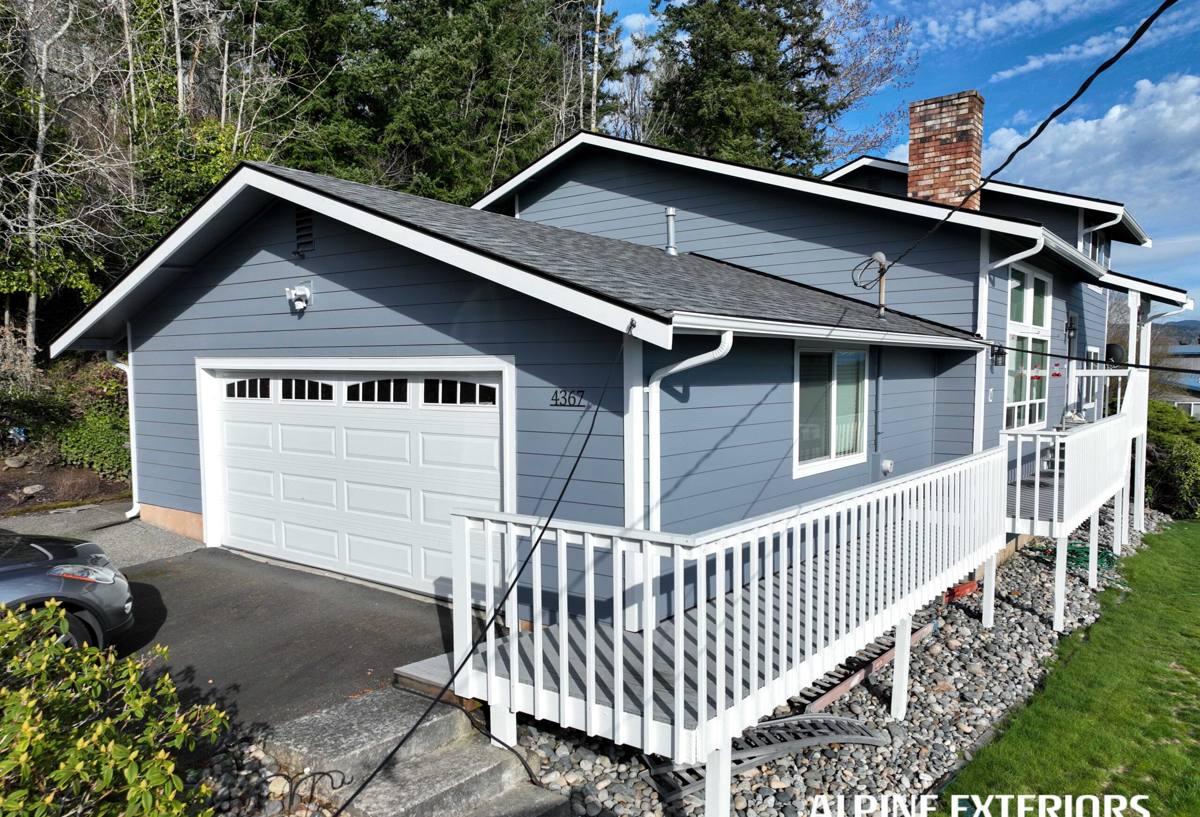
Why Terrell Creek's Climate Changes the Job
Salt Air and Corrosion
Proximity to the water means airborne salt settles on exposed metal, fasteners, and flashing year-round, not just during storms. Untreated or mismatched metal will pit and corrode faster here than it would fifteen or twenty miles inland. That's why fastener selection, panel coating, and even the metal alloy itself matter more in Terrell Creek than they would on a roof in, say, Sumas or Deming.
Driving Rain
Wind off the water pushes rain sideways as often as it falls straight down, which stresses seams, laps, and penetrations that a calmer inland roof would rarely test. A metal roof that's watertight in a light rain but leaks in a wind-driven storm wasn't detailed correctly at the seams and flashings — that's an installation issue, not a material issue.
Long Moss Season
Whatcom County's wet season runs long, and Terrell Creek's tree cover and coastal humidity keep roof surfaces damp for extended stretches. Moss and algae need sustained moisture and organic debris to establish. Metal sheds water fast and gives moss far less to grip than a shingle's granulated surface, but it isn't immune — north-facing slopes, valleys, and areas under overhanging branches still need attention.
What a Correct Metal Roof Involves Here
Metal roofing is often sold as a simple, low-maintenance upgrade, and long-term it usually is — but getting there depends on details that are easy to skip and expensive to fix later.
- Corrosion-appropriate fasteners and flashing metals that won't react galvanically with the panel material
- Proper underlayment — a high-temp synthetic or self-adhered membrane at eaves, valleys, and penetrations, not just felt
- Correct panel overlap and seam type for the pitch and wind exposure of the specific roof
- Ventilation that keeps moisture from condensing under the panels from the inside
- Flashing details at every wall tie-in, chimney, skylight, and vent that account for wind-driven rain, not just gravity drainage
- Fastener spacing and torque that won't back out or over-compress as the metal expands and contracts with temperature swings
Skip any one of these and the roof may look fine for a year or two before a slow leak, a corroding fastener, or a lifted panel edge shows up — usually during the next big windstorm off the water.
Standing Seam vs. Exposed Fastener vs. Stone-Coated Steel
Not every metal roofing system fits every Terrell Creek home the same way. The right choice depends on the roof's pitch, the home's style, and how much the homeowner wants to spend up front versus over the life of the roof.
| System | How It's Fastened | Best Fit | Coastal Durability |
|---|---|---|---|
| Standing seam | Concealed clips, no exposed fasteners on the field | Most Terrell Creek homes, especially anything with steady wind or rain exposure | Excellent — no exposed screw heads to corrode or back out over time |
| Exposed fastener panel | Screws driven through the panel face | Outbuildings, shops, budget-conscious re-roofs | Good if fasteners are re-torqued and gaskets checked periodically; more maintenance near salt air |
| Stone-coated steel | Interlocking panels resembling shingle or tile profiles | Homeowners who want a traditional look with metal's durability | Very good; coating protects the steel base but installation detailing still matters most |
For most homes in this area, we lean toward standing seam because it has no exposed fasteners for salt air to attack and it sheds wind-driven rain more reliably along the seams. Exposed fastener panels aren't wrong — they're a legitimate, more economical option — but they ask for more upkeep in a coastal environment, and we're upfront about that trade-off before anyone commits.
Metal Roofing vs. Asphalt Shingles in This Area
Homeowners in Terrell Creek often ask whether metal is worth the higher upfront cost compared to asphalt shingles. The honest answer depends on how long you plan to stay in the home and how much you value fewer maintenance calls.
| Factor | Asphalt Shingle | Metal Roofing |
|---|---|---|
| Typical lifespan here | 15–20 years, often shorter with heavy moss growth | 40–60+ years with correct installation |
| Moss and algae resistance | Low — granulated surface holds moisture and debris | High — smooth surface sheds water and debris quickly |
| Wind-driven rain performance | Good when new, degrades as seals age | Excellent with correct seam and flashing detail |
| Upfront cost | Lower | Higher |
| Long-term cost per year of service | Higher once you count re-roofing cycles | Lower over a 30–40 year horizon |
We install and repair both, and asphalt shingles remain a reasonable choice for some budgets and some homes. But if you're weighing a full re-roof on a Terrell Creek property and you plan to stay long-term, metal's resistance to moss, salt, and wind is the more climate-appropriate answer for this specific location.
How Our Process Works
Inspection and Assessment
We start by looking at the existing roof deck, current flashing, ventilation, and how water has historically moved across the roof — including any staining, moss buildup, or soft spots that point to past moisture problems. This tells us whether we're dealing with a straightforward re-roof or whether deck repair needs to happen first.
System Selection
Based on the roof's pitch, orientation, and exposure to wind off the water, we recommend a panel system and gauge that fits the house — not a one-size-fits-all package. We'll walk through standing seam versus other options honestly, including cost and maintenance differences.
Tear-Off and Deck Prep
Old roofing comes off down to the deck so we can check for rot or damage that's been hidden under shingles or old metal. Any compromised decking gets replaced before new underlayment goes down — installing over a bad deck just moves the problem underneath a new roof.
Underlayment and Flashing
This is where coastal installations earn their keep. Self-adhered membrane goes at eaves, valleys, and around every penetration, with flashing details built to handle rain that's being pushed sideways by wind, not just falling straight down.
Panel Installation
Panels go on with fastener spacing, clip type, and seam engagement matched to the roof's exposure. We account for thermal movement so panels can expand and contract without stressing seams or fasteners over time.
Final Walkthrough
We check every flashing point, seam, and penetration before calling the job done, and we explain what routine maintenance — if any — the specific system needs going forward.
Coordinating Roofing With Siding and Trim
Because we do siding work throughout Birch Bay and Whatcom County, we pay close attention to how a new metal roof ties into fascia, soffits, and wall siding at every intersection — the places roofs actually leak. A roof replaced in isolation, without matching flashing and trim details to the existing siding, is a common source of hidden leaks a few years down the road. Handling both under one crew means those tie-ins get built correctly the first time instead of patched together between two separate contractors.
Maintenance in a Terrell Creek Environment
Metal roofing is low-maintenance, not no-maintenance. A short annual routine keeps a coastal metal roof performing the way it should:
- Clear gutters and valleys of needles and debris before the wet season builds up
- Rinse off any moss or algae starting to form in shaded valleys or under tree cover
- Check exposed fastener systems for backed-out screws or worn gaskets, if that's the system installed
- Look at flashing around chimneys, vents, and wall tie-ins for any lifting or gaps after major windstorms
- Trim back branches that keep a section of roof shaded and damp longer than the rest
None of this requires a specialist visit every year — most of it is a homeowner with a hose and a ladder, or a quick check we can build into a broader maintenance visit if you'd rather not get on the roof yourself.
Why a Crew That Already Works Terrell Creek Matters
Metal roofing detailed for a dry inland climate isn't automatically wrong here — it's just incomplete. A crew that hasn't worked this stretch of coastline may underestimate how much wind-driven rain a seam needs to handle, or use standard fasteners that aren't suited to salt air. We work roofs and siding throughout Birch Bay and the surrounding Whatcom County coastline regularly, so the flashing details, fastener choices, and underlayment specs we use are calibrated to what this specific environment actually does to a roof over time — not a generic installation manual.
If you're weighing a metal roof for a Terrell Creek home — whether it's a full replacement, a repair, or just a second opinion on a quote you've already received — we're happy to take a look and walk you through what your roof specifically needs. Reach out for a free, no-pressure estimate using the form below.