 Birch Bay Siding
 Roofs in Terrell Creek Face a Different Kind of Wear
Homes in the Terrell Creek area of Birch Bay sit close enough to the water that the roof over your head is doing more work than a roof would in a typical inland neighborhood. Salt-laden air off the water accelerates corrosion on metal flashing, fasteners, and vent components. Wind-driven rain doesn't just fall straight down here — it gets pushed sideways under eaves and into laps that were only ever designed for vertical water flow. And the long stretch of gray, damp months every year gives moss and algae months at a time to take hold on north-facing slopes and shaded areas.
None of this means Terrell Creek roofs fail faster out of bad luck. It means they need to be built and replaced with this specific climate in mind, not with a generic approach that would work fine in a drier or more sheltered part of Whatcom County. A roof replacement done right here accounts for wind exposure, moisture cycling, and the slow biological growth that this climate practically guarantees.
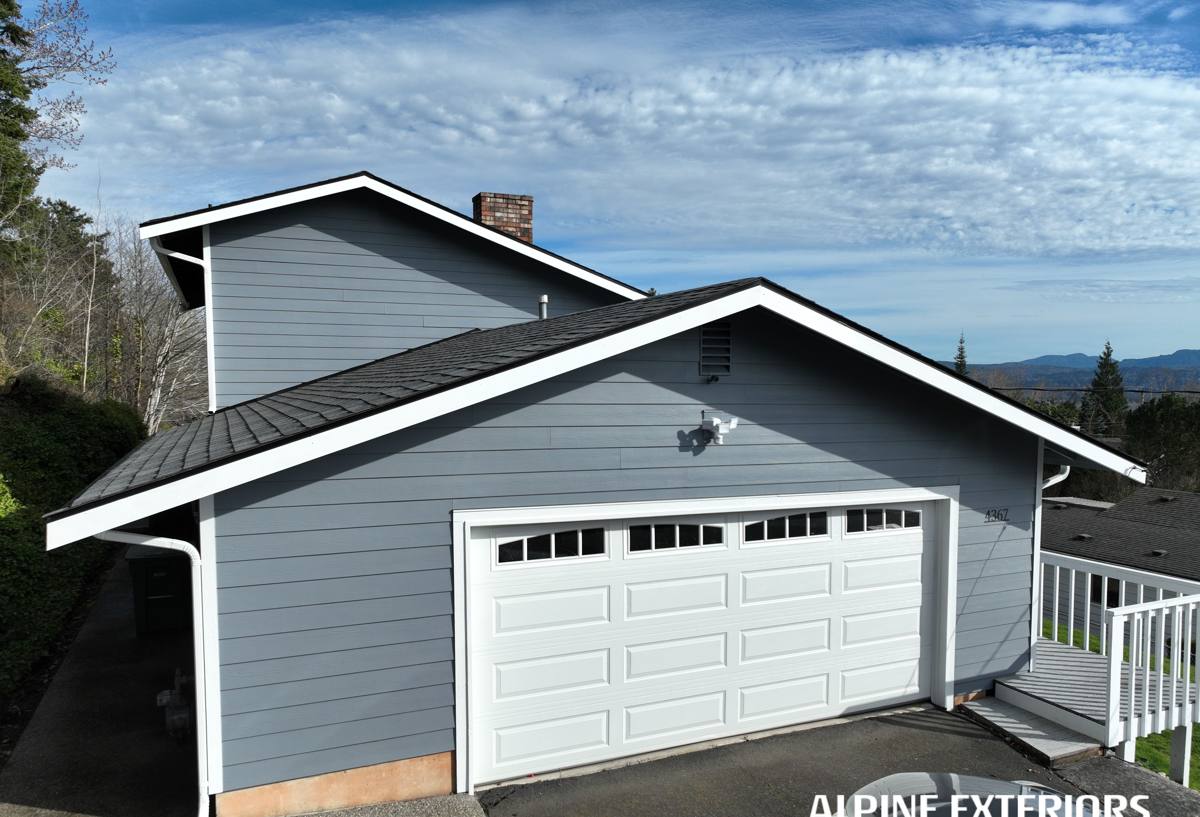
Repair or Replace? Reading the Warning Signs
Not every roofing problem in Terrell Creek means a full replacement. But there's a point where patching becomes a losing game — you're spending money to delay a decision that's already been made by the condition of the roof itself. Some signs point clearly toward replacement rather than another round of repairs:
- Granule loss heavy enough that you can see bare, shiny patches on asphalt shingles, especially on south and west-facing slopes
- Shingles that are cupping, curling at the edges, or cracking when touched
- Moss that has worked its way under shingle tabs rather than just sitting on the surface
- Soft or spongy spots when walked on, which usually means the decking underneath has taken on moisture
- Staining or streaking on interior ceilings, even if it's faint or only shows up during heavy rain
- A roof that's already had two or more rounds of patch repairs in the same areas
- Flashing around chimneys, skylights, or vent pipes that's visibly rusted, lifted, or gapped
If you're seeing one or two of these, a repair might genuinely be the right call for now. If you're seeing several at once, or the roof is past the 20-year mark on asphalt shingles, it's usually more honest — and cheaper in the long run — to talk about replacement instead of chasing leaks one at a time.
What a Correct Roof Replacement Actually Involves
A roof replacement is more than stripping off old shingles and nailing down new ones. In a climate like this, the parts you don't see matter as much as the parts you do.
Tear-Off and Deck Inspection
We remove the old roofing down to the deck rather than layering over it. That's the only way to actually see what's underneath — and on homes near Terrell Creek, it's common to find sections of decking that have softened from long-term moisture exposure, often around valleys, chimneys, or old vent penetrations. Any compromised decking gets replaced before anything new goes down. Covering over a soft deck just hides a problem that will resurface, usually as a leak, within a few years.
Underlayment and Flashing
Given how much wind-driven rain this area sees, underlayment choice matters more than it would in a calmer climate. We use underlayment products rated for high wind and moisture exposure, with extra attention to eaves, valleys, and any low-slope transitions where water tends to sit or back up. Flashing — around chimneys, skylights, walls, and vent penetrations — is where most roof leaks actually start, not in the field of the roofing material itself. We replace flashing rather than reuse it wherever there's any sign of rust, deformation, or gaps, because salt air corrodes flashing metal faster than most homeowners expect.
Ventilation
A roof that can't breathe traps moisture in the attic, which speeds up deck rot from the inside and contributes to premature aging of the roofing material from underneath. We check intake and exhaust ventilation as part of every replacement and correct it when it's undersized or blocked — a step that's easy to skip but has an outsized effect on how long the new roof actually lasts in a damp climate like this one.
Choosing Materials for a Salt-Air, High-Moss Climate
There's no single "best" roofing material for every home — the right choice depends on your budget, your roof's exposure, and how much long-term maintenance you're willing to take on. Here's how the common options actually perform in conditions like Terrell Creek's:
| Material | How It Handles Salt Air & Moisture | Moss Resistance | Typical Lifespan Here |
|---|---|---|---|
| Architectural asphalt shingle | Good, especially with corrosion-resistant fasteners and flashing | Moderate — benefits from algae-resistant granules | 20-25 years |
| Standing seam metal | Very good when a marine-grade coating and stainless fasteners are used | High — sheds moss more easily due to slick, sloped surface | 40-50+ years |
| Cedar shake/shingle | Requires consistent maintenance to manage moisture retention | Low without regular cleaning and treatment | Varies widely with upkeep |
| Composite/synthetic shingle | Good — resists moisture absorption better than natural wood | Moderate to high depending on product | 30-40 years |
We're upfront with homeowners about cedar: it can look great, but in a climate that stays damp for months at a time, it demands a maintenance schedule most people underestimate before they've lived with it a few years — cleaning, treating, and watching for moss intrusion becomes a recurring line item. That's not a knock on the material itself, just an honest trade-off worth knowing before you choose it. For most Terrell Creek homes, a quality architectural asphalt shingle or a metal roof offers the better balance of appearance, cost, and low-maintenance performance in this specific environment.
What Drives the Cost of a Terrell Creek Roof
Every roof is priced based on its own specifics, but a few factors tend to move the number the most on homes in this area:
| Factor | Why It Matters Here |
|---|---|
| Roof pitch and complexity | Steeper or multi-plane roofs take longer to tear off and flash correctly, and increase wind-exposure detailing |
| Decking condition | Moisture-damaged decking found during tear-off adds material and labor not visible in an initial estimate |
| Material choice | Metal and upgraded shingle lines cost more upfront but reduce long-term maintenance in salt air |
| Flashing and penetrations | Chimneys, skylights, and multiple vent stacks each require careful, individual flashing work |
| Ventilation corrections | Adding or upgrading intake/exhaust vents during replacement is far cheaper than doing it later |
| Access and site conditions | Tree cover, tight lot lines, and driveway access affect setup time and disposal logistics |
We don't quote a number before seeing the roof in person, because the honest range on paper and the honest range after we're actually up there looking at the decking can be very different. What we will tell you upfront is which of these factors are likely to apply to your specific home based on its age, slope, and exposure.
Our Process, Start to Finish
- On-site inspection and honest assessment of whether repair or replacement makes sense
- Written estimate that spells out material choice, scope, and what could change the price once we're on the roof
- Full tear-off to the deck, with photos of any decking damage found before we replace it
- Correction of ventilation and flashing issues as part of the job, not as a surprise add-on later
- Installation using fasteners and flashing rated for coastal, salt-air exposure
- Full site cleanup, including a magnetic sweep for stray nails and debris
- Walkthrough so you understand exactly what was done and what to watch for going forward
Nothing here is complicated, but skipping any one of these steps is usually where roofs in this area end up failing early. We'd rather walk you through it plainly than let a shortcut become your problem in five years.
Why a Crew That Already Works Terrell Creek Matters
Roofing crews who mostly work drier, more sheltered parts of the country don't always plan for what this stretch of Whatcom County coastline actually throws at a roof year after year. Detailing that would be adequate inland — lighter underlayment, standard fasteners, minimal ventilation correction — tends to show its limits faster here, where salt air and driving rain are a constant rather than an occasional event.
Working in Birch Bay and the surrounding communities regularly means we're not guessing at how a given material or detail holds up under these conditions — we've seen it, replaced it, and adjusted our approach accordingly. That's less about any single trick and more about not treating a Terrell Creek roof like it's the same job as one twenty miles inland.
Get a Straightforward Estimate
If your roof is showing wear, or you just want an honest read on how much life it has left, we're happy to take a look and walk you through what we see — no pressure, no inflated scare tactics. Use the form below to request a free estimate for your Terrell Creek home.