 Birch Bay Siding
 Ferndale Windows Face a Different Kind of Wear
Ferndale sits inland from Birch Bay but shares the same Whatcom County weather pattern that wears down window assemblies year after year: long stretches of driving rain off the Salish Sea, salt-laden air that rides in on west winds, and a moss and mildew season that can run eight months out of twelve. None of that is dramatic on any single day. It's the accumulation that gets homeowners — caulk that hardens and cracks a season earlier than it would inland, aluminum or vinyl frames that trap condensation, wood sashes that hold moisture against the glazing long enough to start rotting from the inside out.
Windows are one of the first places this shows up, because every window is a manufactured seal punched into your exterior wall. When that seal is done right, water sheds off and the house stays dry behind it. When it's done wrong — even by a well-meaning contractor who doesn't work this climate regularly — water finds the gap, and it usually finds it slowly, over a year or two, which is exactly why so many Ferndale homes have hidden sill and framing damage nobody caught until the interior paint started bubbling.
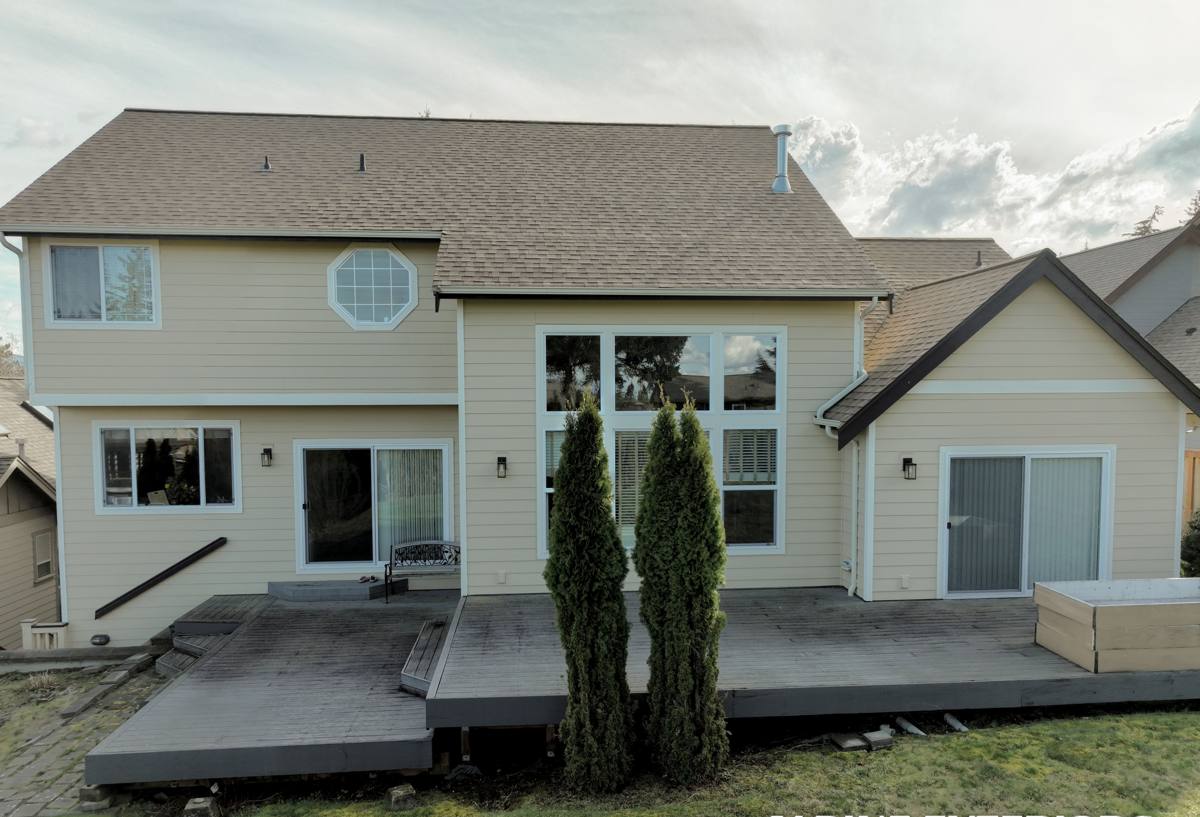
Signs a Ferndale Home Needs Window Replacement, Not Just Repair
Not every window problem means full replacement. But in this climate, several signs point clearly toward it rather than a patch job:
- Fogging or a visible haze between double-pane glass — the seal has failed and the gas fill is gone, so the insulating value is gone too
- Soft or spongy wood at the sill, especially on west- and south-facing walls that take the brunt of wind-driven rain
- Windows that are hard to open, don't latch flush, or have visibly warped frames
- Persistent moss, algae, or black staining on or around the frame that comes back within weeks of cleaning
- Noticeable drafts or a cold-to-the-touch interior frame in winter
- Rising heating bills without a clear cause elsewhere in the home
- Visible daylight or gaps around the frame from the exterior
If you're only seeing one or two of these and the frame itself is sound, a repair or re-caulk may buy you time. Once you're seeing several together, or there's any soft wood at the sill, replacement is almost always the more honest recommendation — patching a failing frame in this climate tends to be money spent twice.
Why Old Seals Fail Faster Here
Salt air is mildly corrosive to metal hardware and can accelerate the breakdown of certain sealants and gaskets faster than a dry inland climate would. Combine that with near-constant humidity for months at a stretch, and factory seals, weep systems, and perimeter caulk lines are simply under more stress in Whatcom County than in most of the country. Windows rated and installed for a drier climate, or installed without attention to local wind-driven rain exposure, tend to show their age early here.
What a Correct Window Replacement Job Actually Involves
A window replacement is not just swapping glass in a frame. Done properly, it's a full assembly of materials working together, and skipping any one layer is where problems start:
Removal and Opening Inspection
The old window comes out and the rough opening gets inspected before anything new goes in. This is the one point in the project where hidden rot, soft sheathing, or old flashing failures are visible and fixable. A crew that rushes past this step is gambling that everything underneath is fine — in a wet climate, that's a bad bet more often than people expect.
Flashing and Water Management
Proper flashing directs any water that gets behind the siding back out, rather than letting it pool at the sill. This includes sill pan flashing, side and head flashing that overlaps correctly (always shedding water downward and outward, never trapping it), and integration with the house's weather-resistive barrier. This is the single most important — and most commonly rushed — part of the whole job.
Air Sealing and Insulation
The gap between the new window frame and the rough opening needs to be sealed and insulated correctly — not overpacked with expanding foam that can bow the frame, and not left with gaps that create drafts and condensation points.
Setting, Leveling, and Fastening
The window has to be shimmed level and plumb before it's fastened, or it won't operate smoothly and won't seal evenly around its perimeter for the life of the unit.
Exterior Sealing and Trim
Exterior caulking, trim, and any cladding tie-in has to match the home's existing siding detail so the finished look is clean and the water management stays continuous — not interrupted at the window opening.
Full-Frame Replacement vs. Insert (Pocket) Replacement
One of the first decisions on any project is whether to do a full-frame replacement or an insert replacement into the existing frame. Both are legitimate approaches — the right one depends on the condition of what's already there.
| Factor | Full-Frame Replacement | Insert (Pocket) Replacement |
|---|---|---|
| Best used when | Existing frame, sill, or flashing shows rot, water damage, or is out of square | Existing frame is sound, square, and dry |
| Access to hidden damage | Full access — sheathing and framing are exposed and inspected | Limited — hidden rot behind the old frame can be missed |
| Exterior trim disruption | Higher — trim and sometimes siding are disturbed and rebuilt | Lower — existing trim largely stays in place |
| Typical cost | Higher labor cost | Lower labor cost |
| Long-term risk if frame is already compromised | Low — problem is corrected at the source | Higher — new window is installed over an existing weak point |
In a climate like this one, we lean toward recommending full-frame replacement more often than a drier region would, simply because insert replacement over a frame with any hidden moisture damage just seals the problem in rather than solving it. We'll tell you honestly which approach your specific windows need once we've opened one up and looked.
Choosing Windows and Glass for Whatcom County Weather
Not every window on the market is a good match for Ferndale's exposure. A few practical points worth knowing before you shop:
Frame Material
Vinyl, fiberglass, and clad-wood frames all perform differently in sustained damp conditions. The right choice depends on your home's style, your budget, and how much maintenance you're willing to do — we'll walk through the real trade-offs (not marketing claims) for your specific house rather than push one material as universally best.
Glass Packages
Double-pane, gas-filled, low-E glass is the practical standard for this region — it manages heat loss in winter and heat gain in the rare hot stretch of summer, and it helps reduce interior condensation, which matters when outdoor humidity is high for most of the year.
Drainage and Weep Systems
Any window installed here should have a functioning weep system that lets water that does get into the frame track back out rather than sit against the sill. This is a detail that's easy to overlook when comparing windows on price alone.
Hardware and Corrosion Resistance
Locks, hinges, and balance hardware near salt air benefit from corrosion-resistant finishes. It's a small line item that pays off in smoother operation years down the road.
Our Process, Start to Finish
- Free on-site assessment — we look at your current windows, check for hidden moisture or frame damage, and talk through what you actually need versus what's optional
- Honest recommendation — full-frame or insert, which glass package and frame material fit your home and budget, with straightforward reasoning behind each recommendation
- Written estimate — clear scope, materials, and timeline before any work starts
- Careful removal — old units come out with the opening protected from weather the entire time, which matters in a climate where rain can show up with little warning
- Correct installation — flashing, air sealing, leveling, and fastening done to the standard described above, not shortcut to save an hour
- Exterior finish and cleanup — trim and caulking matched to your home's existing look, site cleaned up, old windows hauled away
- Final walkthrough — we test operation on every window with you before we call the job done
What Affects the Cost of a Window Replacement Project
| Cost Factor | Why It Matters |
|---|---|
| Number and size of windows | More or larger openings mean more material and labor |
| Full-frame vs. insert | Full-frame involves more labor and often trim or siding work |
| Frame material | Vinyl, fiberglass, and clad-wood carry different material costs |
| Hidden damage found at removal | Rotted sheathing or framing found once the old window is out needs to be repaired before the new one goes in |
| Glass package | Upgraded low-E coatings or gas fills add cost but improve performance |
| Access and site conditions | Second-story windows or tight access can add time |
We give broad, honest ranges up front based on what we can see, and we flag anything that could change the number — like suspected hidden rot — before we ever start, not after.
Why a Crew That Already Works Ferndale Matters
A window replacement is only as good as the judgment behind it. A crew that works Ferndale and greater Birch Bay regularly has already seen what this specific exposure does to different frame materials, different flashing details, and different siding types over several wet seasons — not in theory, but on actual homes in this county. That means fewer surprises during the job and a better read on which corners can never be cut here, even if they might be fine somewhere drier.
It also means we're a known, local business you can find again next year if a question comes up — not a crew that worked one job in the area and moved on. For a project that's sealed behind trim and siding once it's done, that accountability matters as much as the installation itself.
Caring for New Windows After Installation
New windows still need a small amount of seasonal attention in this climate to get their full lifespan:
- Rinse frames and tracks periodically to clear salt residue and organic buildup before it becomes moss or algae staining
- Keep weep holes clear of debris so water can drain out as designed
- Check exterior caulk lines once a year for cracking or separation, especially after a hard winter
- Trim back nearby vegetation that keeps a wall or window in constant shade and dampness
- Address any new soft spots or sticking operation early rather than waiting
None of this is heavy maintenance — it's the same kind of upkeep any exterior feature needs in a marine climate — but skipping it is how a well-installed window loses years off its service life.
If your Ferndale home has windows that fog, stick, feel drafty, or just look tired, we're happy to take a look and give you a straight answer on what it needs — no pressure, no upsell. Fill out the form below for a free estimate and we'll walk the property with you.