 Birch Bay Siding
 Windows Built for What Bellingham Weather Actually Does
Bellingham sits close enough to the water that homes here deal with a different set of pressures than houses further inland. Salt-laden air off the bay works into metal hardware and fasteners. Driving rain off Puget Sound doesn't just hit a window straight on — it gets pushed sideways and upward by wind, testing every seam of the installation, not just the glass. And Whatcom County's long, wet moss season means anything that stays damp for weeks at a time is going to grow something on it eventually. A window that was installed correctly shrugs all of this off for decades. A window that was installed to a lower standard starts showing problems within a few winters, even if the window itself is a good product.
This page is about window installation specifically for homes in and around Bellingham — what the climate demands, what a correct installation actually involves, and what to look for in a crew before you let them cut into your siding.
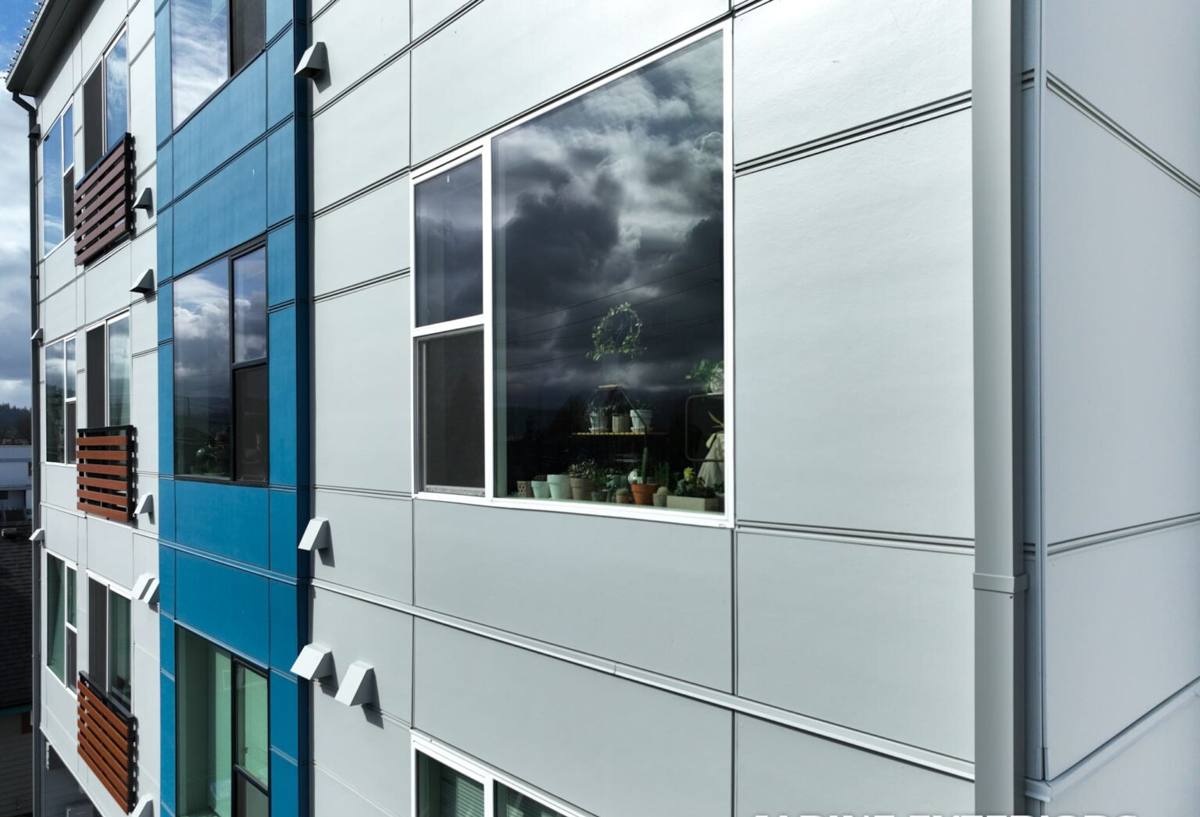
What This Climate Does to a Window Installation Over Time
Most window failures we see in this region aren't glass failures — they're installation failures that took a few years to show up. Understanding the mechanism helps explain why the details matter so much here.
Moisture That Finds a Way In
Wind-driven rain is different from ordinary rain. It doesn't just run down a wall — it can be pushed under laps in the weather barrier and into gaps around a window frame that would never leak in a calmer climate. If the flashing sequence around a window isn't layered correctly (each piece overlapping the one below it, shingle-style, so water always drains outward), water gets behind the siding and into the wall cavity. That's slow, hidden rot, and by the time it's visible on the interior trim, the damage has usually been building for a while.
Salt Air and Hardware
Homes closer to the water deal with airborne salt that accelerates corrosion on lower-grade fasteners, hinges, and locking hardware. It's a slow process, but over years it can stiffen operation on casement and awning windows or cause staining and pitting on exposed metal trim.
Moss, Algae, and Trapped Moisture
Whatcom County's moss season isn't just a roof problem. Window sills, drip caps, and the tops of trim boards that don't shed water quickly enough stay damp long enough to grow moss and algae, especially on north- and west-facing walls that get less direct sun. That growth holds moisture against the wood or trim longer, which speeds up rot in exactly the areas that are hardest to inspect from the ground.
Condensation and Temperature Swings
Bellingham's temperature swings are moderate compared to inland climates, but the combination of high humidity and cool nights means condensation on the interior glass or between panes is a common early sign of a failing seal — something we get asked about often on homes with older dual-pane windows.
Signs a Bellingham Home Actually Needs New Windows
Not every drafty window needs full replacement, and not every old window is a lost cause. These are the signs worth taking seriously:
- Fogging or a milky haze between the panes of a dual-pane window — the seal has failed and the gas fill is gone
- Visible soft spots, dark staining, or moss growth on the wood sill, jamb, or exterior trim
- Windows that are difficult to open, close, or lock, especially after damp weather
- A noticeable draft near the frame even when the window is fully latched
- Paint that keeps failing on the interior sill no matter how often it's touched up
- Higher heating bills without any other explanation, especially in rooms with older single-pane or early dual-pane windows
What a Correct Installation Actually Involves
The window product matters, but in this climate the installation detail matters more. A well-built window installed poorly will leak. A mid-range window installed correctly will outperform it. Here's what we consider non-negotiable on every job:
- Remove and inspect. Old window and any damaged trim come out, and we check the sheathing, framing, and weather-resistive barrier behind it for hidden rot or prior water damage before anything new goes in.
- Sill pan flashing. A sloped, sealed pan under the window opening gives any water that does get past the glass a way to drain back out instead of sitting on the framing.
- Shingle-lapped flashing at the head and sides. Every layer overlaps the one below it so water is always directed outward and down, never trapped behind the siding.
- Correct sealant, not just caulk everywhere. Sealant goes where it should trap water in (which is nowhere) and gaps are left where the assembly needs to drain and dry.
- Square, level, and properly shimmed. A window that's out of square binds hardware and stresses the frame, which shows up as operational problems within a year or two.
- Insulated, not just stuffed. The gap between the window frame and the rough opening gets filled with proper low-expansion foam or backer rod and insulation — not compressed fiberglass that leaves cold spots.
- Exterior trim and finish work sealed to match the wall assembly so the whole system sheds water the way it was designed to, not just the window itself.
Choosing a Frame Material for This Climate
There isn't one universally "best" window frame material — it depends on budget, exposure, and how much maintenance you want to take on. Here's how the common options compare for a home dealing with salt air, wind-driven rain, and a wet, mossy shoulder season:
| Frame Material | Moisture & Salt Air Resistance | Maintenance | Typical Lifespan |
|---|---|---|---|
| Vinyl | Very good — won't rot or corrode, minimal maintenance concerns from salt air | Low — occasional cleaning | 20–30+ years |
| Fiberglass | Excellent — dimensionally stable, resists moisture and salt exposure well | Low | 30+ years |
| Wood or wood-clad | Good on the exterior-clad side, but exposed or poorly maintained wood is vulnerable to rot and moss in this climate | Higher — periodic finishing/sealing needed on exposed wood elements | Varies widely with maintenance |
| Aluminum | Fair — prone to condensation and, without a thermal break, poor insulating performance | Low, but hardware can corrode faster near the water | 20–30 years |
We're honest with homeowners about this: a fully exposed wood window looks great, but in a climate with this much rain and moss pressure, it asks for more upkeep than most people want to sign up for. That's a maintenance trade-off, not a knock on wood as a material — it's just about matching the product to how much time you want to spend on it.
Glass Packages Worth Considering
For most Bellingham homes, a dual-pane window with a Low-E coating and argon gas fill is the practical standard — it balances energy performance, cost, and condensation resistance well. Triple-pane windows offer better insulation and sound dampening and can make sense for north-facing rooms, homes near busier roads, or homeowners prioritizing energy efficiency, but they come at a higher cost and added weight, which matters for larger openings and older framing.
Our Installation Process
The process is straightforward, but we don't skip steps to move faster:
- On-site assessment of your existing windows, framing, and any signs of prior moisture damage
- Measurements and product selection based on your home's exposure, budget, and style
- Written estimate before any work begins — no surprise add-ons mid-project
- Careful removal of old windows with protection for your interior and landscaping
- Full flashing, sealing, shimming, and insulation per the steps above
- Exterior trim and finish work to match your home's existing siding and trim lines
- Final walkthrough so you can operate every window and see the finished work before we consider the job done
Why Hire a Crew That Already Works in Bellingham
Window installation isn't complicated in theory, but the details that keep water out of a wall assembly change depending on exposure, wall construction, and local weather patterns. A crew that regularly works Bellingham and the surrounding Whatcom County area already knows:
- Which sides of a house typically take the worst wind-driven rain given the prevailing weather patterns off the water
- How to sequence flashing so it works with the siding types common on homes in this area
- When to schedule exterior work around the wettest stretches of the year rather than fighting the weather mid-installation
- What early moss and moisture damage looks like on a sill or trim board before it becomes a bigger repair
That local familiarity doesn't replace good technique, but it does mean fewer surprises once the old window comes off the wall.
What Affects the Cost of a Window Installation
We don't publish fixed prices because the honest answer is "it depends," but these are the real factors that move the number up or down:
| Factor | Why It Matters |
|---|---|
| Window size and quantity | Larger openings and whole-house replacement projects have more material and labor per job, though per-window pricing often improves with volume |
| Frame material | Vinyl is typically the most budget-friendly; fiberglass and wood-clad options cost more upfront |
| Glass package | Triple-pane, tinted, or specialty coatings add cost over a standard dual-pane Low-E unit |
| Condition behind the old window | Hidden rot or water damage found during removal adds repair scope before the new window can go in |
| Access and structure | Second-story windows, unusual shapes, or additional trim work take more time |
Rough budgeting for a straightforward window replacement generally runs from a few hundred to a couple thousand dollars per window depending on these factors — we'll give you exact numbers for your specific home during a walkthrough, not a guess over the phone.
Keeping New Windows Performing Long-Term
A correct installation does most of the work, but a little seasonal attention keeps things performing well for the long haul:
- Rinse sills and tracks periodically to keep moss and algae from establishing, especially on shaded, north-facing windows
- Check exterior caulking annually for cracking or gaps, particularly after a hard winter
- Keep gutters and downspouts clear so water isn't sheeting down the wall directly above your windows
- Operate locking hardware a few times through the year, even on windows you rarely open, to keep mechanisms from stiffening
- Address any interior condensation or fogging early rather than waiting for it to spread to more windows
If you're weighing new windows for a Bellingham home, we're happy to take a look, explain what we're seeing, and give you a straightforward, no-pressure estimate — no obligation, just honest information about your options. Use the form below to get started.