 Birch Bay Siding
 Board & Batten Siding Built for California Creek's Climate
California Creek sits close enough to the water that homes here take a different kind of weathering than siding a few miles inland. Salt-laden air moves in off the bay, driving rain comes sideways more often than straight down, and the wet season stretches long enough that moss gets a real foothold on anything that stays damp for more than a day or two. Board & batten siding — with its vertical boards and raised battens covering the seams — is a look a lot of homeowners in this area want, especially on farmhouse-style and coastal cottage homes. But the same design that gives board & batten its character also creates more seams, more fastener points, and more edges where water can find a way in if the material and the installation aren't right for this specific environment.
Salt Air and Marine Exposure
Proximity to saltwater accelerates corrosion on fasteners, flashing, and any metal trim tied into the siding system. Over years, corroding fasteners loosen boards, and once a board starts to move, the caulk joints around it start to fail too. Material choice and fastener choice both matter more here than they would on a home twenty miles inland.
Driving Rain and Wind-Driven Moisture
Wind off the water doesn't just bring rain — it pushes it. Wind-driven rain gets forced sideways and upward into laps, seams, and butt joints that would stay dry in a calmer climate. Board & batten's vertical seams need to be detailed correctly or that wind-driven moisture works its way behind the boards.
The Long Moss Season
Whatcom County's wet season runs long, and shaded or north-facing walls stay damp for extended stretches. Moss and algae don't just look bad — they hold moisture against the siding surface, and on the wrong substrate that constant dampness leads to swelling, soft spots, and eventual rot at the bottom edges of boards and battens.
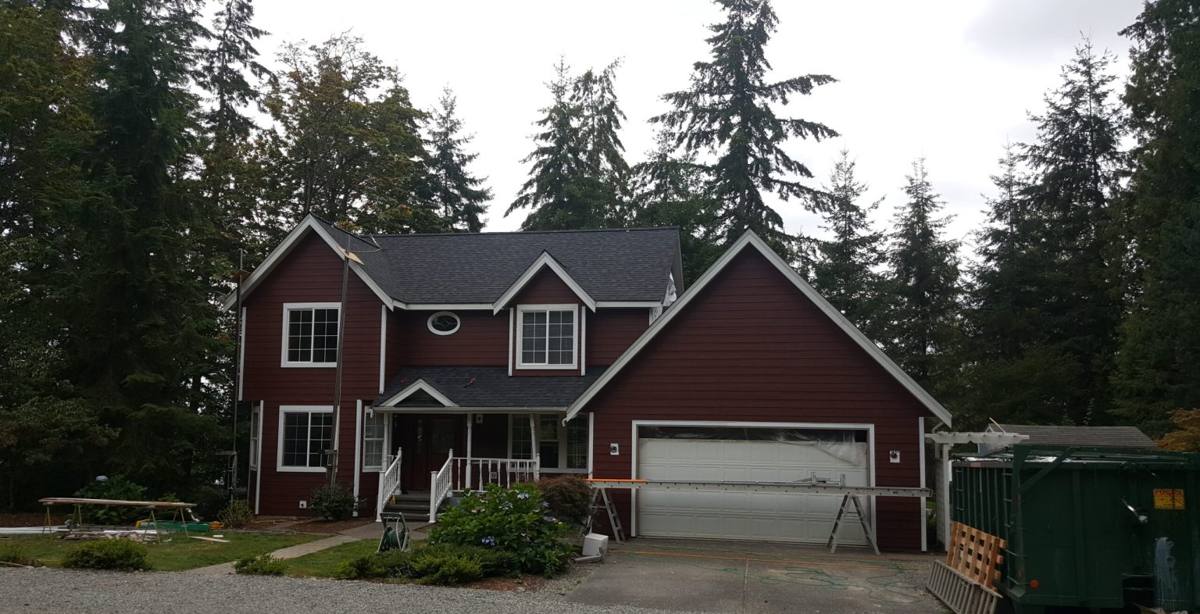
What Board & Batten Siding Actually Is
Board & batten is a vertical siding pattern: wide flat boards installed with a gap between them, then narrower battens fastened over the gaps to cover the seam. It's one of the oldest siding patterns in American building, originally used because it was a simple way to cover a wall with rough-sawn lumber while shedding water down the face of the wall rather than across it. That vertical water path is part of why it still works well in a wet climate — done correctly, it drains rather than pools.
The look reads clean and a little more modern or farmhouse than traditional lap siding, which is part of why it's popular on newer builds and remodels around Birch Bay and California Creek. But the pattern only performs as well as the material and the install behind it. A vertical seam covered by a batten is still a seam, and every seam is a place water can test.
Why We Only Install This in James Hardie Fiber Cement
Board & batten can be built out of vinyl, engineered wood like LP SmartSide, primed spruce, cedar, or fiber cement. We install James Hardie fiber cement exclusively, and board & batten is actually one of the clearest examples of why that standard matters. This pattern has more cut edges and more fastener penetrations per square foot than a standard lap job, and every one of those is a spot where a lesser material's weaknesses show up first.
| Material | How It Handles This Climate | Long-Term Concern for Board & Batten |
|---|---|---|
| Vinyl | Won't rot, but flexes and gaps with temperature swings; battens can bow away from the wall | Seams open over time, letting wind-driven rain track behind the panel |
| LP SmartSide / engineered wood | Engineered to resist moisture better than raw wood, but still wood-based | Cut edges and fastener holes are vulnerable if field-sealing isn't perfect on every board and batten |
| Primed spruce or cedar | Traditional look, but raw wood absorbs moisture directly | Highest maintenance burden — repainting, caulking, and edge sealing on a recurring cycle in a wet, mossy climate |
| James Hardie fiber cement | Non-combustible, dimensionally stable, doesn't absorb and swell the way wood-based products do | Still requires correct installation, but the material itself isn't the weak point |
We're not going to tell you vinyl or engineered wood board & batten will fail on every home — plenty of installations hold up fine for years. What we will say is that we've made a professional decision to only put our name behind one material, and fiber cement's stability, moisture behavior, and factory-applied ColorPlus finish are why it's that material. Hardie's HZ5 product line is engineered specifically for climates like this one, with freeze-thaw and moisture exposure in mind.
What a Correct Installation Involves
Board & batten looks simple from the street, but it has more places to get wrong than standard lap siding because there are two layers of material and more fastener points per square foot. A correct job isn't just nailing boards to the wall — it's a system.
Substrate and Weather-Resistive Barrier
Everything starts underneath the siding. A properly lapped weather-resistive barrier, correctly integrated with window and door flashing, is what actually keeps a home dry — the siding is the first line of defense, not the only one. On a home this close to the water, we treat that barrier as non-negotiable, not a step to rush through.
Batten Spacing and Fastening
Battens need consistent spacing for the look to read clean, but more importantly, both the boards and the battens need to be fastened per Hardie's engineering specifications — correct fastener type, correct penetration depth, correct spacing back from edges. Over-driven or under-driven fasteners are one of the most common causes of early siding problems we see, and it's almost always a workmanship issue, not a product issue.
Flashing and Trim Details
Every horizontal transition — window heads, roof-to-wall intersections, the bottom termination near grade — needs flashing detailed to shed water down and away from the wall assembly. On a board & batten wall, the bottom termination matters even more, since that's where gravity eventually sends any moisture that gets past the surface.
Our Process for California Creek Homes
We approach every board & batten job in this area the same structured way, because skipping steps is where problems start.
- On-site assessment of the existing wall assembly, moisture readings where relevant, and exposure direction (which walls take the most wind-driven rain and salt exposure)
- Removal of failing material down to sound substrate, with any hidden rot or moisture damage addressed before new siding goes on
- Weather-resistive barrier installed and lapped correctly, with flashing integrated at every penetration and transition
- James Hardie board & batten installed to manufacturer fastening specifications, not shortcuts
- Final walkthrough covering fastener lines, caulk joints, and trim details before we call the job done
Where Older Board & Batten Siding Fails in This Area
When we get called out to look at failing board & batten on homes near California Creek, the patterns repeat. Moss and algae build up behind battens on shaded walls and hold moisture against the boards longer than an open lap surface would. Bottom edges near grade take on water and start to soften, especially where the original installation didn't leave enough clearance or didn't flash the base properly. And on wood-based products, cut edges that weren't field-sealed become the entry point once the factory coating is compromised at that one spot. None of these are exotic failures — they're the predictable result of a wet, salty climate finding the weak points in a material or an installation that wasn't built for it.
Maintenance in a Marine, Mossy Climate
Fiber cement lowers the maintenance burden compared to wood, but it doesn't eliminate it. Homes near California Creek still benefit from periodically rinsing off shaded and north-facing walls where moss and algae tend to collect, keeping gutters and downspouts clear so water isn't dumping onto the siding below, and doing a visual check of caulk joints and trim after major storms. ColorPlus factory finish means you're not on a repainting cycle the way you would be with raw wood, but it's not a "never think about it again" product either — it's a lower-maintenance system, not a zero-maintenance one.
Why Hire a Crew That Already Works This Area
Board & batten in a marine, high-moss climate isn't a generic install — the exposure direction, the wind pattern off the water, and the moss pressure on shaded walls all factor into how a job should be detailed. A crew that already works California Creek and the broader Birch Bay area has seen how homes here actually perform over time, not just how a spec sheet says a product should behave. That local pattern recognition is what catches a flashing detail or a clearance issue before it becomes a callback five years down the road. We also pull permits and build to Whatcom County code as a matter of course, so there's no guesswork about what's required on your specific property.
Cost Factors to Understand Before You Get a Quote
| Factor | Why It Changes the Price |
|---|---|
| Wall complexity | More corners, gables, and trim transitions mean more cuts and more labor hours |
| Existing wall condition | Hidden rot or moisture damage found during tear-off adds repair scope |
| Board & batten vs. standard lap | Board & batten typically runs higher than lap due to the extra material layer and fastener labor |
| Trim and flashing detail level | Proper flashing at every transition takes more time than a bare-minimum install |
| Color and finish selection | Factory ColorPlus finishes vary slightly in price by color and product line |
We don't publish blanket pricing because every wall and every home is different, but these are the factors that actually move a number up or down — worth understanding before you compare quotes from different contractors.
If you're weighing board & batten for a home in California Creek, we're happy to come take a look, walk the exterior with you, and put together a straightforward, no-pressure estimate — just fill out the form below to get started.