 Birch Bay Siding
 Deck Repair Built for Marietta's Coastal Conditions
Marietta sits close enough to the water that homes here deal with a different set of problems than decks built inland. Salt-laden air moves through fasteners and finishes faster than most manufacturers plan for, driving rain gets pushed sideways into ledger boards and stair stringers, and a long stretch of gray, damp months each year keeps wood surfaces wet far longer than they were ever designed to stay. None of that means a deck here is doomed — it means repairs have to account for the environment instead of treating every deck like it sits in a dry inland yard.
We work on decks throughout Birch Bay and the surrounding Whatcom County shoreline, and Marietta's decks tend to show a consistent pattern: corrosion at the fasteners before the wood itself looks bad, moss and algae holding moisture against boards long after a storm has passed, and softening at the framing connections closest to the house. Catching those issues early is the difference between a repair job and a rebuild.
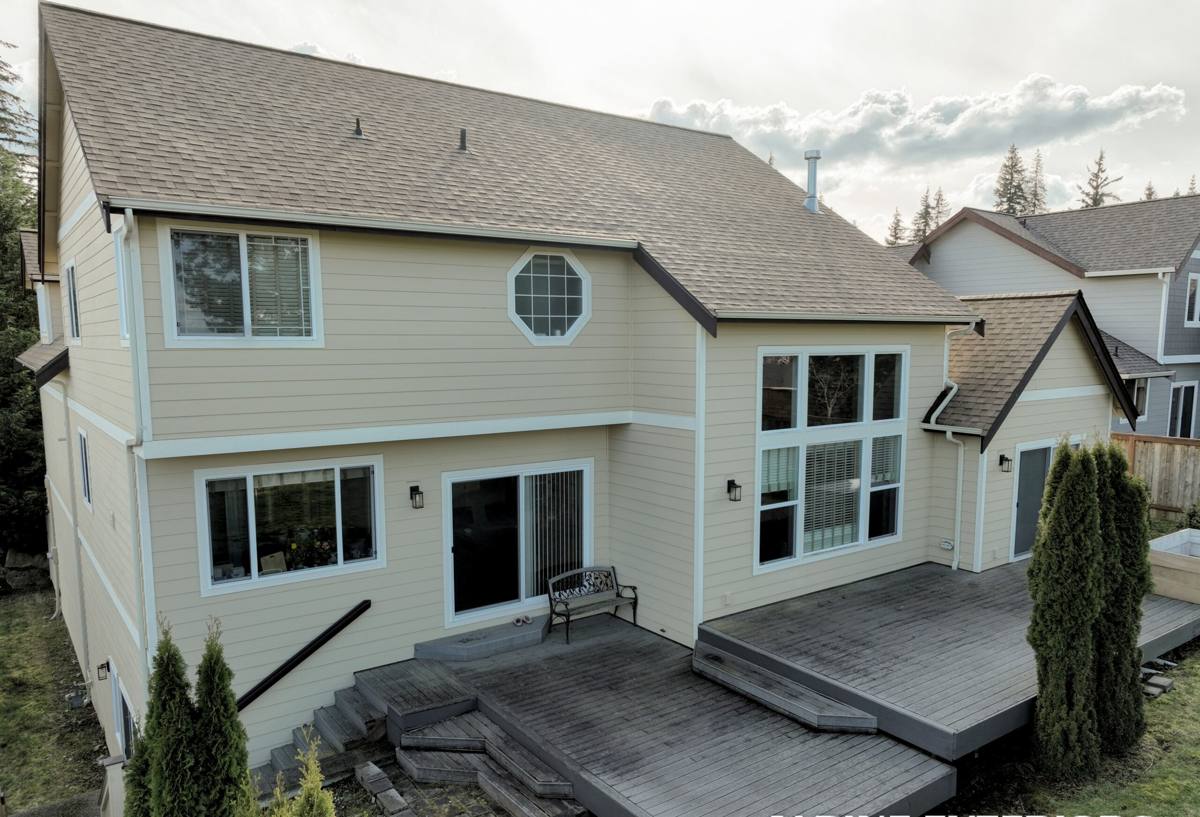
Why Local Climate Drives What a Deck Needs Here
Salt Air and Metal Fatigue
Salt in the air accelerates corrosion on any exposed metal — nails, screws, joist hangers, and structural brackets. Corroded fasteners lose holding strength long before there's any visible sign from the deck surface. A board can look perfectly solid while the nail holding it down has rusted to a fraction of its original strength.
Driving Rain and Water Intrusion
Storms coming off the water don't just fall straight down — wind pushes rain sideways into gaps, seams, and the joint where a deck ledger meets the house. That's usually the single most important spot on any deck, since it's both structural and the hardest place for water to escape once it gets in.
Moss, Algae, and the Long Wet Season
Whatcom County's extended damp season gives moss and algae months to establish themselves on shaded or north-facing deck surfaces. Beyond looking bad, moss holds water against the wood surface, which keeps boards wet well past the point where they'd otherwise dry out, and it makes stairs and walking surfaces genuinely slick.
Signs a Marietta Deck Needs Repair, Not Just Cleaning
A pressure wash can make a deck look better for a season without addressing what's actually happening underneath. Here's what tells us a repair is actually needed:
- Soft or spongy spots when you walk across the decking, especially near the house or stairs
- Visible rust streaking below fasteners or hardware
- Gaps opening up between the ledger board and the house siding or rim joist
- Boards that stay damp or dark long after the rest of the deck has dried
- Railings or stair stringers that flex or feel less solid than they used to
- Moss or algae that returns within weeks of cleaning
- Any visible daylight or gap where the deck framing meets a support post
If you're seeing more than one of these, it's worth having someone look at the framing, not just the surface boards.
What a Correct Deck Repair Actually Involves
Start With the Framing, Not the Surface
Decking boards are the part everyone notices, but the ledger board, joists, beams, and posts underneath are what actually hold the structure up. A proper repair means checking those components first — probing for soft wood, checking fastener condition, and confirming the ledger connection to the house is still sound and properly flashed.
Fastener and Hardware Condition
In a salt-air environment, fastener replacement is often the most important part of a repair even when the wood itself is fine. We look at joist hangers, structural screws, and any exposed hardware for corrosion, since replacing a handful of rusted fasteners now is far cheaper than replacing a joist that failed because of them later.
Flashing and Water Management
Where the deck meets the house is the most common source of hidden rot. Correct repair work includes proper flashing at the ledger board so water sheds away from the house rather than working its way behind the band board or into the rim joist.
Decking, Stairs, and Railings
Once the structure underneath is confirmed sound, we address what's visible — replacing rotted or cupped boards, resecuring loose stair stringers, and tightening or rebuilding railings that no longer feel solid. Railings in particular are a safety issue, not just a cosmetic one, and shouldn't be patched if the underlying post connection has failed.
Repair or Replace: How We Make That Call
Not every deck problem calls for a full rebuild, but pretending a structural issue is cosmetic isn't honest work either. Here's generally how the decision breaks down:
| Condition Found | Typical Approach | Why |
|---|---|---|
| Isolated soft boards, framing still solid | Board-level repair | Structure is sound; only the surface needs replacing |
| Corroded fasteners, wood still intact | Hardware replacement | Cheaper to address now than after further loosening |
| Rot at the ledger-to-house connection | Ledger repair with proper flashing | This joint is structural and must stay watertight |
| Widespread soft framing across multiple joists or beams | Partial or full rebuild | Patching individual joists doesn't restore overall structural margin |
| Failing posts or footings | Full structural rebuild | These carry the entire load of the deck; no partial fix is safe |
Cost for deck repair work varies a lot depending on how much framing is affected versus how much is just surface-level, so it's genuinely hard to quote a number without seeing the deck — jobs can range from a modest board and hardware fix to a much larger framing rebuild.
Our Process on a Marietta Deck Repair
- On-site inspection. We check the framing first — probing wood, checking fasteners, and looking at the ledger connection — before we ever talk about surface boards.
- Honest scope. We tell you what's cosmetic, what's structural, and what can wait, so you're not paying to fix things that don't need it or ignoring things that do.
- Repair the structure first. Framing, fasteners, and flashing get addressed before any new decking goes down, since covering a bad structure with new boards just hides the problem.
- Rebuild the surface. Damaged boards, stair treads, and railings get replaced or resecured to match the rest of the deck as closely as possible.
- Walk-through. We go over what was done and what to watch for going forward, particularly around drainage and moss-prone areas.
Material Choices for a Coastal Repair
Wood vs. Composite Decking
Pressure-treated lumber is often the practical choice for framing repairs since it matches typical existing construction and is straightforward to work with during a partial repair. For surface decking, composite boards can reduce ongoing maintenance since they don't absorb moisture the way wood does, but they come with their own trade-offs — higher upfront material cost and the need for correct spacing and fastening to avoid issues down the road. We'll walk through what makes sense for your specific deck rather than defaulting to one option.
Fasteners and Hardware
Given the salt air here, we favor stainless steel or coated fasteners rated for corrosion resistance at connection points, particularly anywhere hardware is exposed to weather rather than protected by decking above it.
Flashing Materials
Proper ledger flashing — whether metal flashing paired with a moisture barrier, or a purpose-built flashing membrane — is not an area to cut corners on. It's a small material cost relative to the damage that shows up years later when it's missing or installed incorrectly.
Living With a Deck in a Damp, Salty Climate
Even a correctly repaired deck needs some ongoing attention in this climate. A few habits go a long way:
- Sweep leaves and debris off the deck regularly so moisture doesn't sit trapped underneath them
- Address moss growth early in the wet season before it spreads and holds water against boards
- Keep gutters and downspouts near the deck clear so runoff isn't dumping directly onto or under it
- Check visible fasteners and hardware periodically for early rust, especially after storm seasons
- Reseal or refinish wood decking on the manufacturer's recommended schedule rather than waiting until it looks worn
Why a Crew That Already Works in Marietta Matters
Deck problems here aren't generic — they follow patterns tied to this specific stretch of Whatcom County coastline: the direction storms typically come from, how much salt exposure a given lot gets, and how shaded or exposed the deck is to sun that would otherwise help it dry out. A crew that regularly works Birch Bay and Marietta has already seen how these decks fail and knows where to look first, instead of treating every deck as a blank slate. That local familiarity tends to mean a faster, more accurate inspection and a repair that actually accounts for what this climate does to a structure over time.
If you're seeing soft spots, rust, persistent moss, or just want a second opinion on a deck that doesn't feel as solid as it used to, we're glad to take a look. Reach out for a free, no-pressure estimate using the form below — we'll tell you honestly what we find.