 Birch Bay Siding
 Storm Damage Roof Repair Built for Point Roberts' Exposure
Point Roberts sits at the tip of a peninsula that's part of the United States but reachable by land only through Canada, and that geography isn't just a quirk of the map — it shapes how weather hits the roofs out there. Homes on this stretch of coastline take wind and wind-driven rain off open water from multiple directions, with little in the way of inland terrain to slow it down first. Add in the salt air that comes with living this close to the water, driving rain that gets forced sideways and upward during storms, and a long moss season that follows every wet stretch, and you've got a combination of stresses that a roof in a more sheltered part of Whatcom County simply doesn't deal with in the same way.
This page is about what storm damage roof repair actually looks like for a Point Roberts home — what typically gets damaged and why, what a correct repair involves from the first emergency tarp to the final permanent fix, and why the logistics of this particular community make it worth hiring a crew that already has a working routine for getting out there.
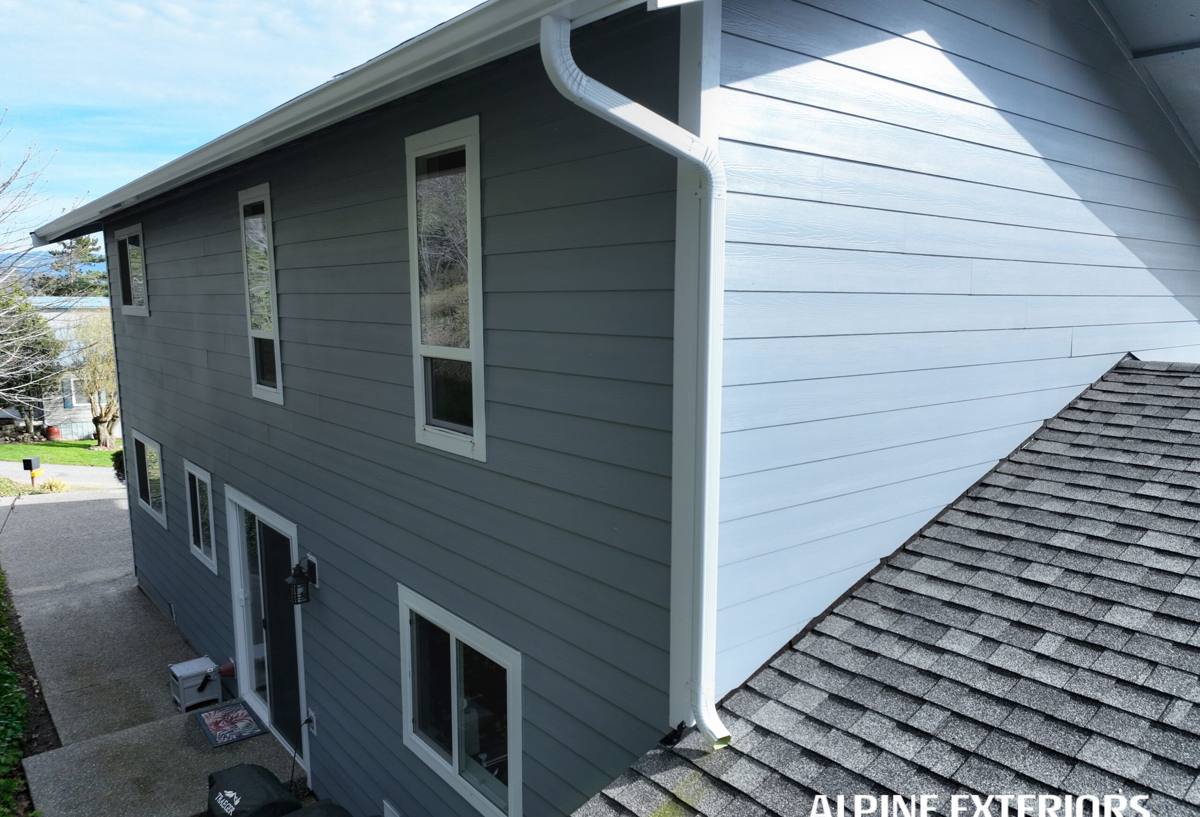
What Actually Damages Roofs in Point Roberts Storms
Storm damage isn't always dramatic. Sometimes it's a handful of shingles peeled back at a ridge line; sometimes it's a slow leak that starts weeks after the wind event that actually caused it. Understanding the mechanism helps explain why the repair has to address more than just the visible damage.
Wind and Wind-Driven Rain
Sustained wind off open water lifts shingle edges and works them loose over repeated gusts, and once an edge is lifted even slightly, wind-driven rain gets pushed underneath it rather than running off the surface. That combination — wind first, water second — is a bigger threat to a roof than either one alone.
Salt Air and Corrosion
Storms don't just apply mechanical stress; they also carry salt-laden air deep into a roof system, and that accelerates corrosion on flashing, fasteners, and any exposed metal that wasn't rated for it. A roof that survives a storm structurally intact can still develop leaks a year or two later at a flashing seam that corroded faster than it should have.
Falling Limbs and Debris
Wind events knock branches and debris loose, and even a glancing hit can crack a shingle, dent flashing, or puncture underlayment in a way that isn't obvious from the ground. These are the kind of damage points that get missed in a quick visual check and turn into a real leak the next time it rains.
Long Moss Season Aftermath
Storm damage and moss growth interact more than people expect. Once shingles are lifted, cracked, or granule-worn from a storm, those spots hold moisture longer, and that's exactly where moss and algae take hold first during the long wet season that follows. A repair that ignores this just sets up the same spot to fail again.
Emergency Response vs. Permanent Repair
Not every storm-damaged roof needs the same kind of response right away. The immediate priority after a storm is stopping active water intrusion; the permanent fix is a separate, more deliberate step that shouldn't be rushed just because a tarp is already up.
| Stage | What It's For | Typical Timeline |
|---|---|---|
| Emergency tarp-over | Stops active leaking and further water damage while a full repair is scheduled | Same day to within 24-48 hours of the storm |
| Damage assessment | Identifies the full scope — visible and hidden — before any permanent work begins | Scheduled once the roof is stable and safe to walk |
| Permanent repair or partial replacement | Restores the roof system with matched materials and correct flashing detail | Depends on material availability and scope of the damage |
Skipping straight from a tarp to a quick patch, without a real assessment in between, is one of the more common ways storm damage gets under-repaired. The patch might stop the visible leak while leaving flashing or decking issues in place that show up again during the next storm.
What a Correct Storm Damage Repair Involves
Assessment Before Any Tarp or Patch
A proper assessment covers more than the spot where water is coming through inside the house. It means getting on the roof, checking adjacent shingle courses, flashing at valleys and penetrations, and the attic space underneath for signs of moisture that have already started to spread beyond the obvious point of entry.
Matching Materials and Flashing Details
Repairs should use shingles and flashing that match the existing roof's profile and material grade wherever possible, tied in correctly with the surrounding courses rather than simply overlaid on top. A patch that isn't properly integrated into the existing shingle pattern is a weak point in itself, storm or no storm.
Deck and Structural Check
Any area where water has been sitting under damaged shingles needs the decking checked for soft spots or rot before new material goes back down. Covering over compromised decking with new shingles hides the problem instead of fixing it, and it's a shortcut that costs far more to correct later than it would have cost to do right the first time.
Working With Insurance on a Storm Claim
Many storm repairs on Point Roberts homes involve an insurance claim, and the process goes more smoothly when the documentation is thorough from the start. We photograph and document damage before any repair work begins, which gives you a clear record to work from with your adjuster rather than relying on memory or after-the-fact descriptions.
We're straightforward about our role here: we can provide a written, itemized estimate and documentation of what we find, but the claim decision itself is between you and your insurance company. Be cautious of any contractor who pressures you to sign an assignment of benefits or promises a specific claim outcome before an adjuster has even looked at the roof — that's a decision that should stay in your hands.
How Our Process Works
- Initial contact and triage: We find out quickly whether the roof needs emergency tarping first or can wait for a scheduled full assessment.
- On-roof and attic inspection: We check the damage itself along with the surrounding area and attic space, not just the spot causing the visible leak.
- Written, itemized estimate: You get a clear breakdown of what's damaged, what repair or replacement is needed, and what materials we're proposing — useful whether or not insurance is involved.
- Scheduling: We build in realistic timing for material matching and weather windows, particularly important given how quickly conditions can change out on the point.
- Repair work: Damaged shingles, flashing, and decking get replaced and properly tied into the surrounding roof, not just patched over the top.
- Final walkthrough: We go over the completed repair with you before considering the job finished.
Why a Crew That Already Works Point Roberts Matters
Point Roberts is logistically different from most of the areas a Whatcom County contractor serves. Getting a crew and materials out there means routing through Canada, and that's not something you want a contractor figuring out for the first time while your roof is actively leaking. A crew that already has an established routine for getting people and equipment to the point can respond faster and more predictably than one that's improvising border logistics on the fly during a storm event.
It also matters for accountability after the work is done. A workmanship warranty is only useful if the company behind it is still reachable and still working in the area a year or two later, not a crew that took one job out on the point and never came back.
A Practical Checklist Before You Choose a Storm Repair Contractor
- Do they offer real emergency tarping, or just a scheduled estimate days out?
- Does their assessment include the attic and surrounding shingle courses, not just the obvious leak point?
- Is the estimate itemized by material and labor, not a single vague repair charge?
- Do they document damage with photos before starting work, useful for any insurance claim?
- Do they carry current WA contractor licensing and liability insurance?
- Can they speak to actual experience getting crews and materials out to Point Roberts specifically?
Signs Your Point Roberts Roof May Have Storm Damage
Storm damage isn't always as obvious as missing shingles on the lawn. Some of the more common warning signs are easy to miss unless you know to look for them.
- Shingles that look lifted, curled, or creased along a ridge or edge after a windy stretch
- Granules showing up in gutters or downspouts following a storm, beyond normal gradual wear
- New water staining on ceilings or in the attic that wasn't there before the last storm
- Dented or visibly separated flashing around chimneys, vents, or valleys
- Fresh moss or dark streaking concentrated in one area, which can point to a spot that's been holding water since a storm
If you're noticing any of this after a recent storm, it's worth having it looked at before the next system moves through rather than waiting to see if it gets worse on its own.
If you'd like an honest look at storm damage on your Point Roberts roof and a written estimate you can actually compare against other bids, we're glad to come take a look. Use the form below to request a free, no-pressure estimate.